
Shoe Factories Struggle Amid Rupiah Depreciation and Iran Conflict; Layoff Threats Loom
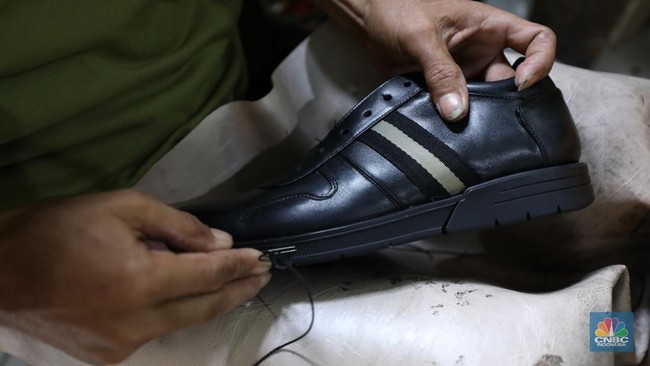
The weakening of the Rupiah against the US Dollar is beginning to pressure domestic labour-intensive industries. The footwear sector is one of the sectors experiencing a surge in raw material costs amidst the strengthening US Dollar and the escalating Iran conflict.
The Rupiah exchange rate opened sharply weaker at Rp17,630/US$ on Monday (18/05/2026). This position represents one of the weakest levels for the Rupiah in recent years, driven by massive capital flows into US Dollar assets due to global uncertainty.
Yoseph Billie Dosiwoda, Executive Director of the Indonesian Footwear Association (Aprisindo), stated that pressure on the shoe industry has been felt recently, particularly regarding the cost of imported raw materials. “Raw material costs have risen by 30-40% due to the effects of the Iran war,” Billie told CNBC Indonesia on Monday.
This cost increase occurs while industry players are still facing weak global demand and uncertainty in export markets. Meanwhile, the strengthening US Dollar further exacerbates production burdens because a large portion of the footwear industry’s raw materials still relies on imports.
Billie noted that the decision to raise final product prices is not entirely in the hands of domestic producers. He stated that price adjustments depend heavily on buyers and the import tariff conditions in destination export countries.
Pressure from exchange rates and global logistics costs has led industry players to adopt a cautious approach while monitoring market developments over the next few months. Companies are also focusing on maintaining operational sustainability to avoid mass layoffs (PHK).
“We are still in a ‘wait and see’ mode for the next 2-3 months to survive,” said Billie.
Amidst this situation, the footwear industry hopes for concrete support from the government to curb the surge in production costs. One of the most urgent needs identified is fiscal incentives for labour-intensive industries.
“We are still striving to avoid layoffs of workers. We hope buyers continue to operate normally. We need fiscal incentives from the government, as well as discounts on electricity and gas, to cover production operational costs,” he emphasised.