
Shocking Surge! Layoffs in Malaysia Skyrocket, Tens of Thousands Lose Jobs
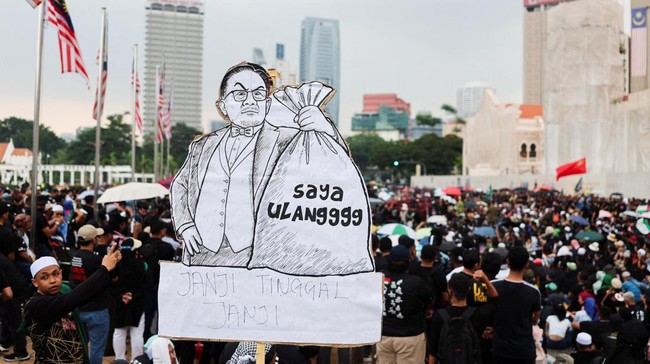
Malaysia recorded a sharp surge in layoffs during the first quarter of 2026. A total of 24,100 workers were affected, marking a 47% increase compared to the same period last year.
Data from the Social Security Organisation, analysed by Hong Leong Investment Bank (HLIB), shows that the wave of layoffs peaked in January with 10,700 cases, before easing to 7,500 in February and 5,900 in March.
Although the trend has begun to decline, the number remains far higher than the approximately 16,500 layoffs in the first quarter of 2025.
Manufacturing Becomes the Weak Link Amid Global Uncertainty
Global economic shocks caused by inter-country conflicts in various regions have become the most influential factor in the layoff phenomenon in Malaysia.
Sectors that absorb a large workforce in Malaysia are also highly dependent on global dynamics. These sectors include:
Manufacturing sector
Wholesale and retail trade sector
Logistics-related sector
HLIB even describes the manufacturing sector as the “weakest link” in the labour market, particularly due to its high dependence on global trade and external demand.
This situation reflects broader adjustments in Malaysia’s economy amid rising global uncertainty and geopolitical tensions.
Unlike last year, which was supported by a strong manufacturing cycle and a boom in the semiconductor industry, the current situation indicates a fairly deep correction phase.
Klang Valley Becomes the Epicentre of Layoffs
Most layoffs are concentrated in Malaysia’s main economic hub, the Klang Valley. This area is a metropolitan region encompassing Kuala Lumpur, Shah Alam, Petaling Jaya, Subang Jaya, Klang, and several other cities in the state of Selangor.
This phenomenon underscores that corporate restructurings tend to first hit urban areas with high business concentrations.
Outside the Klang Valley, risks are also increasing in Penang and Johor.
Penang is vulnerable due to its dependence on the electrical and electronics (E&E) sector, while Johor is exposed to trade fluctuations and spillover effects from Singapore.
Although there has been a surge in layoffs, Malaysia’s overall labour market remains relatively stable.
Data from the OpenDOSM Labour Market Dashboard shows that the unemployment rate has held steady at 2.9% for four consecutive months, indicating that some workers affected by layoffs have been absorbed into other sectors.
HLIB highlights the rise in job vacancies, reaching around 107,000 positions in March, as a sign that recruitment activity is still ongoing, particularly in the services and construction sectors.
This shows that while some companies are reducing staff, others continue to expand.
However, the situation is very different from last year.
In the first quarter of 2025, Malaysia recorded far fewer layoffs, supported by a stronger manufacturing cycle and high demand in the semiconductor industry.
HLIB states that the current wave of layoffs reflects an adjustment phase as global conditions become increasingly uncertain.
Although layoffs have eased since January, the bank warns that downside risks remain amid a highly dynamic global situation.
Export-based sectors, particularly manufacturing, are expected to remain vulnerable to external shocks in the coming months.