
Shocking Discovery Near Indonesia: 149 New Species and 1,000 Shark Teeth Found
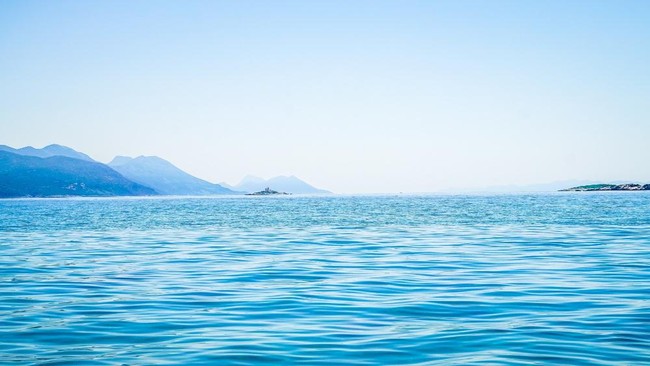
A group of scientists has successfully discovered 149 new deep-sea species and a graveyard of shark teeth dating back 22 million years. These findings originated from the Indian Ocean, located near Indonesia.
The research expedition was conducted in the seabed areas around Christmas and Cocos islands, southwest of Jakarta, Indonesia, as well as between Australia and Sri Lanka. The study surveyed depths ranging from 9lag 94 to 5,431 metres and mapped the abyssal seabed, featuring volcanic seamounts aged 40–120 million years with diameters of 70 km.
“People have explored islands in shallow waters, but no one has yet studied life in deeper waters. It represents a massive gap in the data,” said Tim O’Hara, an external scientist at Melbourne’s Museum Victoria, as quoted by ZME Science.
Among the hundreds of species discovered were sea cucumbers from the genus Oneirophanta, new fish from the greeneye family (Chlorophthalmus), and parasitic barnacles from the genus Rhizolepas.
Furthermore, researchers discovered a graveyard containing approximately 1,000 shark teeth within the seabed. These teeth were recovered during a final fishing haul along the Cocos Abyssal Plain.
The teeth are estimated to be over 22 million years old. They include specimens from the Great White shark (Carcharodon carcharias), Mako shark (Isurus oxyrinchus), Tiger shark (Galeocerdo cuvier), and the prehistoric Megalodon (Otodus megalodon) fossils.
Additionally, polymetallic nodules, or manganese nodules, were found alongside the shark teeth. These mineral-rich rocks are highly sought after for deep-sea mining and are used in electric vehicle batteries, wind turbines, and renewable energy technologies.
O’Hara emphasised the importance of deep-sea research, noting that several scientists are currently conducting explorations in the region. This includes research on underwater mountains in the Coral Sea Marine Park off the northeast coast of Australia, as well as the German research vessel Sonne, which is studying seabed structures off the coast of New Zealand.
O’Hara and Jim Barry, senior scientists at the Monterey Bay Aquarium Research Institute, explained that the oceans are facing numerous threats, ranging from rising sea surface temperatures and marine heatwaves to overfishing and deep-sea mining.
All these threats impact the ecosystem. However, on the other hand, continued marine research remains vital to understanding how the deep sea functions.
“We cannot see it from the surface; no one has ever experienced the deep sea except those who have descended there in a submarine. I would very much like to go further into the Indian Ocean.”
Source: jawawa.id (https://jawawa.id/newsitem/shocking-discovery-near-indonesia-149-new-species-and-1-000-shark-teeth-found-1788922462)
Originally published by CNBC Indonesia (https://www.cnbcindonesia.com/tech/20260909075000-37-766380/temuan-mengejutkan-di-dekat-ri-149-spesies-baru-sampai-1000-gigi-hiu), translated from Indonesian