
Shockbyte Deploys AMD EPYC CPUs to Expand Game Servers to the US
The gaming industry has evolved into one of the largest entertainment sectors, generating higher revenues than the combined film and music industries. With approximately two-thirds of gamers playing online, the need for fast, stable, and efficient server infrastructure has become increasingly crucial.
In response to this demand, Shockbyte is strengthening its position as a service provider for Minecraft and various other popular games. The company is relying on AMD Ryzen and AMD E_PYC processors to increase server density, single-thread performance, and power efficiency, while supporting business expansion into the United States market. The primary focus is to deliver a seamless, low-latency online gaming experience capable of handling player surges during new game launches.
Founded in 2013 during a period of massive demand for Minecraft servers, Shockbyte has grown significantly. Mitch Smith, CEO and Founder of Shockbyte, stated that one of the company’s initial goals was to simplify game server management, even as the business grew threefold over several consecutive years.
Shockbyte’s business has since expanded beyond Minecraft. Currently, the company supports approximately 65 games focused on player-owned servers. Additionally, Shockbyte has established a B2B business line called ‘Shockbyte for Game Studios’ as a cloud infrastructure provider. Smith noted that Shockbyte works with Facepunch as an official dedicated server partner for Rust, a popular survival game with a large community, and also collaborates with Discord.
The game server business model presents unique challenges. When a new game launches, player numbers can spike sharply during the first few weeks before potentially dropping by about 10% from the initial peak. This volatility forces infrastructure providers to scale rapidly and then migrate and consolidate workloads onto fewer machines. For active players, this process risks causing disruptions; even minor micro-stutters can lead to customer complaints. Therefore, Shockbyte requires infrastructure that is robust during peak loads but also efficient when demand decreases.
Liam Charles, Director of IT at Shockbyte, explained that for much of its operational history, the company leased bare-metal servers from third parties. Around 2023, Shockbyte began considering operating servers in its own data centres. At that time, most of the infrastructure was still running on Intel.
During the same period, AMD Ryzen processors based on the AM5 socket became available. Shockbyte already possessed several Ryzen 3000 and 5000 Series-based systems. According to Charles, some of these systems had been running for over six years without a reboot and continued to operate effectively. “Switching to AMD EPYC Server Processors was a very easy decision,” said Liam Charles.
During the transition, hardware partner DiGiCOR helped Shockbyte identify the AMD configuration best suited to game server workloads. Dez Nguyen, Lead Systems Engineer at DiGiCOR, stated that the collaboration began in early 2024. According to Nguyen, the gaming industry often relies on consumer-grade CPUs installed in specialised rackmount systems because few enterprise solutions are specifically designed for these particular needs.
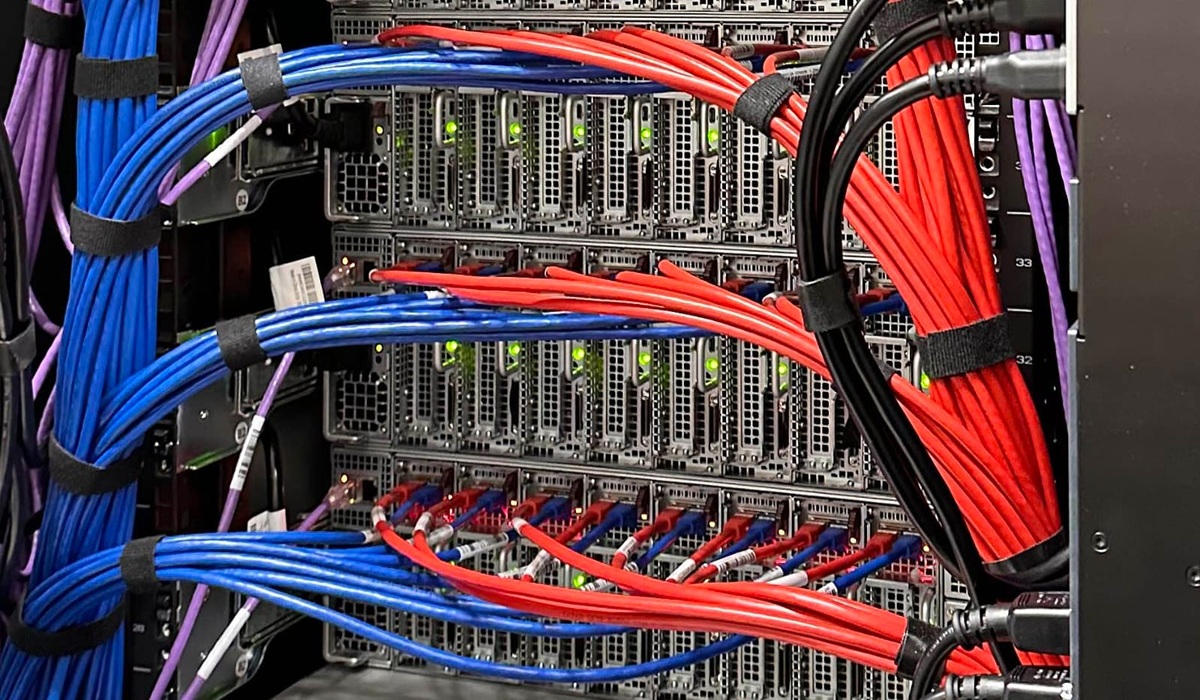
Supermicro subsequently introduced MicroCloud, a high-density solution for the AMD Ryzen 7000 Series. This system allows eight nodes to be placed within a single 3U rackmount. MicroCloud became the foundation for Shockbyte’s first bare-metal implementation in Melbourne, Australia.
In internal testing reported by the company, Shockbyte’s legacy systems recorded an average score of approximately 2,750 on the PassMark single-thread benchmark. With the latest AMD systems, the global average score increased to approximately 4,200, representing an increase of about 53%. Single-thread performance is a critical indicator for game servers, particularly for Minecraft. Charles noted that Shockbyte observed a single-thread performance increase of at least 40% since transitioning from the previously used Intel Xeon to AMD.
The hardware implementation was carried out in stages. Shockbyte began deployment with the Ryzen 7700. Subsequently, the company moved to the AMD EPYC 4464P when more cores were required to run more client servers. The EPYC 4464P features 24 threads and supports up to 192GB of RAM. The infrastructure further evolved to include the AMD EPYC 4545P and AMD EPYC 9555P. The EPYC 9555P provides a 64-core CPU with memory support of up to 1.1TB per system in the configuration used by Shockbyte.
For game server providers, single-thread performance remains vital because many game workloads are not yet fully distributed across multiple cores. However, a high number of cores and large memory capacity are still necessary to run more customer server instances on a single physical system.
Economic efficiency is a key factor for Shockbyte, as the company operates much like a cloud provider focused on gaming. With the latest AMD CPUs, Shockbyte noted that the number of machines could be reduced from over 2,000 units to fewer than 1,000 units. Power consumption has also decreased; older builds averaged 0.93 watts per GB of memory, whereas the latest AMD systems use approximately 0.65 watts per GB, representing a reduction in power consumption of about 30% for the same capacity.
Charles stated that expanding reach in the United States is currently a primary growth area for Shockbyte. The AMD EPYC 9555P processors are almost entirely being shipped to the US, with the most recent deployment located in Dallas, Texas.