
Ships Attacked as NATO Faces a New War Threat
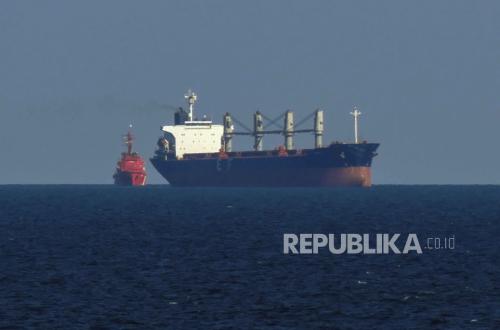
A series of drone attacks on commercial vessels in the Black Sea is drawing the North Atlantic Treaty Organisation (NATO) into regional shipping security concerns. Bulgaria has formally asked the military alliance to deploy fighter aircraft and counter-drone systems after several commercial ships were attacked near Bulgarian and Romanian waters.
The request was made by Bulgarian Defence Minister Dimitar Stoyanov on Friday (16 October 2026), as threats to civilian vessels in the area bordering the two NATO members intensify. Some attacks have caused ships to catch fire and sink, while dozens of sailors have reportedly been killed or gone missing.
Reuters reported that Bulgaria had sent an official letter to NATO’s Secretary General and Supreme Allied Commander Europe, requesting additional defensive capabilities. The Bulgarian government wants to strengthen its ability to counter drone threats, which now endanger not only Ukrainian vessels but also international commercial shipping.
“We have sent a letter and a request to the NATO Secretary General and the Supreme Allied Commander to strengthen our capabilities, including by deploying additional forces in our territory. We are awaiting their decision,” Stoyanov said.
The request marks a significant development in the escalation of the Black Sea conflict. Attacks on commercial ships are no longer solely a matter of the Russia-Ukraine war; they are also testing NATO’s ability to protect international trade routes near its members’ territory.
NATO Secretary General Mark Rutte met Bulgarian Prime Minister Rumen Radev and Romanian President Nicusor Dan on Thursday (15 October 2026). After the meeting, Rutte said NATO would continue adapting its deterrence and defence capabilities in response to developments in the Black Sea region.
According to Reuters, Bulgaria’s request is due to be discussed by ambassadors from NATO’s 32 member states the following week. Sofia also plans to join NATO’s counter-drone defence initiative before the end of October 2026.
Ukrainian grain ship struck by drone
The latest tensions in the Black Sea began with an attack on the cargo ship Royad Mammadov on 5 October 2026. The 139-metre vessel, owned by a Turkish company, was carrying maize from Ukraine to the Italian port of Ravenna when it was hit by a drone off the Romanian coast.
According to The Telegraph, two drones struck the ship, causing a major fire. The vessel, near the Sfântu Gheorghe area, became the focus of a rescue operation involving Romanian maritime authorities.
All 11 crew members, who were Azerbaijani and Indian nationals, were rescued. However, two bodies were found at sea, including that of the ship’s captain, while search and rescue operations continued in dangerous conditions.
Ukrainian President Volodymyr Zelensky accused Russia of being behind the attack. He described an assault on a civilian vessel carrying food in international waters as a threat to shipping safety and global food security.
Euronews reported that the Royad Mammadov was sailing under the flag of Saint Kitts and Nevis and operated by the Turkish company MG Shipping 5. The vessel was last tracked leaving the port of Izmail in Ukraine’s Odesa region before continuing towards Italy.
The attack took place in Romania’s exclusive economic zone, not its territorial waters. This distinction in the legal status of the waters is significant: the attack occurred close to NATO territory, but it cannot automatically be treated as an armed attack on an alliance member.
The Royad Mammadov incident was followed by attacks on several other vessels. In less than two weeks, the Black Sea became an increasingly risky area for commercial shipping.
Two ships attacked near Bulgaria
On Tuesday (13 October 2026), two more merchant vessels were targeted by drones off the Bulgarian coast. The Malta-flagged Chelsea 3, operated by a Ukrainian company, was hit by three drones, while the Guinea-Bissau-flagged HS Dignity sank after an attack.
All 15 crew members of the Chelsea 3 were evacuated. Five crew members from the HS Dignity were rescued, while 11 others were reported missing after the vessel sank.
Bulgarian Prime Minister Rumen Radev said attacks on civilian ships were unacceptable. His government also summoned Russia’s ambassador in Sofia to seek an explanation for the series of attacks, which are drawing increasingly close to Bulgaria.
Radev acknowledged that there was not yet sufficient evidence to establish who carried out the attacks. However, he questioned whether Ukraine would attack ships and crews associated with its own interests.
“There is no logic in Ukraine attacking its own ships and crews, given that the outcome of all these attacks benefits Russia. Logically, that is where it points,” Radev said, as quoted by The Telegraph.
“But the problem is that we cannot prove it,” he added.
The remarks illustrate Bulgaria’s security dilemma. On one hand, its government suspects Russian involvement based on the pattern and effects of the attacks. On the other, formally assigning responsibility requires verifiable technical evidence.