
Shipping Companies Reluctant to Transport Electric Vehicles, Ministry of Transportation Reveals Reasons
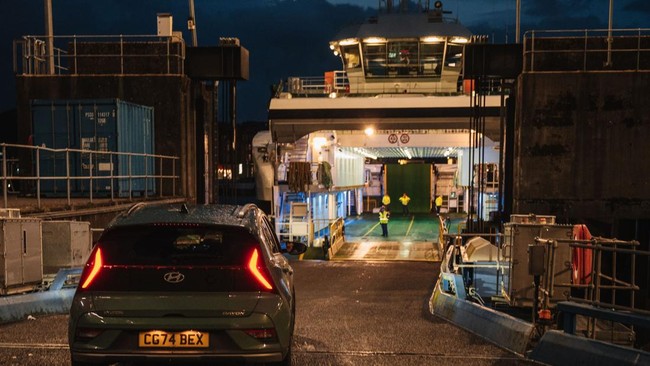
The Ministry of Transportation has revealed that some shipping operators remain reluctant to transport electric vehicles. One of the primary reasons relates to compliance with safety provisions established by the government. These safety regulations currently refer to a circular issued by the Ministry of Transportation.
The circular regulates the procedures for transporting electric vehicles on ships, ranging from vehicle placement to emergency response readiness, via the Circular Letter (SE) of the Director General of Sea Transportation Number SE-DJPL 12 of 2024, dated 4 April 2024, concerning the Handling of Indonesian-Flagged Vessels Transporting Electric Vehicles.
Samsuddin, Director of Shipping and Seamanship at the Ministry of Transportation, stated that the ministry is still receiving reports of several operators being unwilling to carry electric vehicles. “Indeed, we are still receiving information that some operators are still reluctant to transport electric vehicles,” he said at the Ministry of Transportation on Friday.
The Ministry of Transportation has re-distributed the circular to operators following complaints from service users. This action was taken to ensure that the established provisions can be understood and implemented during the electric vehicle transport process.
“Therefore, we have re-sent the circular after receiving complaints from service users regarding several operators who were unwilling to transport them,” he added.
The decision by operators not to transport electric vehicles does not necessarily imply a ban on bringing electric vehicles via ship. The issue arises when the safety requirements listed in the Ministry of Transportation’s circular are not met.
“It is possible that in this case, some requirements in the circular are not being fulfilled. Yes, there are unmet requirements, which is why they are unwilling to transport them,” said Samsuddin.
According to the circular, transported electric vehicles must be placed on open decks and are not permitted to be located in the lower car decks. Additionally, the battery power of the vehicles during transport must be limited to a maximum of 50%.
Ships are also required to have open spaces that can be used for mitigation or handling in the event of an issue with an electric vehicle. Furthermore, fire extinguishing equipment appropriate to the characteristics of electric vehicles must be available.
“So, the public needs to understand that it does not mean they are simply rejected and refused. It is possible that the requirements stated in the circular regarding safety have not been met,” he concluded.
Source: jawawa.id (https://jawawa.id/newsitem/shipping-companies-reluctant-to-transport-electric-vehicles-ministry-of-transportation-reveals-reasons-1789124635)
Originally published by CNBC Indonesia (https://www.cnbcindonesia.com/news/20260911150717-4-767255/kapal-laut-ogah-angkut-mobil-listrik-kemenhub-bongkar-penyebabnya), translated from Indonesian