
Shifts in the Geopolitical Energy Landscape Following the UAE's Exit from OPEC
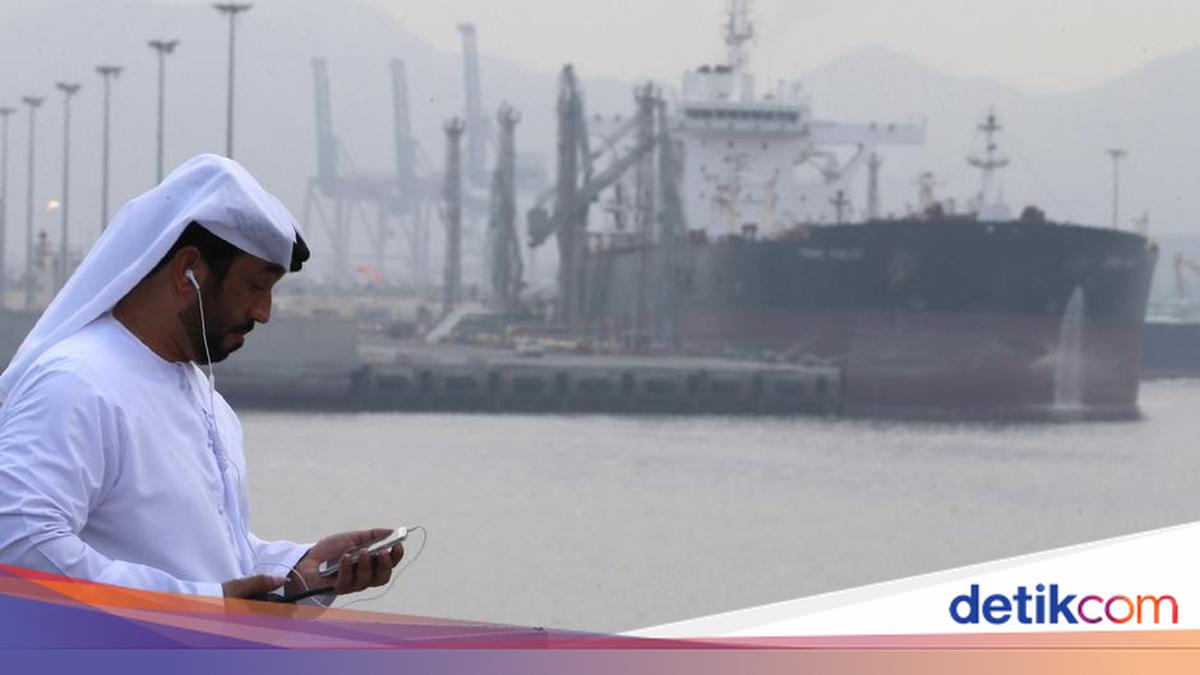
The UAE is one of OPEC’s key producers, with substantial production capacity, significant ready-to-use reserves, and a strategically important diplomatic position in the Gulf region and the Asian energy market. The UAE’s Minister of Energy, Suhail Al Mazrouei, described the decision as part of a long-term strategic vision and the need to respond more flexibly to market conditions.
Key questions arise: Is OPEC still relevant as a guardian of global oil price stability? What are the impacts on market balance? What are the consequences for Asia, particularly oil-importing countries like Indonesia?
The UAE’s exit from OPEC can be analysed through the lens of game theory. OPEC fundamentally operates like a cooperative game: producers agree to limit output to keep prices stable and relatively high.
In an ideal scenario, all members benefit because no party floods the market with excess supply. However, such stability is only possible if all players adhere to the common rules.
Problems emerge when some members exceed production quotas without adequate sanctions. In such conditions, compliant members bear the losses. They restrain production and forgo potential revenue, while others enjoy high prices alongside greater sales volumes. This is where the prisoner’s dilemma arises: remaining compliant means bearing losses alone, but exiting the agreement allows for maximising national interests.
The UAE has already built substantial production capacity and invested in upstream sectors. However, under the OPEC quota regime, that capacity cannot be fully monetised. Every barrel that cannot be produced represents lost potential revenue. As markets become increasingly disrupted by geopolitical risks, including vulnerabilities in supply routes like the Strait of Hormuz, greater flexibility becomes ever more crucial.
Implications of the UAE’s Exit from OPEC on the Asian Energy Market
The first implication for Asia is increased supply competition. Asia has long been the primary market for Middle Eastern oil. China, India, Japan, South Korea, and ASEAN countries are heavily dependent on stable oil flows from the Gulf.
By exiting OPEC, the UAE can offer more flexible supply contracts, in terms of pricing, contract terms, and delivery volumes, without being fully bound by the cartel’s quota discipline.
For Asian buyers, this situation presents both opportunities and risks. The opportunity lies in importers securing more competitive alternative contracts. The UAE can act as an independent swing producer, strengthening its market share through price and supply flexibility. In the short term, this could help Asian buyers obtain oil sources on more attractive commercial terms.
However, the UAE’s exit could weaken OPEC’s credibility in managing market balance. For decades, OPEC has functioned like an “oil central bank,” signalling to the market through production decisions. When a key strategic player exits, internal cohesion weakens, policy signals become less effective, and the market will find it harder to read the direction of global supply.
The second implication is increased price volatility. If the UAE ramps up production to chase market share, while Saudi Arabia, Russia, and other producers respond in kind, the market could enter a phase of volume competition. Under normal conditions, additional supply could pressure prices downward. However, in a fragile geopolitical environment, any logistical disruptions, shipping insurance issues, or military tensions in the Gulf region can quickly shake price directions.
Volatility is far more dangerous than simply high oil prices. High but relatively stable prices can still be anticipated through subsidies, fiscal adjustments, or long-term contracts. In contrast, volatility creates uncertainty for industries, transportation, inflation, trade balances, and exchange rates. Oil-importing countries must manage not only price risks but also supply continuity risks.
The third implication is a shift in the energy diplomacy map. Historically, Asian buyers have negotiated within a market framework heavily influenced by OPEC and OPEC+. After the UAE’s exit, energy diplomacy space becomes more multipolar. Asian countries can pursue more aggressive diversification strategies: purchasing from the UAE, Russia, the United States, West Africa, and Latin America. However, such diversification requires stronger refinery technical capacity, logistical flexibility, and contractual capabilities.
The fourth implication concerns currencies and the energy payment architecture. If the UAE expands oil trade in yuan, rupees, or other non-dollar currencies, the Asian energy market will enter a new phase. US dollar dominance will not disappear overnight, but space will emerge for more diverse settlements. For importing countries, this could serve as an instrument to mitigate exchange rate risks, though it demands readiness in financial systems, foreign exchange reserves, and more careful monetary coordination.
The UAE’s exit from OPEC is a symptom of broader geopolitical fragmentation. The cartel-based stability regime is shifting towards a competition regime based on flexibility, diplomacy, and buyer leverage.
As a country that still imports large quantities of crude oil and fuel, Indonesia is highly sensitive to global price and supply disruptions. Every oil price increase pressures the trade balance, burdens energy subsidies, affects inflation, and adds stress to the rupiah exchange rate. Therefore, various strategic steps are needed, including:
First, Indonesia must strengthen long-term supply contracts with high-flexibility producing countries. The UAE could become an important partner, especially since oil types like Murban suit domestic refinery configurations. Long-term contracts must be designed
Source: jawawa.id (https://jawawa.id/newsitem/shifts-in-the-geopolitical-energy-landscape-following-the-uaes-exit-from-opec-1778730824)
Originally published by detikcom (https://news.detik.com/kolom/d-8488468/pergeseran-konstelasi-geopolitik-energi-pasca-uea-keluar-dari-opec), translated from Indonesian