
Shifting Away from US, Canada Joins UK-Japan Stealth Fighter Jet Project as Observer
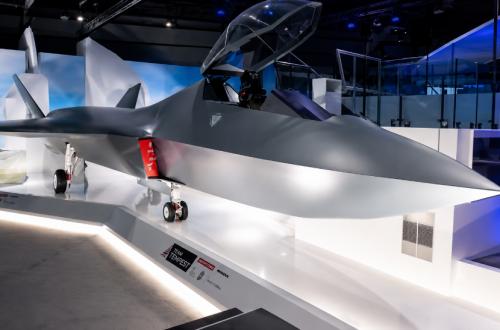
Canada has officially joined the Global Combat Air Programme (GCAP) as an observer, the future stealth fighter development project led by the United Kingdom, Japan, and Italy. The move marks Ottawa’s latest effort to expand defence partnerships beyond the United States while opening opportunities for involvement in the development of next-generation fighter jets. The agreement for Canada to become a GCAP observer emerged ahead of the Farnborough International Airshow in the UK. The official announcement regarding Ottawa’s involvement is expected to be made during the aerospace exhibition. Observer status does not immediately burden Canada with funding obligations but provides access to study the programme before deciding on deeper involvement. Canada’s interest in GCAP was previously expressed by Defence Minister David McGuinty during a visit to Tokyo. After meeting Japanese Defence Minister Shinjiro Koizumi, McGuinty said Ottawa ‘wants to learn more’ about the next-generation fighter jet programme. GCAP was launched in December 2022 through the merger of the UK’s Tempest programme and Japan’s FX fighter project. Italy joined as a founding partner in the project, which is targeted to produce a new-generation fighter to replace the Eurofighter Typhoon and Mitsubishi F-2 from the mid-2030s. Canada’s inclusion is seen as a strategic step to expand defence industrial cooperation with allied nations outside the United States. However, observer status does not yet require Ottawa to share the development costs borne by the three core partner nations. Although promoted as a sixth-generation stealth fighter programme, some analysts suggest the final outcome of GCAP is more likely to resemble a ‘generation 5+’ fighter. Its capabilities are expected to be on par with the latest variants of the American F-35 Lightning II and China’s J-20, rather than truly matching sixth-generation aircraft like the US F-47 or China’s J-XX projects currently under development. These doubts stem from the track record of European fighter development, which has often faced cost overruns, delays, and technological complexity. Observers argue GCAP still needs to prove its ability to produce a platform capable of competing with the latest generation of fighters from the United States and China.