
Shift in Investment Triggers Mass Layoffs in Central Java
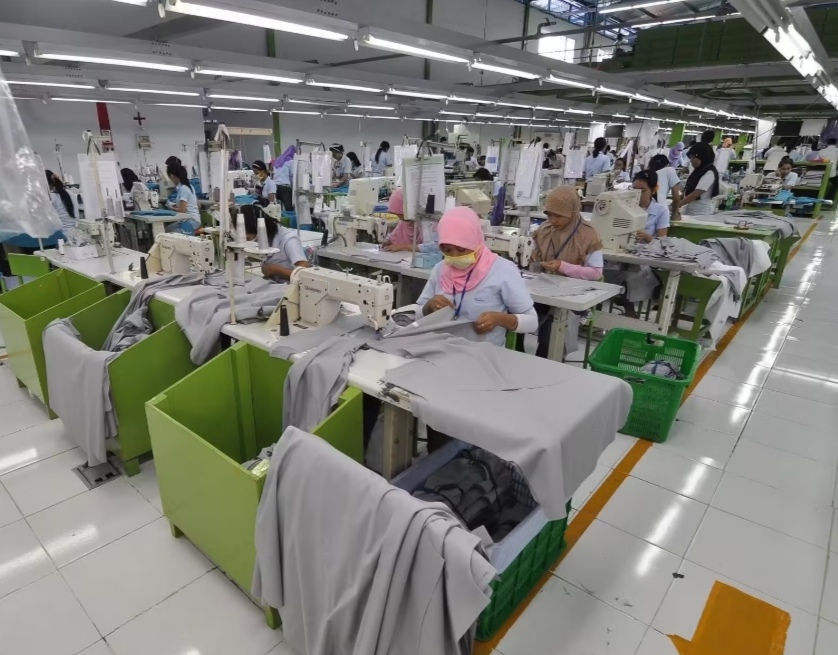
The shift in investment from labour-intensive to capital-intensive sectors has become a primary cause of increasing mass layoffs in Central Java. Despite these challenges, the garment industry remains a backbone of exports and a major employer in the province.
Potential for further layoffs has emerged following plans to close two garment companies, PT Samwon Busana Indonesia in Jepara and PT Victory Apparel in Semarang, by August 2026. The closure of these two firms is expected to affect approximately 1,400 workers.
The Head of the Central Java Investment and One-Stop Integrated Services Agency (DPMPTSP), Sakina Rosellasari, stated that the changing direction of investment is the main factor affecting labour-intensive industries, particularly textiles and garments. “The shift in investment from labour-intensive to capital-intensive is one of the causes of the current mass layoffs,” said Sakina Rosellasari.
According to Sakina, this shift has caused investment in the textile and garment sectors to decline. Previously, this sector consistently ranked third as an investment destination, but it has now dropped to fifth place. Conversely, the overall value of investment in Central Java continues to increase, particularly within several industrial estates.
She cited an example where capital-intensive investment in Batang Regency reached IDR 6.11 trillion but only absorbed 6,584 workers. In contrast, Kendal Regency, with an investment of IDMX 6.56 trillion, was able to absorb 19,386 workers.
Despite the pressure, the garment industry remains a strategic sector for Central Java’s economy. Sakina noted that hundreds of garment, knitwear, and non-knitwear industries in the province still supply approximately 47.5% of export products to the United States market. “We hope that labour-intensive industries remain one of the primary solutions for labour absorption,” she said.
In addition to garments, the leather goods and footwear industry is also a major employer. As of the first semester of 202 proportion 6, the sector recorded an investment value of IDR 5.85 trillion, absorbing 51,288 workers. Meanwhile, the textile industry recorded an investment of IDR 3.92 trillion with 44,460 workers. The rubber and plastic industry recorded an investment of IDR 5.1 trillion absorbing 11,534 workers, while the wood industry received an investment of IDR 4.73 trillion with 6,287 workers absorbed.
In the first semester of 2026, realised investment in Central Java reached IDR 48.54 trillion, nearly half of the annual target of IDR 99.09 trillion. This investment consisted of foreign direct investment amounting to IDR 25.92 trillion (53.4%) and domestic investment of IDR 22.62 trillion (46.6%).
“Investment realisation up to the first semester has absorbed 213,217 workers, and we continue our efforts to maintain an investment climate capable of creating jobs,” said Sakina.
The five regions with the largest investment realisation in Central Java during the first semester of 2026 were Semarang City at IDR 6.57 trillion, Kendal Regency at IDR 6.56 trillion, Batang Regency at IDR 6.11 trillion, Temanggung Regency at IDR 4.58 trillion, and Demak Regency at IDR 4.34 trillion.