
Sherly Tjoanda Expresses Concerns at DPR, Unable to Pay PPPK Salaries Until Late 2026
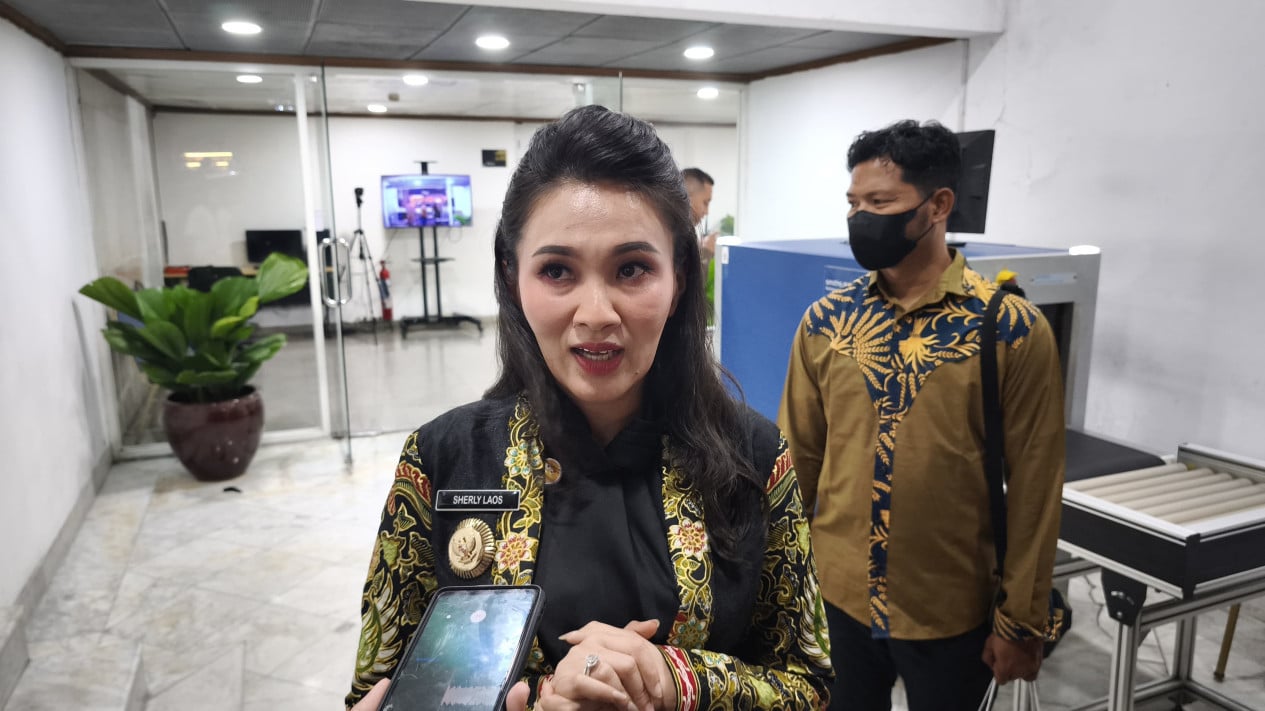
The Governor of North Maluku, Sherly Tjoanda, attended a meeting with Commission II of the House of Representatives (DPR RI) on Monday, 8 June 2026. During the session, she revealed that the North Maluku Provincial Government is unable to pay the salaries of PPPK employees until the end of 2026. She emphasised that the government’s solution regarding the relaxation of personnel expenditure to a maximum of 30 per cent has failed to resolve the issue.
“We have heard all the complaints from regional heads, stating that this does not solve our problems in the region, because we currently do not have the cash flow to pay PPPK salaries until the end of the year. Therefore, has our regional problem been resolved? Not yet,” stated Sherly Tjoanda, as reported on Tuesday, 9 June 2026.
She also questioned the members of Commission II regarding the planned cuts to Regional Transfers (TKD) for the upcoming 2027 fiscal year. She noted that while the North Maluku Provincial Government is attempting to innovate to increase Regional Original Income (PAD) to address these issues, many tools and authorities have been centralised by the central government, leaving little room for regional innovation.
“Furthermore, our PPPK cannot be [expanded], as mentioned by the Governor of Central Sulawesi; we are constrained by ASN regulations. Even with the relaxation, in North Maluku, our DAU is only approximately Rp 960 billion, whereas our personnel expenditure is Rp 1.1 trillion,” she added.
Consequently, Sherly concluded that personnel expenditure in North Maluku has exceeded the General Allocation Fund (DAU). She requested that a portion of the 60 per cent Revenue Sharing Fund (DBH) be returned to the region. She clarified that she is not requesting PPPK salaries be paid from the State Budget (APBN), but rather asks for the return of part of the DBH to the local government.
“If that is returned, we can find a middle ground, which would be very helpful. Ultimately, in our view, while the relaxation provided is a good thing, it sacrifices infrastructure spending, and infrastructure is essential as the foundation for accelerating regional economic growth,” Sherly concluded.