
Sheng Mu Gang: The Forgotten Chinese History of Batavia
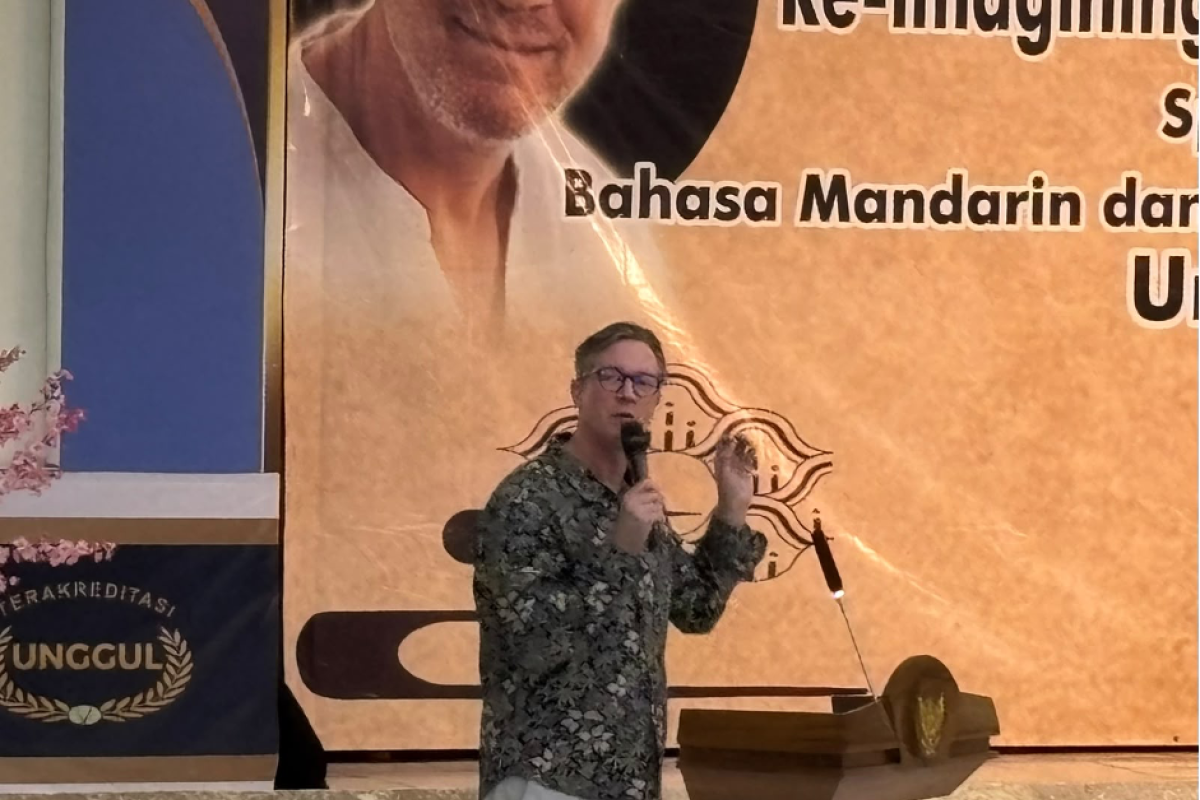
Jakarta (ANTARA) – Historian William L. Gibson is tracing the history of Sheng Mu Gang, an area whose name disappeared from maps of Batavia around 1870, to uncover sacred spaces and the links between Chinese religious traditions and life in Jakarta in the past.
The author of “Keramat, Sacred Relics and Forbidden Idols in Singapore” has examined Sheng Mu Gang’s history through Dutch colonial records, documentation of old buildings and religious traditions that developed in Batavia. The surviving traces of the name raise questions about sacred spaces and the lives of the city’s Chinese community in the past.
At a seminar entitled “Sheng Mu Gang: Re-imaging the Lost Keramat River of Chinese Batavia”, organised by the university’s Chinese Language and Chinese Culture Studies programme in its Faculty of Languages and Culture, Gibson said the name Sheng Mu Gang fell out of use around 1870. Its disappearance was one of the questions that prompted him to investigate the area’s origins.
Literally, Sheng Mu Gang can be translated as “sacred tomb river”.
Gibson said the name may be more than a phonetic rendering of a term; it could also refer to a particular object or location in Batavia’s landscape.
He asked where the sacred site might have been if the name referred to a sacred river.
His investigation led him to several possibilities, including an old mosque, a place where a religious figure had stopped, an object of worship, or a temple that once stood near a water source.
One clue came from Tambora Mosque, which has several Chinese architectural features. Gibson initially noticed an unusual element in the building’s structure: it had an odd number of pillars despite its rectangular shape.
After examining photographs of the mosque from 1971, he found that the building once had an entrance facing directly on to the street. The door was later closed during renovations, changing the building’s form.
Gibson said the original design may have allowed passers-by to enter the place of worship. This raised the possibility of a connection between the mosque and the wider community in the surrounding area.
However, he cautioned that the architectural clues were not enough to establish a link between the mosque and the origins of Sheng Mu Gang.
Another possibility concerns the tradition of paying respect to religious figures. Gibson cited a petilasan—a site believed to have been visited or used as a resting place by someone, rather than a grave—associated with Sunan Gunung Jati at Klenteng Padi Lapa in West Jakarta.
According to an account encountered during his research, Sunan Gunung Jati had a Chinese wife named Ong Tien Nio. Gibson said the story could help explain why Chinese people also pay respect to the figure. The example also points to possible acculturation between Chinese traditions and Islamic religious practices.
The petilasan identified in the investigation, however, was built only in the 1980s. Gibson therefore said it could not be treated as proof that a similar site existed in Batavia’s time.
Gibson also raised the possibility that sacred spaces did not always take the form of a grave or a building. In some traditions, natural objects such as stones can be considered sacred and become focal points for worship.
He cited Keramat Kuda, a place of worship associated with the discovery of a horse-shaped deity statue in 1904. The object was subsequently venerated by local people, including the Chinese community, before the place of worship disappeared.
The fort was located near a source of fresh water for Batavia’s residents. Gibson suggested that the availability of fresh water may have been one reason the Chinese community built a temple in the area.
He put forward the possibility that local people had a sacred place or object there before the Dutch took over the site. However, the available historical evidence has not confirmed this theory.
For Gibson, these possibilities show how the history of an area is shaped by layers of stories, traditions and changes in how spaces are used over time.
The investigation into Sheng Mu Gang also prompted a broader discussion about heritage preservation. He asked whether preservation should select one version of history as the most accurate, or instead make room for the different stories that have developed in the community.
Although he has not been able to establish Sheng Mu Gang’s origins, Gibson said the investigation has brought to light historical layers of Batavia that have previously received limited attention.
Source: jawawa.id (https://jawawa.id/newsitem/sheng-mu-gang-the-forgotten-chinese-history-of-batavia-1795697514)
Originally published by Antara (Indonesian) (https://www.antaranews.com/berita/5880847/sheng-mu-gang-jejak-sejarah-tionghoa-yang-terlupakan-di-batavia), translated from Indonesian