
Sharia Jamsosnaker: Safeguarding the Rights of Muslim Workers, Upholding the Constitutional Promise
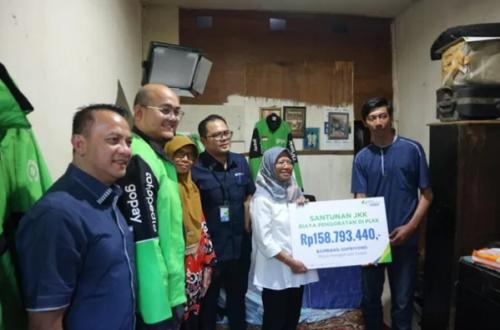
Every month, millions of workers, along with their employing companies, routinely set aside a portion of their income in the form of social security contributions. These contributions are not merely administrative deductions but a collective effort to ensure that risks such as old age, work accidents, and job loss are not borne alone by individuals.
Behind this seemingly simple routine lies an increasingly prominent question among participants: is it possible for the protection system to be designed with reference to the Sharia principles they believe in, without reducing justice for other participants who choose non-Sharia schemes?
The Constitution has already provided a clear signal. Article 28H paragraph (3) of the 1945 Constitution states that everyone has the right to social security that enables them to develop with dignity. Article 29 paragraph (2) affirms the guarantee of freedom of religion for every citizen. When read side by side, the constitutional logic is simple: the right to social security for religious citizens cannot be separated from the right to obtain social protection that does not conflict with their beliefs.
In the Indonesian context, with the majority of the workforce in a Muslim societal ecosystem, the question of Sharia-compliant Employment Social Security (Jamsosnaker) services is not a marginal issue. It touches the core of the state’s commitment to two promises at once: social protection and respect for the faith of its citizens.
SJSN, fiqh, and the Sharia Path
Institutionally, Law No. 40 of 2004 on the National Social Security System (SJSN) and Law No. 24 of 2011 on BPJS position BPJS Ketenagakerjaan as a public legal entity that implements five programmes: Work Accident Insurance (JKK), Death Insurance (JKM), Old Age Savings (JHT), Pension Insurance (JP), and Job Loss Insurance (JKP). These two laws do not prohibit the presence of Sharia options but have not yet provided an explicit mandate for Sharia services on a national scale.
However, if we draw from the treasure trove of muamalah fiqh, social security is very close to the concepts of taawun (mutual help), tabarru (charity), and takaful (mutual risk bearing). The mutual contribution model managed on a non-profit basis, transparently and trustworthily, where all development results are returned for the benefit of participants, essentially reflects the spirit of SJSN directly. What is needed is not to establish a new system from scratch, but to align positive legal instruments with Sharia principles in terms of contracts and fund management.
Source: jawawa.id (https://jawawa.id/newsitem/sharia-jamsosnaker-safeguarding-the-rights-of-muslim-workers-upholding-the-constitutional-promise-1776480650)
Originally published by Republika (https://analisis.republika.co.id/berita/tdo3ro451/jamsosnaker-syariah-menjaga-hak-pekerja-muslim-merawat-janji-konstitusi), translated from Indonesian