
Sharia Gold ETF: A New Chapter in the Financialisation of Indonesian Gold
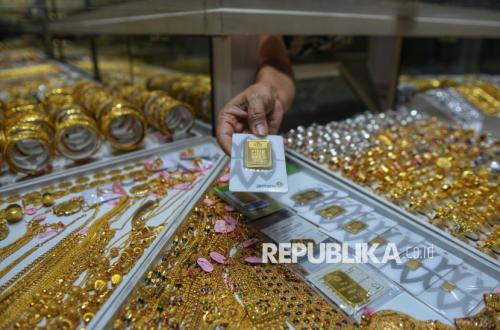
Gold has been present in the economic life of Indonesian society for centuries in its simplest form: bought, stored, and then passed down. It is synonymous with jewellery, bullion, safes, or savings. Now, that relationship is entering a new phase. The arrival of sharia-compliant gold Exchange Traded Funds (ETFs) paves the way for gold’s transformation from an asset primarily stored into one that can be efficiently traded through the capital market.
This momentum is noteworthy. Five gold ETFs received an effective statement from the Financial Services Authority (OJK) on 4 August 2026 and are scheduled to be listed on the Indonesia Stock Exchange on 10 August 2026: Syailendra ETF Sharia Gold (XSGO), Mandiri ETF Emas Syariah (XMES), Premier ETF Gold Sharia Indonesia (XGLD), BRI MI Gold ETF Syariah (XDES), and Trimegah Syariah ETF Emas (XTRA).
This event is bigger than just the birth of five investment products. Indonesia is entering a new chapter of the financialisation of gold: physical gold gains a financial representation that is more liquid, transparent, standardised, and connected to capital market infrastructure.
Finansialisasi is often perceived as a process of distancing finance from the real sector. In the case of gold ETFs, the opposite can occur: real assets are made more easily accessible through financial instruments. Investors no longer need to buy gold bars and worry about storage, security, authentication, and resale. Through an ETF, exposure to gold can be obtained via participation units traded on the exchange. Conceptually, an ETF is not a hybrid of a mutual fund and a stock, but rather a mutual fund in the form of a collective investment contract whose participation units are traded on the exchange.
This transformation brings together two worlds that have been relatively separate: the gold market and the capital market. Globally, this model has developed widely. The World Gold Council recorded that global gold ETF assets under management reached approximately USD 526 billion, with holdings of around 4,047 tonnes at the end of June 2026. The size of this market demonstrates how ETFs have changed gold from merely a store of value into part of modern asset allocation strategies and portfolio diversification.
For Indonesia, the implications are more interesting because the public has a strong cultural affinity with gold. Until now, the logic was mainly gold saving: buying when having funds and selling when needing liquidity. ETFs can expand this behaviour towards gold investing, where gold begins to be positioned alongside stocks, sukuk, bonds, and other instruments in portfolio management. This is where ETFs have the potential to encourage financial deepening. A deep financial market not only has large capitalisation but also provides a variety of instruments to meet the needs for risk, liquidity, investment horizons, and public preferences.
What makes Indonesia’s development more interesting is that the sharia foundation was not built after the product arrived. The normative infrastructure was prepared beforehand. The National Sharia Board of the Indonesian Ulema Council (DSN-MUI) issued Fatwa No. 154/DSN-MUI/V/2023 concerning Sharia Exchange Traded Funds (ETF). Two years later, Fatwa No. 163/DSN-MUI/VII/2025 on Sharia Gold ETFs was issued. This development continued with Fatwa No. 166/DSN-MUI/II/2026 concerning Bullion Business Activities Based on Sharia Principles. The sequence is important: sharia ETF, sharia gold ETF, then sharia bullion business activities. This evolution shows a shift from an instrument to an ecosystem.
Gold is not an ordinary commodity in fiqh muamalah. As a ribawi item, its transactions intersect with the provisions of al-sharf, ownership (milkiyyah), possession (qabd), asset clarity, and the prohibition of riba, gharar, and maysir. Therefore, a sharia gold ETF cannot simply add a sharia label to a conventional structure. The relationship between the investment unit, ownership, transaction, and the underlying gold must satisfy sharia discipline. Here, the fatwa has a broader function than merely providing religious legitimacy; it builds a legal-economic architecture for the financialisation of gold that remains connected to real assets.
Indonesia certainly does not start from an empty space. The Securities Commission Malaysia issued the Shariah Parameters on Islamic ETF Based on Gold and Silver in 2014. AAOIFI, together with the World Gold Council, later launched the Shari’ah Standard on Gold in 2016, which became a key reference for developing global sharia gold investment products. Malaysia went further with the TradePlus Shariah Gold Tracker, listed on Bursa Malaysia since 2017. At least 95 per cent of the product’s net asset value is allocated to physical gold from LBMA-accredited refineries. This experience demonstrates three important foundations for a sharia gold ETF: sharia certainty, the integrity of the physical gold underlying, and credible market infrastructure.
Indonesia now has the opportunity to go further. With a large Muslim investor base and an ecosystem that already includes the Sharia Securities List, sukuk, sharia mutual funds and indices, and the Sharia Online Trading System, gold ETFs can become a bridge between the public’s preference for gold and modern capital market infrastructure. Indonesia may not be the pioneer of sharia gold ETFs, but the development of bullion activities opens the opportunity to become an ecosystem integrator, connecting gold ETFs, the bullion market, and the sharia capital market within a single national gold financial architecture.
Source: jawawa.id (https://jawawa.id/newsitem/sharia-gold-etf-a-new-chapter-in-the-financialisation-of-indonesian-gold-1786326698)
Originally published by Republika (https://analisis.republika.co.id/berita/tjj4nn475/etf-emas-syariah-babak-baru-finansialisasi-emas-indonesia), translated from Indonesian