
Sharia Finance Seen as Alternative Funding for Community-Based Solar Power Plants
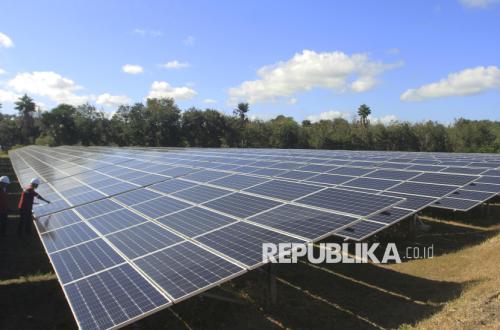
In an effort to accelerate the energy transition towards the 2060 net-zero emission target, Islamic financial instruments are considered to have great potential to support the funding of community-based solar power plants (PLTS).
Aldy Permana, Director of the MOSAIC Program, stated that while the demand for renewable energy continues to rise, the greatest challenges lie in financing and support from various stakeholders. Based on MOSAIC’s research findings, there is an opportunity to utilise Islamic financial instruments as an alternative financing scheme for community solar projects.
Aldy outlined four financing models, including the use of cash waqf-linked sukuk (CWLS). According to him, this instrument is worth considering as it is capable of easing operational cost burdens while simultaneously reducing the risks borne by the community.
MOSAIC’s study estimates that a solar power plant with a capacity of 1 megawatt can produce approximately 1.58 million kilowatt-hours (kWh) of electricity per year. With a tariff of around Rp500 per kWh, such projects have the potential to generate a profit of approximately Rp780 million annually.