
Sharia Expert: Governance is Indonesia's Biggest Challenge in Global Halal Industry
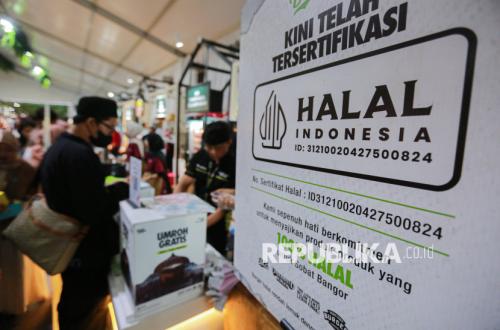
A sharia economics expert from YARSI University, Dr. Any Setianingrum, has stated that Indonesia’s biggest challenge in becoming a major player in the global halal industry is no longer creating demand, but building governance that can enhance competitiveness in the global market. “If we want to become a major player in the global halal industry, we cannot just rely on a large market. What must be strengthened is governance, transparency, institutions, and the ecosystem,” Any said in Jakarta on Monday (29/6/2026). According to Any, Indonesia needs to learn from countries that have successfully made the halal industry a national economic strategy, such as Thailand, which has built a halal ecosystem despite not having a Muslim-majority population. She assessed that the success of such countries is not solely determined by market size, but also by their ability to build integrated standards, research, certification, promotion, and policy support. This view aligns with the State of the Global Islamic Economy (SGIE) Report 2025/2026, which places Indonesia fourth on the Global Islamic Economy Indicator, behind Malaysia, the United Arab Emirates, and Saudi Arabia. The report emphasises that future competitiveness in the Islamic economy will be determined by the integration of halal standards, Islamic financing, trade, innovation, and supply chains, rather than just the size of market demand. In the halal food sector, Indonesia ranks third globally, while Thailand is fourth. Indonesia also ranks fourth in the halal cosmetics and pharmaceutical sectors. However, in the Islamic finance sector, Indonesia is not yet in the top five globally. Any noted that these achievements show Indonesia has significant capital but must strengthen its industrial foundations to avoid falling behind other countries that are continuously improving. She stressed that the halal industry cannot rely solely on product certification. What is more important is building an ecosystem that connects business actors, Islamic financial institutions, certification bodies, academics, and the government in a mutually supportive system. “If we only talk about halal certification, that is not enough. What is needed is an ecosystem that allows the halal industry to grow, be competitive, and be trusted by the global market,” she said. Any added that strengthening governance must also be supported by innovation and the use of technology, including artificial intelligence, to increase transparency, strengthen supervision, and minimise conflicts of interest in the development of the halal industry. Globally, the Islamic economy continues to show growth. The SGIE 2025/2026 report recorded that spending by Muslim communities reached USD 2.60 trillion in 2024 and is projected to increase to USD 3.56 trillion by 2029. The value of global Islamic financial assets is also expected to rise from USD 5.99 trillion to USD 9.72 trillion over the same period. This indicates that competition in the global halal industry will intensify, requiring Indonesia to accelerate the strengthening of its competitiveness.