
Sharia Economy Marginalised? INDEF Flags Indonesia’s Fall in SGIE Ranking
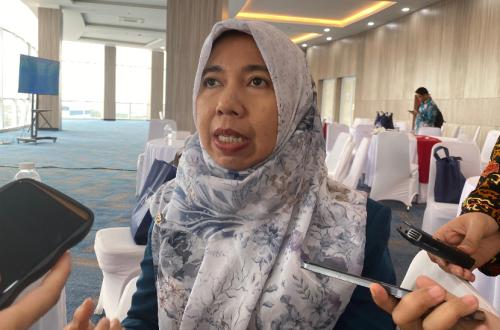
JAKARTA — Indonesia’s ranking in the State of the Global Islamic Economy (SGIE) fell from third to fourth in the 2025/2026 edition. Prof Nur Hidayah, head of INDEF’s Centre for Sharia Economic Development (CSED), said the decline was an indicator of the need to improve policy and strengthen the position of the sharia economy in the national development agenda.
Prof Nur said there were signs that the sharia economy had become a lower priority in the national policy agenda. The State Address and the Financial Note for the 2027 draft state budget do not explicitly mention the sharia economy, although Asta Cita 3 and the 2025–2029 National Medium-Term Development Plan (RPJMN) include it in the national development agenda.
“This weakening is also reflected in several indicators. Indonesia’s ranking in the State of the Global Islamic Economy fell from third to fourth in the 2025/2026 edition,” Prof Nur told Republika on Sunday (11 October 2026).
Prof Nur said Islamic banking was showing signs of an “illusion of growth”. Assets, financing and third-party funds continued to grow, but its market share of national banking fell from 7.72 per cent in December 2024 to 7.36 per cent in June 2026. In the capital market, the Jakarta Composite Index (IHSG) fell by 28.34 per cent up to 24 July 2026, with foreign net selling of Rp79.09 trillion, after Moody’s and Fitch downgraded Indonesia’s rating outlook to negative. Halal certification, claimed to cover 24 million products, has yet to boost exports, while national zakat collection has reached only 13.7 per cent of its potential Rp327 trillion.
Prof Nur offered recommendations to narrow the gap between the commitments in Asta Cita 3 and the 2025–2029 RPJMN and the sharia economy’s actual performance, while addressing the factors behind Indonesia’s lower SGIE ranking.
Her first recommendation was to restore the sharia economy as a distinct national development agenda. It should have measurable targets, including a return to at least the SGIE top three as a performance indicator across ministries and agencies.
“Second, integrate halal certification with sharia financing. Halal certification needs to be linked to access to financing, business capacity-building and export markets, including through sharia financing incentives for halal-certified small and medium-sized enterprises,” she said.
Prof Nur’s third recommendation was to strengthen fiscal support, supervision and transparency. Fiscal support should be more proportionate to the development of the sharia industry, accompanied by stronger oversight of Islamic rural banks (BPRS) and sharia peer-to-peer lending fintech, as well as the provision of integrated and open sharia finance data.
“Fourth, deepen the sharia capital market and investment. Policy consistency and regulatory stability must be maintained, alongside incentives for corporate sukuk and ESG/green sukuk. Danantara should set transparent sharia investment targets and strategies, including examining sharia financing for the Kampung Haji project,” she said.
Prof Nur added that the fifth recommendation was to strengthen governance of Muslim community social funds. Management of ZIS-DSKL, waqf and hajj funds should be improved through a co-ordinated roadmap and digitalisation, as well as greater professionalism among amil and nazhir through competency certification and transparent performance reporting.
Source: jawawa.id (https://jawawa.id/newsitem/sharia-economy-marginalised-indef-flags-indonesias-fall-in-sgie-ranking-1791701462)
Originally published by Republika (https://halalhub.republika.co.id/berita/tmqbzs490/ekonomi-syariah-terpinggirkan-indef-soroti-penurunan-peringkat-sgie-indonesia), translated from Indonesian