
Sharia Economy: Benefits That Cross Identity Boundaries
In Manado, there is a long-standing expression that serves as a shared principle: torang samua basudara, we are all brothers and sisters. It is usually quoted in discussions of social harmony. This time, I would like to borrow it for something more down to earth: trade.
Imagine a woman in Manado who makes sambal roa, a smoked-fish chilli sauce. She wants her product to reach more buyers. She needs good packaging, help meeting business requirements, additional capital and marketing networks. If she wants to serve consumers who require halal products, she must also ensure that the relevant requirements are met.
These needs cut across religious backgrounds. Every business owner has the same hopes: to grow their business, reach a wider market and create jobs.
It is through these shared needs that the development of the Sharia economy in the regions should be understood. In a diverse city such as Manado, its relevance should not rest on the religious make-up of the population, but on its ability to expand business opportunities and benefit people from different backgrounds.
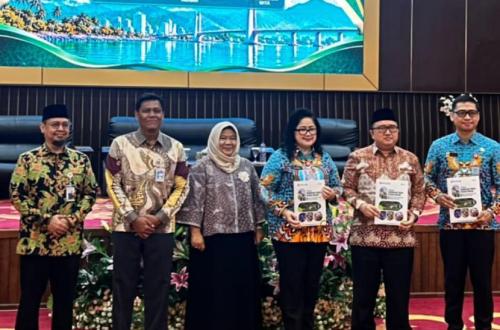
Our experience taking part in an outreach session on the updated Guidebook for Cross-Departmental Regional Collaboration in Manado led us to one reflection: the Sharia economy will be easier to understand if discussions begin with people’s problems, rather than institutional terminology.
People need opportunities to do business. The government has various instruments to support them. The challenge is to ensure that all this assistance works together.
Opening opportunities, not changing identities
The Sharia economy is rooted in Islamic teachings, but participation and benefits are not restricted by religious identity. In regional development, it should be translated into needs that people can understand and share: growing businesses, fair transactions, responsible financing and wider economic opportunities.
The Sharia economy is therefore not solely a matter of religious services. It is also connected with product development, trade, strengthening business capacity and creating jobs. Its relevance to a region cannot be measured simply by the religious make-up of its population, but by its ability to address people’s needs.
As noted above, a processed-food producer in Manado, for example, may meet halal requirements to reach more consumers and wider marketing networks. This is a business-development choice, not a change to personal identity or local culture. Market opportunities can be taken up without imposing uniformity of belief.
The same applies to Sharia-compliant financing. Business owners need clear explanations of a product’s suitability, the terms of the agreement or akad, their payment obligations and the risks they bear. Choices should be made on the basis of understanding and need, not pressure or the assumption that a particular service is suitable only for certain groups.
This openness must still respect the rules governing each instrument. Commercial financing, halal certification, zakat and waqf have different purposes, requirements and regulations. Inclusivity does not mean treating them all as the same; it means enabling appropriate participation, respecting freedom of choice and extending benefits in a diverse society.
One business, different areas of responsibility
The next question is very practical: who helps business owners seize these opportunities?
Business owners do not divide their needs according to the names of government departments. They see their business as a single journey: production gets under way, requirements are met, capital is managed and products find buyers.
Within government, support for that journey may fall under different regional departments. Law No. 23 of 2014 on Regional Government sets out the division of responsibilities and authority so that government action has a clear legal basis and accountability.
But the division of responsibilities should not fragment the business journey. Production training is more useful when connected to support with product requirements and marketing. Access to financing means more when accompanied by financial record-keeping and the ability to meet repayment obligations.
From an administrative-law perspective, clarity over authority and continuity of service must be maintained together. Collaboration is not a reason to take over another party’s duties. Conversely, boundaries of authority are no reason to leave people’s needs without follow-up.
Source: jawawa.id (https://jawawa.id/newsitem/sharia-economy-benefits-that-cross-identity-boundaries-1793605886)
Originally published by Republika (https://opini.republika.co.id/berita/tnv3sg451/ekonomi-syariah-manfaat-yang-melintasi-identitas), translated from Indonesian