
Sharia Economics Review: Qurban's Impact on National Economic Activity
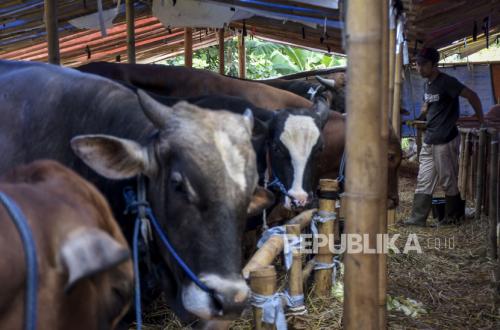
Amid global food crisis threats, rising economic inequality, and weak purchasing power among lower-income communities, Indonesia possesses a social economic instrument often perceived merely as an annual ritual—the Qurban.
However, from a Sharia economics perspective, Qurban is more than just animal sacrifice during Eid al-Adha. It serves as an economic redistribution mechanism, strengthens food security, and drives grassroots economic activity with tangible impacts on the national economy.
Official data from the National Zakat Agency (Baznas) through its Puskas division indicates that the national Qurban economic potential for 2024 reaches Rp34.3 trillion. This figure stems from approximately 2.75 million Qurban households, with an estimated 2.3 million animals—including 1.79 million goats/sheep and 514,000 cattle—and an anticipated meat production of 195,500 tonnes.
Rp34.3 trillion is no trivial sum. It exceeds the budgets of many Indonesian provinces, approaches the economic value of several national industrial subsectors, and ranks among the largest seasonal economic flows within Indonesia’s Sharia economy ecosystem.
Even the Institute for Demographic and Poverty Studies (IDEAS) estimates the Qurban economic potential at around Rp28.2 trillion, indicating a strong consensus that Qurban represents a substantial grassroots economic force.
Notably, Qurban’s economic impact is most pronounced among lower-income communities. In practice, it channels funds from urban to rural areas, as millions of city dwellers purchase animals from local breeders, ensuring money flows directly to grassroots economies rather than remaining confined to urban centres.
For small-scale breeders, Eid al-Adha is an annual ‘economic harvest season’. Many raise cattle or goats for months, sometimes years, specifically for the Qurban season, making it a crucial liquidity source for rural economies.
Statistics Indonesia data shows the national livestock population is concentrated in key breeding regions such as East Java, Central Java, and West Java. Qurban activities directly boost national livestock demand and stimulate inter-regional trade.
The economic effects extend beyond breeders. Qurban generates widespread multiplier effects: increased animal transport, profits for feed traders, employment for butchers, growth in food processing SMEs, raw materials for the leather industry, and expanded logistics distribution.
In development economics theory, such activities create a powerful domino effect by directly engaging the informal sector and grassroots economy.
More critically, Qurban is closely linked to national food security. Indonesia continues to face serious nutrition and stunting issues. The 2023 Indonesian Health Survey reported a national stunting prevalence of 21.5%, well above the national target of 14%.
In this context, distributing nearly 195,500 tonnes of Qurban meat is highly strategic. The Eid al-Adha period enables millions of poor families to access animal protein, which they previously struggled to afford due to economic constraints.