
Shaping a democracy truly rooted in Indonesia's Pancasila
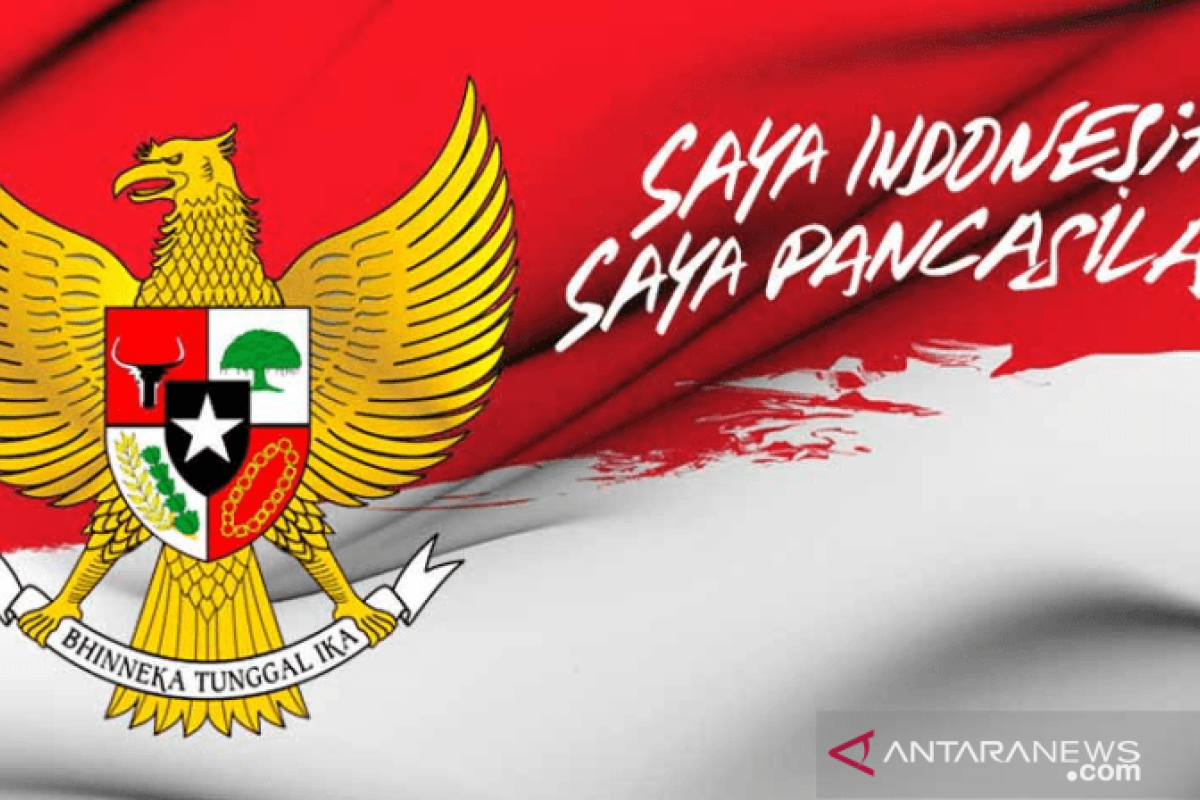
After its eighty-one years of independence, Indonesia’s democracy has undergone major development.
Indonesia experienced Guided Democracy, the centralistic New Order government, and the Reformation, which expanded political freedom significantly.
This long journey raises an important question: has Indonesian democracy found a form that truly reflects the nation’s character?
The question matters because democracy should be more than just the process of electing leaders.
Democracy also encompasses how power is used, how citizens’ voices are heard, how vulnerable groups are given a voice, and how political decisions uphold justice.
The Reformation has indeed broadened political participation, but it has also brought political practice closer to liberalization. High political costs, transactional politics, the influence of financiers, corruption, and the weakening of deliberation are seen as symptoms that warrant evaluation.
Direct democracy has also brought important advances that should not be overlooked. The public has gained greater rights to determine their leaders, along with larger freedom of expression, transparent transfer of power, and stronger societal control for public officials.
Therefore, the question is not whether to choose democracy or Pancasila, but how to make democracy more reflective of Pancasila values.
Pancasila was born and positioned as a value extracted from the lives of the people of the country.
Mutual cooperation, kinship, religiosity, humanity, unity, deliberation, and social justice were then woven into the foundation of national life.
Among these values, the fourth principle holds strong relevance when discussing democracy.
“Democracy Guided by the Inner Wisdom in the Unanimity Arising Out of Deliberations Amongst Representatives” highlights the message on public decisions that are not sufficient simply to obtain a majority of votes. Democracy also requires wisdom, dialogue, and a willingness to find common ground.
Deliberation does not mean eliminating voting. In a modern society with over 280 million people, voting remains necessary in many circumstances.
However, democracy will lose its depth when all issues are translated into who wins and who loses.
Hybrid System
In its development, a hybrid system may be worth considering in Indonesia. This system introduces representation through elections and group and regional representation.
In its concept, the People’s Consultative Assembly (MPR) is re-positioned as the highest institution, with elements from political parties, regional representatives, and group representatives.
Groups such as farmers, fishermen, laborers, teachers, religious leaders, and others are expected to receive more concrete representation.
Therefore, it is time to revive the State Policy Guide Lines (GBHN) as a long-term development framework that remains consistent despite changes in government.
Indonesia’s long-term agenda should focus on two key challenges: escaping the middle-income trap and achieving equitable development.
The proposal also presents challenges. Group-based representation raises concerns over who should choose representatives, how they remain accountable to the public, and how to ensure the system does not create another channel for elites.
Restoring the MPR as the highest institution or changing the regional head election mechanism also requires constitutional review and in-depth public debate.
The value of this idea extends beyond its institutional structure. At its core, it calls for a democracy that does not leave behind groups unable to compete effectively in elections.
A farmer in a remote area, a fisherman on a small island, a factory worker, a micro, small, and medium enterprise (MSME) owner, or an indigenous community may have the same number of votes at the polls.
However, their ability to influence the policy process is not necessarily the same as a group with capital, networks, media access, and proximity to the center of power.
The true test of democracy comes after the election. Another related issue is the interconnectedness of Pancasila democracy and economic life. It is important to constantly remember Article 33 of the 1945 Constitution, which emphasizes cooperatives, MSMEs, the people’s economy, and the principle of family.
The current condition presents an overly free market that resulting in economic concentration, with small chances of small businesses to compete with large capitalists.
This is particularly relevant when economic and political democracy are viewed together. While the right to vote is fundamental, citizenship also depends on access to education, jobs, decent living conditions, and fair economic opportunities.
Resetting Indonesia
Democracy struggles to thrive in conditions of widening inequality. Therefore, the proposed idea of resetting Indonesia should not be interpreted as an invitation to erase all the achievements of the Reformation.
Instead, the country needs to safeguard civil liberties, the rule of law, peaceful transfer of power, freedom of the press, and the people’s right to elect and oversee their leaders.
Weaknesses, including high-cost politics, corruption, oligarchy, identity politics, weak substantive representation, and policies that sometimes stray too far from the needs of the people, must be addressed.
Indonesia’s historical experience shows that any political system can pose risks when power is not properly checked. Guided Democracy demonstrated the consequences of excessive power concentration.
Meanwhile, the New Order brought stability and development, but also left a record of restrictions on political freedom. The Reformation opened up broad participation, but encountered the high cost of political contestation and transactions.
No previous model needs to be adopted in full. The key is to have the courage to take the best lessons from Indonesia’s historical experience.
The rise of regional discontent and economic inequality, along with the risk of disintegration, should also serve as a warning that development must be inclusive.
Indonesia has long experience managing diversity of regions, ethnicities, religions, and interests. Therefore, unity cannot be maintained simply through slogans; it requires justice for all people.
As we approach Golden Indonesia 2045, discussions about Pancasila should move beyond nostalgia and ceremony.
Pancasila must be present when budgets are prepared, when laws are enforced, when natural resources are managed, when MSMEs confront large market forces, when local communities demand to be heard, and when leaders make decisions.
The essence of Pancasila democracy is not a return to the past, but a search for a better future. Democracy should not only be vibrant during elections, but should ensure that people have a voice in the nation’s decisions.
Democracy should go beyond counting votes to hearing the people’s voices. It should also balance individual freedom with national unity.
This may capture the deeper meaning of the fourth principle: democracy is strongest when collective decisions bring people together rather than simply allowing one group to defeat another.
If Pancasila is truly to become our shared home, the task of today’s generation is not simply to memorize the five principles, but to put them into practice in politics, the economy, law, and everyday life.
Ultimately, a strong democracy goes beyond elections. It ensures that every citizen is heard, respected, and given an equal place in shaping the nation.
*) Dr. Taufan Hunneman is an alumnus of the National Values Strengthening Program (PPNK) 74 of the National Resilience Institute (Lemhannas RI).
Related news: Pancasila must guide national development: President Prabowo
Related news: Pancasila born from commitment to national unity: Prabowo
Related news: President chairs Pancasila Day ceremony in Central Jakarta
Translator: Dr Taufan Hunneman*), Resinta S