
Shanxi Hosts Global Dialogue on Cultural Heritage Preservation
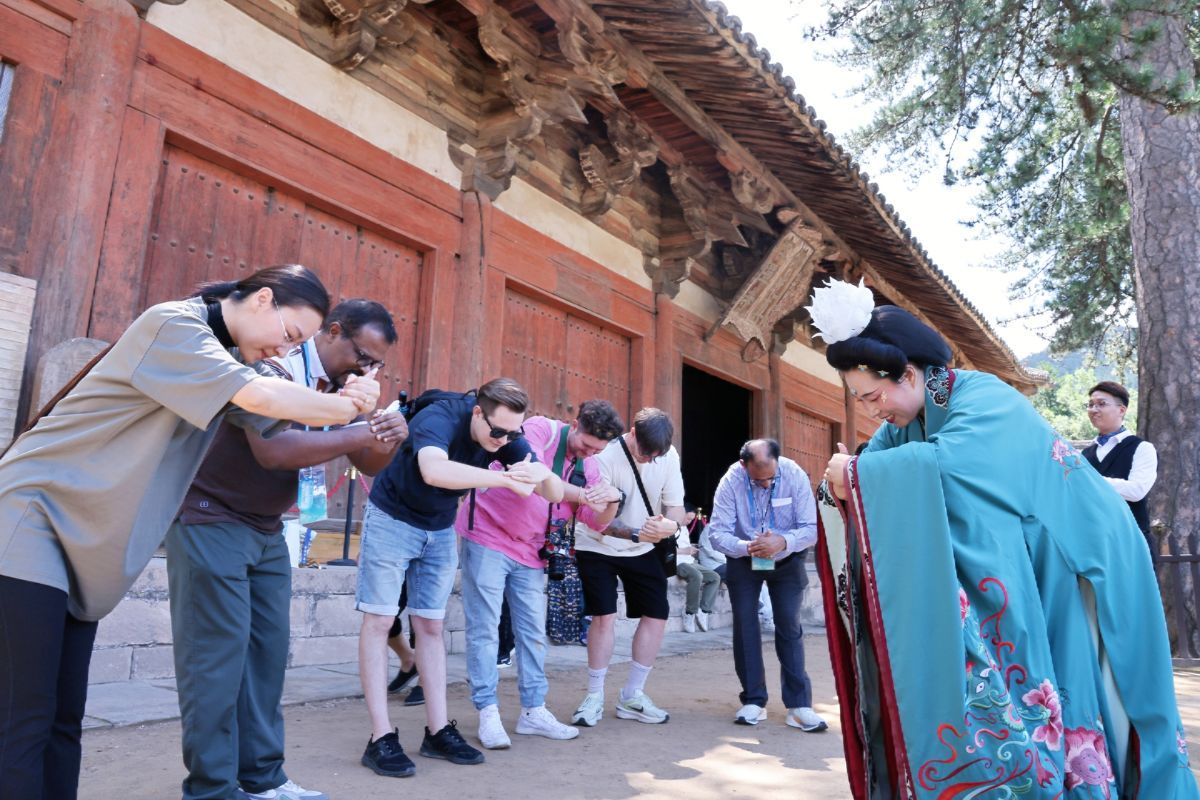
Themed ‘Unity for Prosperity, Heritage for Eternity’, the World Cultural Heritage Preservation Week 2026 officially concluded on Tuesday in the ancient city of Yuci, Jinzhong, Shanxi province. The event served as a significant moment to strengthen global dialogue and cultural exchange.
It brought together ambassadors, international academics, cultural heritage preservation experts, and young creators from various countries to foster cross-cultural communication and collaboration. The programme included an opening session, a light sculpture performance, interactive intangible cultural heritage experiences, and three thematic forums. Discussions addressed the challenges of heritage preservation amidst globalisation and digital transformation, the role of youth in ensuring the sustainability of cultural heritage, and various innovative approaches to expanding cross-border cultural promotion.
Shanxi is renowned as one of the provinces with the most complete cultural heritage resources in China. The region is home to three surviving wooden structures from the Tang Dynasty (618–907), 518 ancient wooden buildings dating from the Yuan Dynasty (1271–1368) and earlier, and 531 major historical and cultural sites protected at the national level.
In his opening remarks, Md. Nazmul Islam, Ambassador of Bangladesh to China, described Shanxi as one of the birthplaces of Chinese civilisation. He noted that historical sites such as the Yungang Grottoes are not only part of China’s cultural heritage but also a spiritual legacy belonging to all of humanity. Evandro Menezes de Carvalho, Professor of International Law at Fluminense Federal University in Brazil, echoed this sentiment, observing that ancient temples, traditional villages, and wooden pagodas that have stood for thousands of years bear witness to a long journey of civilisation, while cultural traditions that continue to thrive remain part of the daily lives of local communities.
As a key supporting programme, the organisers also held a tour titled ‘Discovering Shanxi’s Ancient Chinese Architecture – A Visual Journey Through Cultural Heritage’. The tour retraced the historic 1937 discovery of Tang Dynasty wooden architecture by Chinese scholars. Participants followed the historical trail through well-preserved relics, including Tang Dynasty stone pillars, interior murals, and inscriptions on supporting beams, reconstructing a significant milestone in the history of Chinese architectural archaeology.
The use of digital technology was another highlight of the event. At the Yingxian Wooden Pagoda, visitors were able to explore the historic structure virtually through an immersive digital exhibition. This experience allowed them to closely examine the dougong construction—a traditional wooden bracket system built without nails—as well as the well-preserved painted statues from the Liao Dynasty (916–1125). Mian Abrar Hussain, a senior journalist for Pakistan Today, remarked that China’s use of virtual reality and immersive digital tools positions it as a pioneer in heritage preservation and presentation models that can be applied in other countries. He considered this approach a valuable reference for the international community in developing cultural heritage preservation efforts.