
Shangri-La Dialogue Addresses Rising Security Challenges in Asia-Pacific
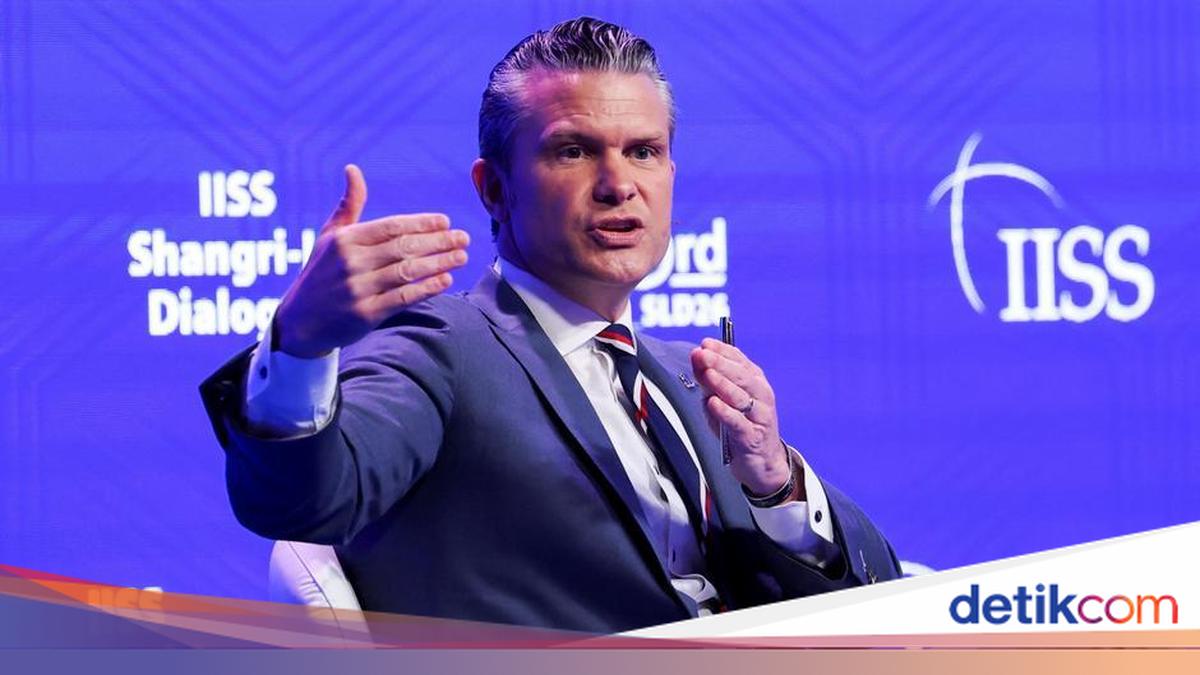
Defence ministers, military officials, and security experts from around the world gathered at the Shangri-La Dialogue (SLD) in Singapore last weekend to discuss security situations in the Asia-Pacific region. The conference has been held annually since 2002 by the International Institute for Strategic Studies (IISS), a London-based organisation.
What were the main points of this year’s conference?
- Security situation deteriorating
A week before the 2026 Shangri-La Dialogue began in Singapore, Singaporean Prime Minister Lawrence Wong stated, “In reality, in this changed world, we will face more uncertainty. We will face challenge after challenge.” Several conflicts in the Asia-Pacific region have intensified in recent times. In May 2025, a brief war occurred between India and Pakistan. The conflict between Thailand and Cambodia also concluded in December 2025. In February 2026, repeated clashes between Pakistan and Afghanistan escalated following Islamabad’s air strikes. The civil war in Myanmar continues, while tensions in the South China Sea (SCS) persist. Taiwan, a focal point for regional security issues, remains in a state of high uncertainty.
However, the increasingly sharp rivalry between the United States (US) and China became a key focus. China’s rapid military expansion is seen as altering the power balance in the Asia-Pacific region.
In the SLD’s annual security report, IISS Senior Research Fellow for Southeast Asian Security and Defence, Evan A. Laksmana, wrote: “Countries in the Asia-Pacific, whether large, medium, or small, cannot avoid the deteriorating security environment.”
Vietnam’s President and General Secretary of the Communist Party, To Lam, delivered the keynote speech at the conference’s opening on Friday, 29 May. He emphasised that competition between nations is natural but must be managed properly. “The key principle is to manage differences within a legal framework, ensuring competition remains limited, responsible, and predictable. A sustainable regional order cannot be built on perpetual fear or mutual distrust.”
To Lam also stressed that development and security are interlinked. “For many countries, development is as important as security.”
Australian Deputy Prime Minister and Defence Minister Richard Marles echoed this view, stating, “Security cannot be separated from development. When societies prosper and human development progresses, it contributes to stability and peace. Conversely, when these are threatened, unrest and instability emerge.”
- Defence budgets increasing
Despite development being highlighted as crucial for stability, the Shangri-La Dialogue focused heavily on military strengthening. According to the Stockholm International Peace Research Institute (SIPRI), defence spending in the Asia-Pacific rose 8.1% in 2025 to $68.1 billion (approximately £55.5 billion or Rp 12.1 trillion).
US Defence Secretary Pete Hegseth deemed the figures insufficient. In his speech on Saturday, 30 May, Hegseth announced the US would allocate $1.5 trillion (£1.2 trillion or Rp 26.7 trillion) for defence. He urged US allies in Asia to increase investments to bolster their own security.
“The balance of power can only be maintained with allies possessing sufficient military strength, industrial capacity, and political will. Regional security has long relied too heavily on US military power, while many allies and partners have neglected strengthening their own defence capabilities,” he said.
Hegseth specifically praised South Korea, the Philippines, Australia, Singapore, Malaysia, Thailand, Vietnam, and India, stating these nations understand that peace requires robust defence capabilities, unlike some European countries. He reiterated this message multiple times.
The German delegation remained calm in response to US criticism. State Secretary for Defence Nils Hilmer noted the region faces challenges similar to Europe—capacity constraints. Since constitutional amendments, Germany now has adequate funding.
“For the first time in years, the Bundeswehr is receiving the funds we need, and our most critical task now is to acquire the right equipment at the right time and in the right quantities,” he said.
The notion that more weapons do not automatically equate to greater safety and peace received little attention at the SLD. Only International Red Cross Committee President Mirjana Spoljaric voiced concerns: “Where weapons are produced, they will ultimately be used. Massive arms flows, production, and defence investments will inevitably cause casualties and material losses. That is why we must consider the implications of war from the outset, from day one, when drafting defence budgets.”
- Taiwan’s uncertainty
During his speech this year, Hegseth made no mention of Taiwan. Beijing regards the self-governing island as a “rebellious province” and does not rule out using military force to achieve “reunification.”
In last year’s SLD speech, Hegseth warned that “communist China” may be closer to taking military action against Taiwan, stating such moves would bring