
Shallow volcanic earthquakes at Mount Awu rise to 41 per day
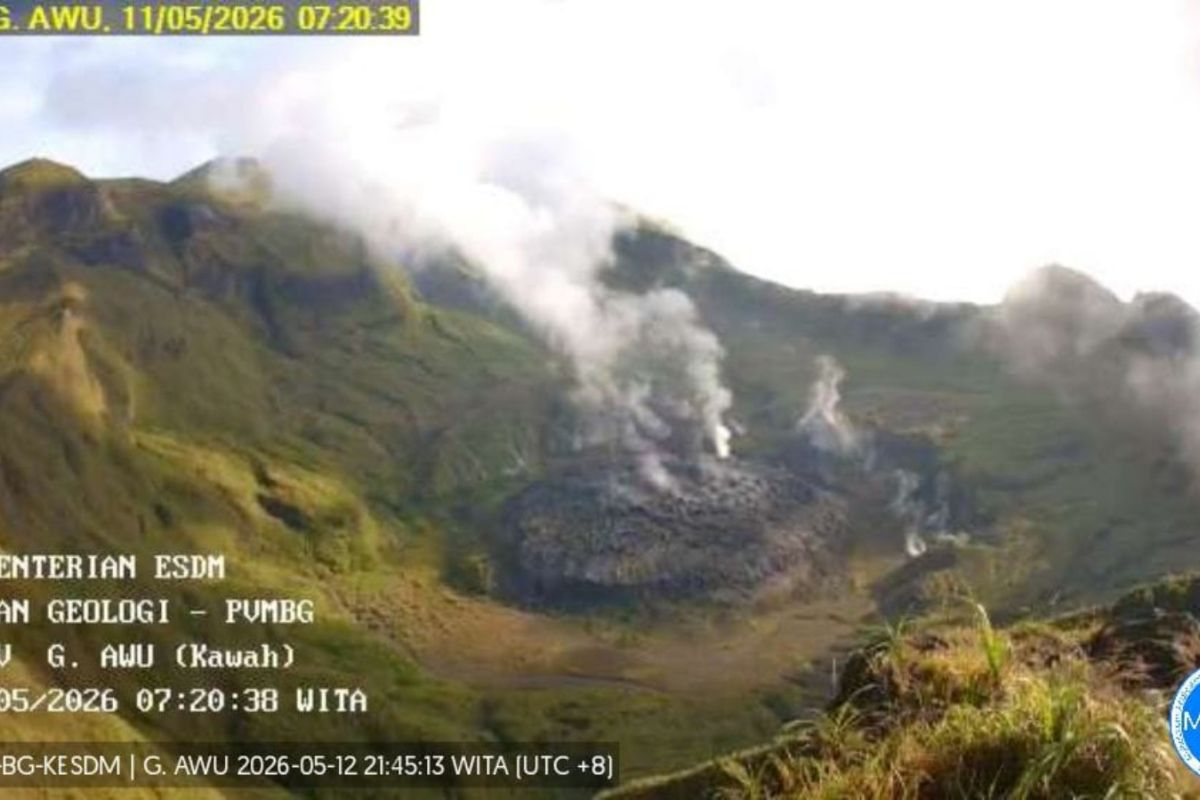
The condition of shallow volcanic earthquakes has increased compared to previous periods. The Ministry of Energy and Mineral Resources (ESDM) reported that shallow volcanic earthquakes at Mount Awu in Sangihe Islands Regency, North Sulawesi, rose to 41 per day during the observation period of 16-22 May 2026. “Shallow volcanic earthquake conditions have increased compared to previous periods, with the average rising from 29 to 41 events per day,” said Acting Head of the Geological Agency Lana Saria in the evaluation of Mount Awu’s activity received in Manado on Thursday. During this period, 291 shallow volcanic earthquakes (VB), 19 deep volcanic earthquakes (VA), one felt earthquake with MMI scale I, and 191 remote tectonic earthquakes (TJ) were recorded. Based on the evaluation, visual observations of Mount Awu’s crater have not shown significant changes since early July 2024. No steam emissions were observed from the PGA Awu post during this period, indicating that steam activity remains confined within the crater and has not increased compared to previous periods. A series of shallow and deep volcanic earthquakes (Spasmodic Burst) were recorded, particularly on 19 May 2026. This indicates magmatic activity at Mount Awu has caused increased shallow pressure, potentially leading to lava dome collapse. A sudden increase in seismic activity (volcanic swarm) or rise in ‘Low Frequency’ earthquakes should be monitored closely in the coming days, especially given the high regional tectonic activity around North Sulawesi and Maluku. Potential hazards include explosive magmatic eruptions producing incandescent material and/or pyroclastic flows, effusive magmatic eruptions generating lava flows, or phreatic eruptions dominated by volcanic gases or previous eruption materials. Other hazards include volcanic gas emissions which could be life-threatening if inhaled concentrations exceed safe thresholds. Based on comprehensive analysis and evaluation up to 22 May 2026, Mount Awu’s activity level remains at Level III (Caution) with recommendations adjusted to current threat potentials. The Ministry of Energy and Mineral Resources (ESDM) advises the public and visitors to avoid entering and engaging in activities within a four-kilometre radius of Mount Awu’s crater centre. The public is also urged to comply with recommendations issued by the Geological Agency through the Center for Volcanology and Geological Hazard Mitigation, avoid spreading unverified and irresponsible news about Mount Awu’s activity, and follow guidance from authorised agencies, including the Geological Agency which continues to coordinate with BNPB, BMKG, ministries, local governments, and other relevant institutions.