
Shallot Prices Drop, Farmers in Pidie, Aceh Choose to Delay Harvest
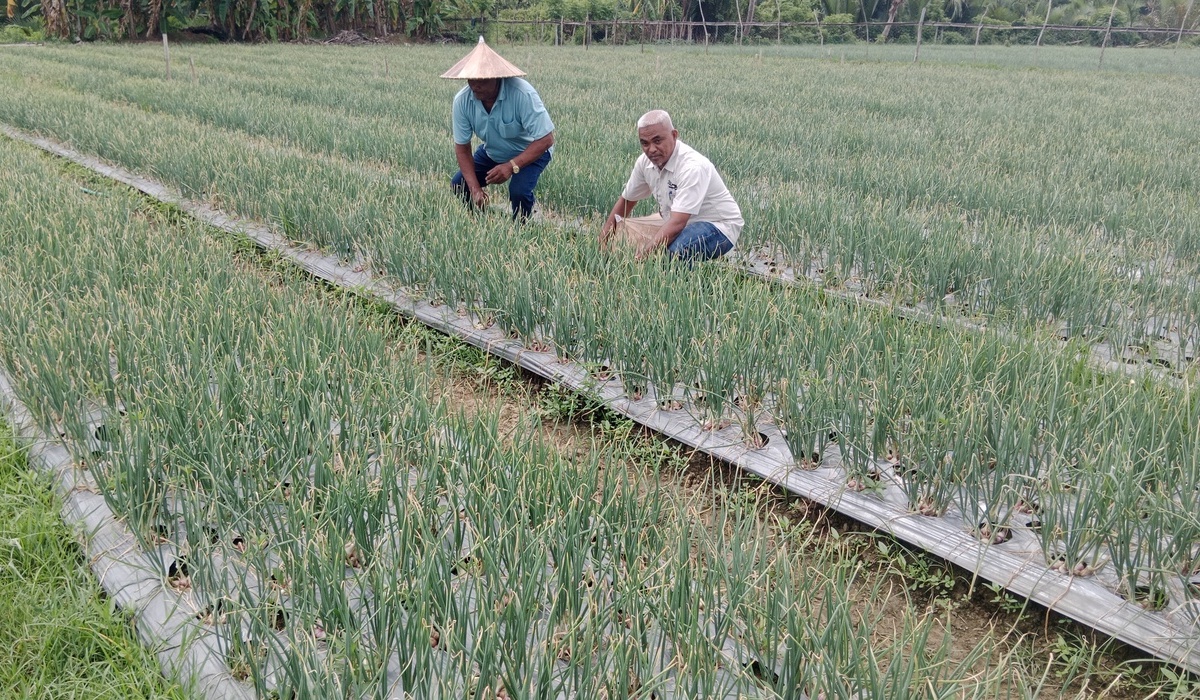
Shallot farmers in Pidie Regency, Aceh Province, have been forced to take steps to delay their harvest period. This decision follows a recent slump in the selling price of harvested dried shallots at the farmer level.
Based on field observations over the last three days, particularly in the Simpang Tiga District, dozens of hectares of shallot fields have not yet been harvested by their owners despite reaching the harvest season. Technically, the crops are between 5_2 to 60 days old, which is the ideal age for harvesting.
“It should be harvestable. Usually, at 60 days, we harvest immediately. But this time, I am not harvesting yet because prices are currently low,” said Muhammad Abubakar, the Imum Mukim (traditional leader) of Gigieng, on Thursday.
Muhammad explained that he plans to extend the harvest time until the plants reach 70 days. This strategy is implemented in the hope that prices will improve in the future. Additionally, the delay aims to ensure the shallot bulbs become denser and fuller, thereby increasing their quality for sale.
Currently, the selling price for top-quality shallots at the farmer level to collectors stands at Rp24,000 per kg. This figure represents a significant drop compared to last month, which reached Rp35,000 per kg. A similar condition applies to standard-quality shallots; prices that usually reach Rp28,000 per kg have plummeted to Rp20,000 per kg. Farmers are desperately hoping this downward trend ends soon and prices stabilise at a profitable level.
Regarding this situation, farmers are urging the local government and relevant agencies to intervene and control market prices. Oversight is considered crucial to protect farmers from potential price manipulation by market syndicates that often exploit harvest periods.
The Head of Programme and Finance at the Simpang Tiga District Office, Mustamar Atifina, revealed that the region possesses significant potential for shallot cultivation, covering approximately 200 hectares. Most of this land consists of paddy fields repurposed for shallot planting during the second planting season (musim gadu).
“This is a downstream area, making it difficult to obtain water from technical irrigation sources. Therefore, residents prefer planting shallots. Besides the usually promising prices, the harvest age is much faster compared to rice,” explained Mustante.
Delaying the harvest has become a dilemma for farmers in Pidie as they attempt to maintain the economic value of the region’s flagship commodity amidst market price fluctuations.