
Shallot Prices Begin to Rise, Spreading to 159 Regions Across Indonesia
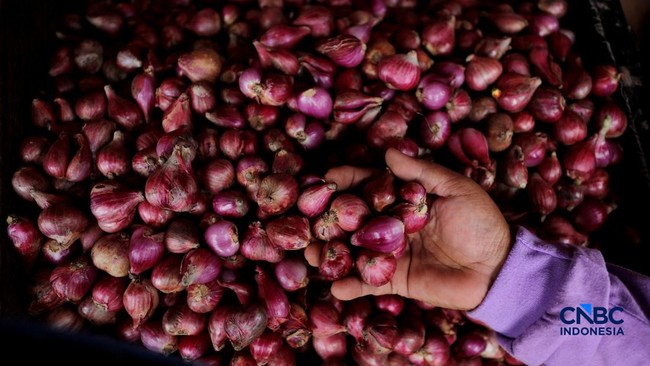
Jakarta — Shallot prices are beginning to rise. Statistics Indonesia (BPS) recorded a national average of Rp35,475 per kilogram in the first week of November 2026, up 0.73% from October 2026.
Nevertheless, the national shallot price remains below the Reference Selling Price (HAP). Prices have, however, started to rise in a number of areas.
According to BPS data, 159 regencies and cities recorded an increase in the Shallot Price Development Index (IPH) in the first week of November 2026. This was up from 109 regencies and cities the previous week.
The shallot price situation has drawn the government’s attention, particularly as it seeks to ensure supplies and distribution remain stable amid differing production conditions between regions.
Data from the Ministry of Agriculture indicate that Indonesia’s shallot balance is expected to record a surplus of 24,827 tonnes in November 2026.
This figure is based on forecast production of 88,213 tonnes in November, plus 48,511 tonnes of carry-over stocks from the previous month. National demand for shallots is estimated at 103,650 tonnes.
Overall, the country’s shallot supplies are therefore considered sufficient.
“Cumulative production and availability in November are sufficient,” said Sudi Mardianto, the ministry’s Director of Vegetables and Medicinal Plants.
Despite the national surplus, supplies are uneven across the country. The shallot balance map shows that a number of areas, particularly those outside the main production centres, are still facing production deficits.
The ministry is preparing several measures to safeguard supplies. In the short term, the government is encouraging local agencies, together with agricultural extension workers, to collect data on planted area, harvested area and production.
Local governments have also been asked to coordinate with the River Basin Organisation (BBWS) on water management during the September–October planting season, when water shortages are a risk.
In the medium and long term, the government will encourage an expansion of additional planting areas, particularly in regions with production deficits.
“Expanding additional planting areas in deficit regions,” he said.
Alongside maintaining production, the government has highlighted the importance of distributing shallots from production centres to areas experiencing shortages.
Price monitoring at 20 Shallot Champion locations on 7 November 2026 found that farm-gate prices ranged from Rp13,000 to Rp27,000 per kilogram. Market prices ranged from Rp15,000 to Rp34,000 per kilogram.
The highest market prices were recorded in Bima Regency, at Rp30,000–Rp34,000 per kilogram, followed by Solok Regency at Rp30,000–Rp32,000 and Malang Regency at Rp32,000 per kilogram.
The price differences underscore the need to strengthen distribution so that surplus supplies in production centres can help meet the needs of areas facing deficits.
Source: jawawa.id (https://jawawa.id/newsitem/shallot-prices-begin-to-rise-spreading-to-159-regions-across-indonesia-1794228632)
Originally published by CNBC Indonesia (https://www.cnbcindonesia.com/news/20261109172430-4-783664/harga-bawang-merah-mulai-naik-terus-menular-sampai-ke-159-wilayah-ri), translated from Indonesian