
Shadow Cabinet More a Political Symbol Than a Solution
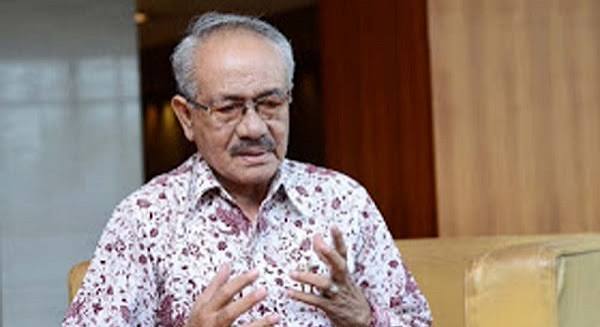
Intelligence and geopolitics analyst Amir Hamzah has launched a sharp critique against the formation of a Shadow Cabinet announced by a civil society coalition in July 2026. According to him, the cabinet’s existence lacks political legitimacy and a mandate from the people, rendering it nothing more than a political spectacle that brings no tangible benefit. Amir Hamzah assessed that the shadow cabinet would only become a public laughing stock because it has no constitutional authority to run a government. “The existence of the shadow cabinet is like a clown. It is just a laughing stock. They do not have legitimacy from the people and have no authority to determine the direction of state policy,” Amir said on Tuesday (28/7/2027). He stressed that within Indonesia’s constitutional system, the legitimate government is the one resulting from a general election that obtains a direct mandate from the people. Therefore, according to him, all national programmes remain the responsibility of the Red and White Cabinet under the administration of President Prabowo Subianto. Amir noted that the public is now paying more attention to the realisation of government programmes that address the people’s needs rather than symbolic political manoeuvres. “The people trust the Red and White Cabinet more, which is working to realise programmes for the public interest, than forming a rival cabinet that has no constitutional basis,” he stated. Furthermore, Amir reminded the initiators of the Shadow Cabinet that they should consider the political and historical impact of such a move. “They should be ashamed before their grandchildren. In the historical record, they will be remembered as part of a shadow cabinet that had no popular mandate. Politics should offer solutions, not just a stage for image-building,” he asserted. As is known, the Shadow Cabinet formed by the civil society coalition was announced in July 2026, appointing Feri Amsari as Minister of State Secretary and involving a number of academics and professionals to fill various ministerial positions. The group stated the shadow cabinet was formed as a means of oversight and to deliver policy alternatives to the current government. However, according to Amir Hamzah, criticism of the government would be more valuable if conveyed through constructive, idea-based democratic mechanisms, rather than through the formation of a structure he considers to lack political and constitutional legitimacy.