
SGIE Ranking Drops: Indonesia's Halal Industry Needs to Strengthen Production Side
The decline in Indonesia’s position in the State of the Global Islamic Economy (SGIE) Report 2025/2026 serves as a vital reminder of the need to strengthen the production capacity of the national halal industry. Despite the vast size of the domestic Muslim market, Indonesia is assessed to need more focus on strengthening the supply side to reap greater economic benefits.
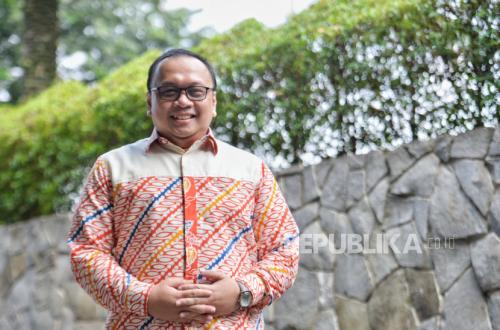
Professor of Sharia Economics at IPB University, Irfan Syaucmd Beik, stated that Indonesia’s drop from third to fourth place in the Global Islamic Economy Indicator (GIEI) should not be viewed with excessive alarm. According to him, the priority should be building the competitiveness of the national halal industry.
“Regarding the ranking, I believe we should not worry too much. The most important thing is the production side. We have been discussing market size, but the parties enjoying the greatest profits are actually the producers,” Irfan told Republika on Wednesday (3/6/2026).
In the SGIE 2025/2026, Indonesia currently sits below Malaysia, the United Arab Emirates, and Saudi Arabia. Nevertheless, Indonesia still holds the first rank globally in the modest fashion sector, third in halal food and media-recreation, and fourth in halal pharmaceuticals and cosmetics.
According to Irfan, having the world’s largest Muslim population makes Indonesia a highly potential market. However, much of the economic opportunity from the global halal industry is still being enjoyed by other nations with stronger production capacities. He noted that a large portion of the world’s halal food production comes from countries with Muslim minority populations, and the global halal meat supply is dominated by Brazil, Australia, and New Zealand.
“We are large, yes, but in terms of consumption. Meanwhile, those reaping the largest profits are those on the supply or production side,” he added.
Therefore, Irfan believes that the development of the halal industry should be directed towards strengthening production, exports, and the national halal value chain. Such steps could serve as a new source of economic growth amidst the global economic slowdown. He added that strengthening institutions and policy implementation are crucial factors in accelerating the development of the national Sharia economy.
Previously, the Director of Sharia Ecosystem Infrastructure at KNEKS, Sutan Emir Hidayat, explained that Indonesia’s ranking decline was influenced by the weakening positions of several sectors, including Muslim-Friendly Travel, which fell out of the global top five, and halal pharmaceuticals, which dropped from second to fourth place.
Professor of Sharia Accounting at Tazkia University, Murniati Mukhlisin, assessed that the SGIE results show Indonesia still possesses a strong foundation in the halal economy. However, strengthening the supply chain, logistics, and financing is still required for Indonesia to enhance its competitiveness in the global halal market.