
Sexual Abuse Cases Continue at Central Java Islamic Boarding Schools, Licensing Under Scrutiny
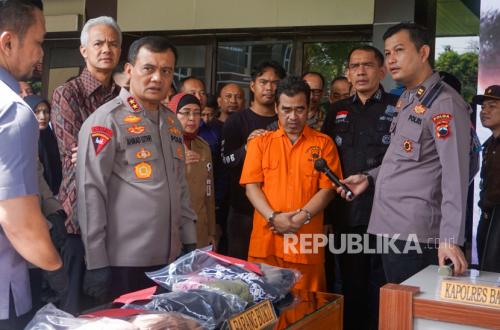
SEMARANG — Abdul Wachid, deputy chair of Commission VIII of the House of Representatives (DPR), wants the issuance of operational permits for Islamic boarding schools, or pesantren, to be tightened. His comments come amid a spate of sexual violence cases involving pesantren caretakers, particularly in Central Java.
“We will also tighten the process for issuing permits to Islamic boarding schools at the ministry. To be frank, sometimes these permits are misused,” Wachid said in an interview at the Central Java Provincial Government Office on Friday (9 October 2026), when asked about a series of sexual violence cases at pesantren in several parts of the province.
He said he had followed a sexual violence case at a pesantren in Pati regency, referring to the case at Ndholo Kusumo Islamic boarding school. Wachid said that when the case came to light, he called the regent and the Pati police chief.
“I even contacted the Pati regent directly, and I called the police chief: ‘Please take action over the alleged sexual violence. Secure the child, but the teacher or kiai must also face action,’” Wachid said.
Wachid also suggested that the pesantren in Pati should be closed. In response to sexual violence cases at boarding schools, he said caretakers should be certified. “Ustaz and kiai should be certified. Otherwise, it could be dangerous,” he said.
The Ministry of Religious Affairs has tightened the issuance of operational permits for pesantren in Central Java following a series of sexual violence cases at boarding schools across the province in 2026.
Moch Fatkhuronji, head of the Islamic Education and Pesantren Division at the ministry’s Central Java regional office, said the ministry had previously focused considerably on the number of permits issued. In response to the abuse cases, however, quality is now the priority.
He said that from May to December 2025, the ministry issued 888 operational permits for pesantren in Central Java. From January to April 2026, the number fell sharply to 41, with stricter requirements including Building Approval (PBG) and a Certificate of Fitness for Use (SLF).
In 2025, the Central Java office issued 125 recommendations for operational permits. So far in 2026, it has submitted only three recommendations.
“The state has an obligation to ensure that institutions receiving official recognition genuinely meet the basic characteristics of a pesantren and are able to guarantee the safety of their students,” Fatkhuronji said during an online briefing on preventing and handling violence in pesantren on Thursday (8 October 2026).
He added that the ministry has set up a complaints channel called “Telepontren” to address violence, including sexual violence, at boarding schools. “Making the ministry’s Telepontren channel more effective is a solution to breaking the culture of silence that has long obstructed the disclosure of abuse cases,” he said.
According to Fatkhuronji, complaints to Telepontren have risen over at least the past three years. The channel received no reports in 2024, while it recorded 26 complaints in 2025. “The channel has responded promptly to 25 complaints between January and September 2026,” he said.
Fatkhuronji said 5,325 pesantren currently hold operational permits, with a combined student population of 815,504.
He acknowledged that some pesantren in Central Java operate without permits. As they are not administratively registered, the regional office cannot determine precisely how many unlicensed schools there are.
Fatkhuronji said several sexual violence cases in Central Java had occurred at unlicensed pesantren. “They call themselves pesantren, when they are only retreats and have no permits; the Ministry of Religious Affairs is the one affected by these cases,” he said.
“Unlicensed pesantren are a shared responsibility, so we are asking local governments to share responsibility by reporting them to us,” Fatkhuronji added.