
Several National Human Rights Institutions Considered in Need of Merger, Here Are the Reasons
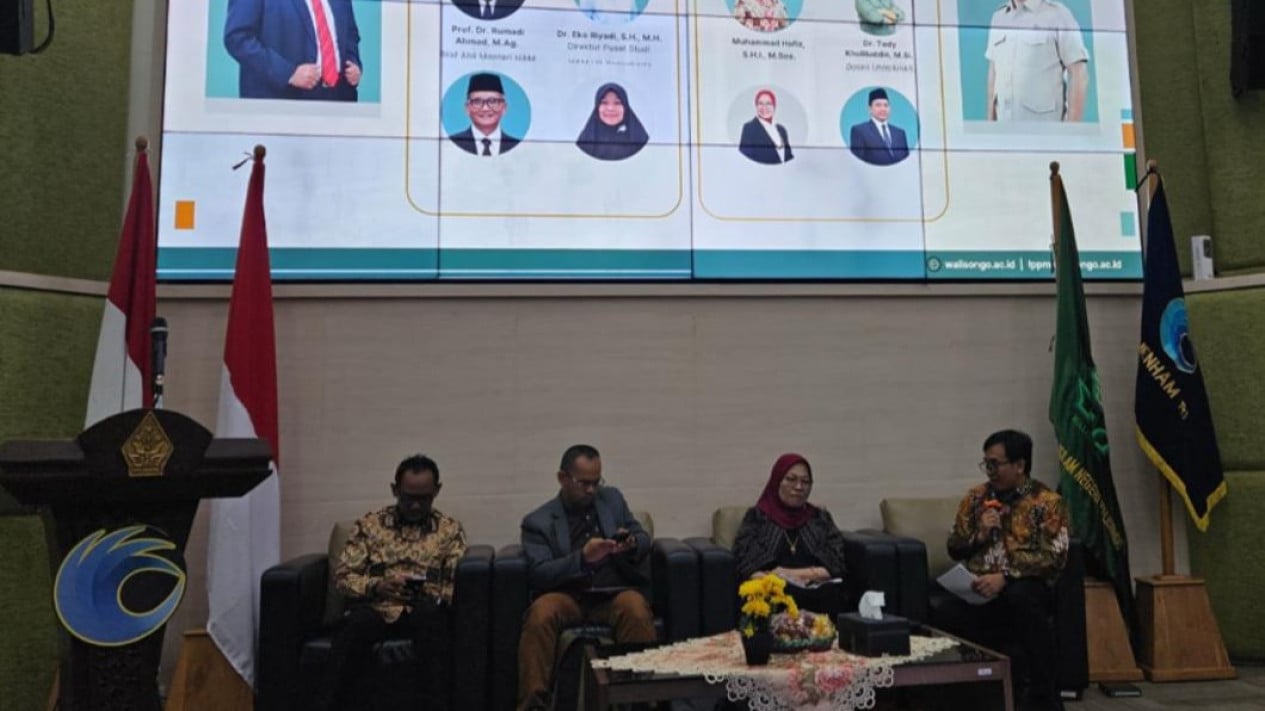
In a Talk Show on Public Scrutiny of the HAM Bill organised by the Ministry of Law and Human Rights, academics emphasised the importance of reforming the national human rights institutional framework, including merging the human rights bodies to be more effective and coordinated. Eko Riyadi, Director of the Centre for Human Rights Studies (PUSHAM) at Universitas Islam Indonesia (UII), highlighted the existence of multiple national human rights institutions (NHRI) that are considered too fragmented. He proposed the idea of merging the various human rights commissions into a single national body, a stance that differs from the HAM Bill draft conceived by the Ministry of Law and Human Rights. According to him, the current condition confuses the public seeking justice. For example, a woman victim with an intellectual disability could be unsure whether to report to Komnas HAM, the National Disability Commission, or the agency for the protection of women and children. ‘The reporting problem becomes uncoordinated and the data has never been truly integrated,’ he said. Meanwhile, Professor of Islamic Legal Sociology at UIN Semarang, Gunaryo, appreciated the Ministry’s move to draft the Bill. He noted that drafting human rights regulation is not easy because it involves many institutional and governance aspects. Gunaryo assessed that the HAM Bill’s substance is actually already quite complete, including the inclusion of issues on human rights and business. However, he also supported merging NHRI bodies so that governance is more efficient. ‘Why not merge? Usually it’s because of funding. Yet there are now hundreds of state bodies with similar functions,’ he said. He believes that merging institutions can still proceed as long as the government’s policy direction is clear and inter-agency coordination is strengthened. He also highlighted that Indonesia still faces significant human rights challenges. In his view, five main issues remain the challenges: the gap between regulation and practice of human rights enforcement, structural injustice, impunity for human rights violations, marginalisation of vulnerable groups, and restrictions on civil liberties due to political interests and the weak independence of institutions.