
Several Figures Gather at Paramadina to Respond to Foreign Media Scrutiny of Economic Conditions
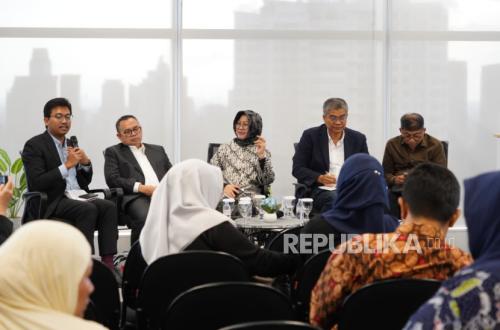
REPUBLIKA.CO.ID, JAKARTA — Strong criticism by international magazine The Economist of the direction of Indonesia’s government has sparked serious anxiety among academics and national economists. In a public discussion at Paramadina University, experts assessed that the foreign media spotlight is not merely a normal critique, but an alarm over the weakening of governance and democracy that is increasingly being treated as normal. They argue that institutional damage is no longer occurring in silence. Symptoms are visible in the way power is exercised, how policies are formulated, and in state oversight bodies that are said to be losing their bite. Rector of Universitas Harkat Negeri, Sudirman Said, said that the rule of law has shifted from the founding ideals of the nation. “The rule of law and the sovereignty of the people that were originally designed as instruments for distributing prosperity,” he said on Friday (22/5/2026), “have now been reduced to electoral tools to seize and retain power.” According to him, in the last decade, state governance has moved from institution-based leadership to personalisation of power. Rules are easily changed, policies flip-flopped, while oversight bodies are gradually weakened for short-term political interests. “All those tactics are solely to win elections,” he added. A similar tone was conveyed by BRIN Senior Researcher, Siti Zuhro. She noted that Indonesian democracy has now lost its soul because inter-institutional monitoring mechanisms hardly function. “Elections are just ‘ethok-ethok’ democracy. The public is forced to accept the elites’ choice, while parties are busy guarding their own power barricades,” said Prof Siti.