
Seven state-owned logistics firms officially merge under one entity
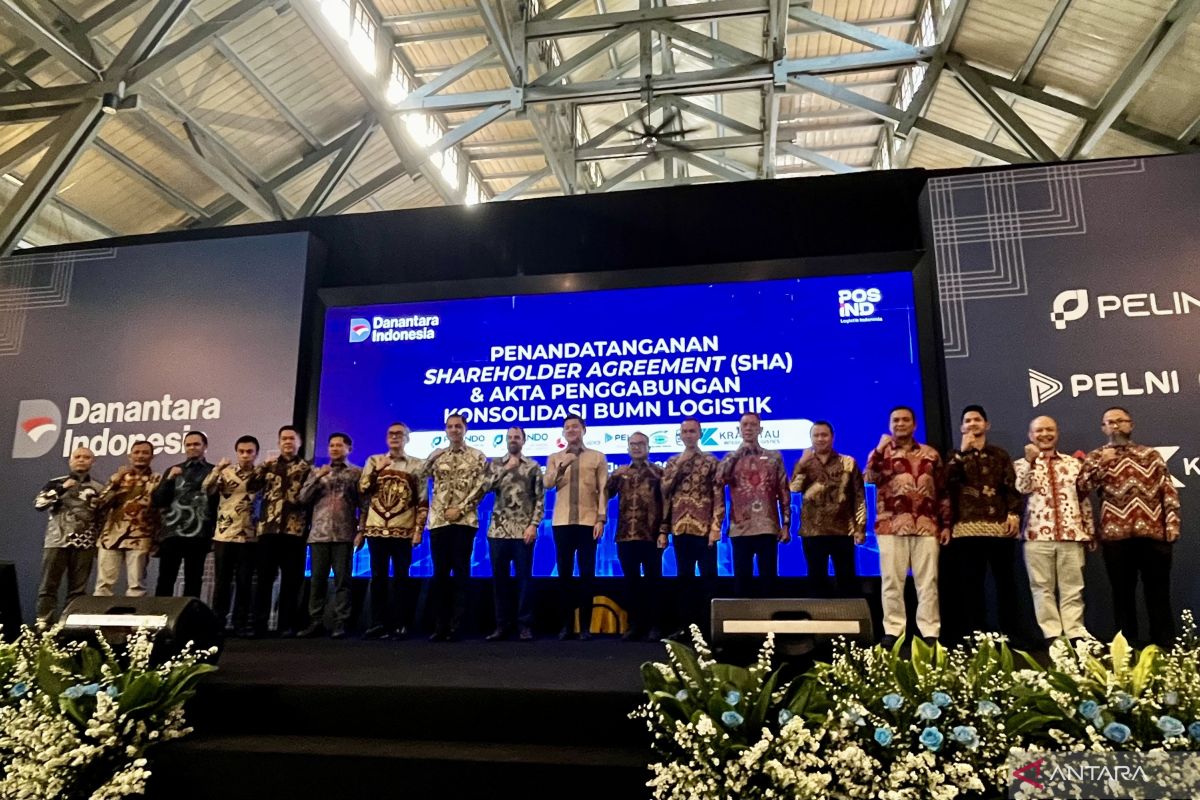
In line with the government’s vision to achieve greater effectiveness and efficiency in the nation’s logistics processes, seven State-Owned Enterprises (BUMN) in the logistics sector have officially merged into one entity. This was formalised through the signing of a Shareholder Agreement (SHA) and a Deed of Consolidation Merger in Jakarta on Tuesday.
Daud Joseph, Chairman of the Steering Committee for the Logistics BUMN Consolidation PMO, stated that PT Multi Terminal Indonesia will act as the surviving entity and serve as the umbrella for the seven companies during the transition period.
The seven logistics companies involved in the merger are Pelindo Sinergi Lokaseva Multiterminal Indonesia, Pelindo Sinergi Lokaseva Prima Indonesia Logistik, Pos Logistics, Pelni Logistics, PT Kawasan Berikat Nusantara (KBN), PT Varia Usaha Dharma Segara (VUDS), and Krakatau Integrated Logistics.
“The surviving entity that will remain is PT Multiterminal Indonesia,” said Daud.
During this transition period, the merged companies will undergo an integration process covering operations, legal, finance, and governance before entering the final transaction stage.
Furthermore, Daud noted that the merger of these seven state-owned logistics companies is the initial step in national logistics consolidation by Danantara Asset Management. The goal is to build a more efficient and integrated logistics ecosystem in Indonesia.
“This is in accordance with the government’s vision and mission to ensure effectiveness and efficiency in the country’s logistics processes. From the BUMN perspective, Danantara wants these seven companies to become one, and the implementation has begun today,” Daud said.
Daud Joseph, who also serves as the President Director of PT Pos Indonesia, expressed hope that the unification of these seven companies would provide direct benefits, allowing the national logistics sector to develop more efficiently.
“The benefit we collectively hope for as a nation is that the consolidated logistics company can possess all the necessary features, so that a single entity can perform various logistics functions,” Daud added.
“From that, efficiency will occur, including more efficient pricing, because we will no longer be dealing with multiple companies,” he concluded.