
Seven Reasons the US Says Indonesia Deserves an 18% Trade Tariff
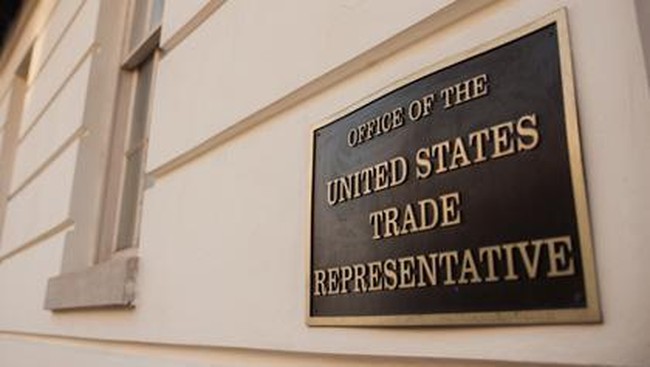
Jakarta, CNBC Indonesia — The Office of the United States Trade Representative (USTR) has formally concluded that various Indonesian policies and manufacturing practices are unreasonable and burden US trade. The findings of its Section 301 investigation provide a strong basis for Washington to impose sanctions or retaliatory trade measures against Indonesia, including tariffs of up to 18%.
In its latest release on Thursday (26 November 2026), the USTR presented the results of an investigation launched on 11 March 2026 into 16 trading partners, including Indonesia. The inquiry followed confidential consultations with the Indonesian government and public hearings. The agency said Indonesia’s manufacturing capacity and output persistently exceeded normal market levels as a result of government intervention.
The investigation report said various Indonesian policies were interrelated, creating structural excess capacity and excessive concentration of production in certain sectors. The USTR’s main reasons for concluding that Indonesia could face sanctions are as follows:
- Aggressive industrial policy and export targets
The USTR said the Indonesian government deliberately pursued export-led growth through coordinated industrial masterplans that deviated from market signals. These policies include the 2015–2035 National Industrial Development Master Plan (RIPIN), the National Medium-Term Development Plan (RPJMN), and the Making Indonesia 4.0 initiative, which provides substantial incentives and develops industrial estates to boost exports.
As a result of this intervention, manufacturing accounted for an average of 19.7% of Indonesia’s gross domestic product (GDP) between 2021 and 2025, almost twice the US average of 9.9%. Goods exports accounted for an average of 19.8% of Indonesia’s GDP, nearly three times the US average of 7.1%.
- Low wages, weak labour rules and alleged forced labour
Washington accused Indonesia of artificially suppressing labour costs through weak employment laws and enforcement. The USTR cited strict limits on collective bargaining and the right to strike, widespread outsourcing, minimum-wage exemptions for labour-intensive industries and small and medium-sized enterprises, limited social security, and tolerance of forced labour practices in nickel industrial estates, most of which are owned by Chinese companies.
The report said workers’ compensation in Indonesia’s manufacturing sector averaged just 10.9% in 2021 and 2022, far below the US average of 45.7%, or about 76% lower. Low wages also kept Indonesian household consumption at an average of 54.7% of GDP, more than 12 percentage points below the US level, leaving Indonesian manufacturers to send their output to export markets.
- Inflows of Chinese investment and raw-material imports
The USTR highlighted what it called Indonesia’s failure to restrict foreign direct investment (FDI) and imports of low-cost raw materials from non-market economies (NMEs), particularly China. Between 2000 and 2023, China provided about US$69.6 billion (Rp1,270.2 trillion) in development finance and around US$94.1 billion (Rp1,717.33 trillion) in private investment for more than 400 projects in Indonesia. These included projects in nine Chinese overseas economic zones, such as the US$11.6 billion (Rp211.7 trillion) Rempang Eco-City industrial estate.
“Investment from Chinese companies is enormously significant, representing a quarter of new foreign capital expenditure,” the report said, quoting AidData.
On trade, Indonesia’s imports of semi-finished inputs from China rose by 116%, or US$26 billion (Rp474.5 trillion), between 2017 and 2025. China’s share increased from 22% to 32%, while imports of inputs from all NMEs rose by US$29 billion (Rp529.25 trillion). The USTR said reliance on free-trade agreements such as ACFTA and RCEP meant that Chinese value-added content in Indonesian manufactured exports to the US reached 9.6% in 2024, five times the Chinese content in US exports.
- Financial repression and requirements to retain export proceeds
The USTR also cited financial repression as a reason for its negative assessment of Indonesia. It said the government and financial authorities restricted non-residents’ access to financing through bans on rupiah derivatives transactions, limits on foreign-exchange transactions and caps on rupiah transfers overseas, directing credit and capital towards domestic producers.
The USTR also highlighted the natural-resources export-proceeds (DHE) policy, which in 2023 required exporters to retain 30% of proceeds for three months on exports worth more than US$250,000 (Rp4.56 billion). Government Regulation No. 8 of 2025 subsequently tightened the requirement, mandating that 100% of export proceeds be held for 12 months. The USTR said the measure tied up liquidity in the domestic financial system to finance the expansion of production capacity.
- Nickel downstreaming and textile-sector dominance
At sector level, the USTR strongly criticised the 2009 Mining Law, the ban on exports of unprocessed mineral ore, and downstreaming policies, which it said had led to excessive concentration in metal refining. These policies increased the value of Indonesia’s nickel exports from Rp17 trillion to Rp510 trillion and gave the country more than 45% of global refined nickel production in 2025. Chinese entities control three-quarters of its refining capacity.
“We want to benefit from value-added exports so that the country earns revenue through taxes and new job opportunities,” former Indonesian president Joko Widodo was quoted as saying in the USTR report. “We do not just want to build batteries. This is only half the story. We want to build electric cars in Indonesia.”
The USTR said an influx of low-cost nickel supported by China had nearly halved global nickel prices between 2022 and 2025, forcing mines in Australia and New Caledonia to close, even though Indonesia cut mining quotas by about 30% in February 2026. The report also scrutinised the textile and garment sector, citing tax incentives, bonded zones allowing duty-free imports of US$6.1 billion (Rp111.33 trillion) in Chinese raw materials in 2025, and plans announced in January 2026 for a new state-owned textile company worth US$6 billion (Rp109.5 trillion). It noted that 48.6% of Indonesia’s garment exports depend on the US market.
- Large trade surpluses and harm to US industry
The USTR said Indonesia’s alleged trade-distorting practices directly burden US trade through persistent trade deficits. From 2021 to 2025, Indonesia recorded an average annual global goods trade surplus of US$41 billion (Rp748.25 trillion), including an average bilateral surplus with the US of US$19.9 billion (Rp363.18 trillion).
In 2025, Indonesia’s goods trade surplus with the US rose to US$23.7 billion (Rp432.53 trillion), accounting for 56% of its total global surplus. This contrasted with Indonesia’s bilateral deficit with China, which grew from US$11 billion (Rp200.75 trillion) in 2024 to US$20.5 billion (Rp374.13 trillion) in 2025. The USTR said a flow of low-priced Indonesian goods, including garments, steel, machinery, electrical control panels and automotive parts, was eroding US market share, investment and manufacturing jobs.
“It displaces production, depresses profitability and reduces the ability of American steel companies to invest in cost savings, maximising efficiency and creating jobs,” the American Iron and Steel Institute said in the USTR document.
- Risks to US economic security and supply chains
The final reason underpinning the USTR’s proposed sanctions was a perceived threat to US economic security and supply-chain resilience. The agency said the US’s high dependence on Indonesian manufactured goods—including more than US$3.6 billion (Rp65.7 trillion) in electrical goods, over US$3 billion (Rp54.75 trillion) in renewable-energy products, and US$26.5 billion (Rp483.63 trillion) in Indonesian goods containing Chinese value-added components—created strategic vulnerabilities.
Indonesia’s dominance in critical commodities such as refined nickel, which is needed by the US aerospace and defence industries, was also said to have displaced alternative suppliers. The USTR warned that concentrated supply chains closely linked to Chinese inputs made US companies and the economy vulnerable to supply shocks or potential economic coercion in the future.
Source: jawawa.id (https://jawawa.id/newsitem/seven-reasons-the-us-says-indonesia-deserves-an-18-trade-tariff-1795650656)
Originally published by CNBC Indonesia (https://www.cnbcindonesia.com/news/20261126004434-4-788535/7-alasan-mengapa-as-anggap-ri-layak-dijatuhi-tarif-dagang-18), translated from Indonesian