
Seven Provinces Under BMKG Level 1 Warning as Boiling Heat Hits Dry Season
Jakarta, CNBC Indonesia — The Meteorology, Climatology and Geophysics Agency (BMKG) has announced that the peak intensity of El Nino will exceed the strong category, with the climate phenomenon predicted to persist until early 2027.
BMKG Head Teuku Faisal Fathani said the agency is focusing on strengthening mitigation measures through Weather Modification Operations (OMC) in various priority regions across Indonesia, whilst mobilising a swift and integrated response from all parties to anticipate surges in forest and land fires (karhutla) as well as drought.
In its Analysis of Atmospheric Dynamics for the third ten-day period of July 2026, released on Monday (3/8/2026), BMKG revealed that monitoring showed the ten-day IOD index (monthly index) at +0.715 (+0.229), whilst the SSTA value in the Nino3.4 region on a ten-day basis (monthly ENSO) stood at +2.45 (+2.19). These conditions, it said, confirm that a strong El Nino is currently under way.
Accordingly, BMKG has issued an early warning on the potential for meteorological drought, applying to the first ten-day period of August 2026.
The following are the details of BMKG’s early warning:
Waspada (Caution): Several regencies/cities in Bengkulu, South Sumatra, Bangka Belitung Islands, Lampung, Banten, Central Java, East Java, East Nusa Tenggara (NTT), West Kalimantan, Central Kalimantan, East Kalimantan, South Kalimantan, West Sulawesi, Central Sulawesi, Southeast Sulawesi, South Sulawesi, North Maluku, Maluku, as well as the whole of DKI Jakarta, West Papua and Southwest Papua.
Siaga (Alert): Several regencies/cities in Bangka Belitung Islands, Lampung, Banten, West Java, Central Java, DI Yogyakarta, East Java, Bali, West Nusa Tenggara (NTB), NTT, Central Kalimantan, South Kalimantan, North Sulawesi, Gorontalo, West Sulawesi, Southeast Sulawesi, South Sulawesi and North Maluku.
Awas (Warning): Several regencies/cities in West Java, Central Java, DI Yogyakarta, East Java, Bali, NTB and NTT.
BMKG recorded that as of the third ten-day period of July 2026, based on the number of Seasonal Zones (ZOM), 73.8% of Indonesia’s territory (516 ZOM) had entered the dry season.
Regions currently experiencing the dry season are northern Aceh, southern North Sumatra, southern Riau, southern West Sumatra, part of the Riau Islands, Bengkulu, part of Jambi, South Sumatra, part of the Bangka Belitung Islands, Lampung, Banten, DKI Jakarta, West Java, Central Java, DI Yogyakarta, East Java, Bali, NTB, NTT, most of West Kalimantan, most of East Kalimantan, most of southern Central Kalimantan, South Kalimantan, Gorontalo, North Sulawesi, part of Central Sulawesi, part of West Sulawesi, part of South Sulawesi, North Maluku, Maluku, Southwest Papua, West Papua, Papua, Highland Papua and South Papua.
Rainfall during the first ten-day period of August 2026 is generally predicted to fall within the low-to-moderate category, at 0-150 mm per ten-day period.
Specifically, rainfall across most of Sumatra, Java, Bali, NTB, NTT, Kalimantan, Sulawesi, North Maluku, Maluku and Papua is predicted to be in the low category, or below 50 mm per ten-day period.
Extremely Long Stretches Without Rain
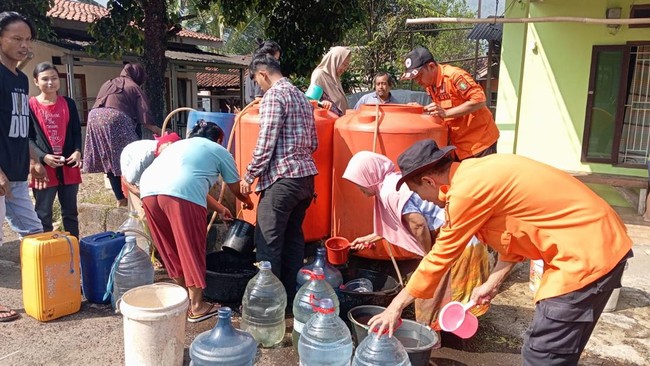
BMKG has recorded thousands of locations across Indonesia experiencing long periods without rain (HTH), with some even classified as extremely long.
“Indonesia is currently experiencing days without rain ranging from the very short category to extremely long. The longest HTH, at 90 days, was recorded at the BPP Pajangan rain post in Bantul Regency, DI Yogyakarta,” BMKG wrote.
In total, long HTH periods — meaning no rain for roughly 21-30 consecutive days — have been recorded at 322 points, very long HTH periods (31-60 consecutive days) at 1,657 points, and extremely long HTH periods (more than 60 consecutive days) at 306 points.
BMKG’s Advice
BMKG reminded the public that the current climate and dry season affect many sectors requiring special attention.
The agency recommended concrete steps for various stakeholders to curb the impact of climate conditions, particularly in agriculture as well as water resources (SDA) and energy, which depend heavily on water supply.
In the agricultural sector, farming businesses need to plan early planting-season schedules and select crop varieties resilient to dry conditions.
Meanwhile, managers of the water resources and energy sectors must calculate raw water availability, determine reservoir volumes and anticipate fluctuations in hydropower (PLTA) electricity generation in order to manage surges in energy consumption.
On the other hand, minimal rainfall has triggered a decline in air quality that could raise the risk of acute respiratory infections (ISPA).
“Stakeholders and the wider public need to remain vigilant about these conditions, whilst preparing rapid response mechanisms to anticipate potential changes in the spread of dengue fever and malaria, as well as the threat of heat stroke from extreme hot weather,” BMKG wrote.
“Equally important, managers in the forestry and disaster sectors must heighten preparedness in facing the threat of drought and potential forest and land fires (karhutla),” BMKG stressed.
On a more positive note, BMKG noted that players in the fisheries and salt pond sectors can take advantage of the dry season to optimise salt production and make the most of the upwelling phenomenon to increase fish catches.
Source: jawawa.id (https://jawawa.id/newsitem/seven-provinces-under-bmkg-level-1-warning-as-boiling-heat-hits-dry-season-1785754379)
Originally published by CNBC Indonesia (https://www.cnbcindonesia.com/news/20260803143757-4-756137/7-provinsi-kena-peringatan-bmkg-siaga-1-efek-panas-mendidih-kemarau), translated from Indonesian