
Seven Potential Successors to Putin, from a Former Bodyguard to ‘General Armageddon’
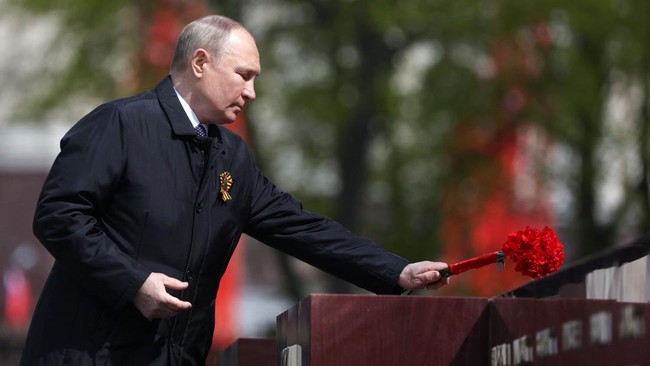
Jakarta, CNBC Indonesia — As Vladimir Putin celebrated his 74th birthday on Wednesday (7 October 2026), speculation about who might replace him resurfaced. Rumours that Putin’s health is deteriorating are said to have fuelled discussion about a struggle for influence among the Kremlin elite.
Putin has led Russia since December 1999 and has spent more than two decades strengthening his grip on domestic politics. Amid uncertainty over the future of his leadership, several figures from the security services, military, technocratic and political spheres are reportedly potential contenders for the top position, according to Express.
Here are seven leading potential successors to Putin, as reported by Express on Thursday (8 October 2026):
- Aleksey Dyumin, Putin’s preferred successor
Aleksey Dyumin, 54, is a former military intelligence general and Putin’s former personal bodyguard. He is known for having led Russia’s Special Operations Forces during the annexation of Crimea in 2014.
Dyumin’s career continued to advance within the Kremlin’s circle of power. After serving as governor of Tula Oblast, he became a presidential aide and then secretary of the State Council, before taking responsibility for several important security portfolios. Because of his close relationship with Putin, Dyumin is regarded as one of the leading succession candidates.
- Andrey Mordvichev, Russia’s hard-line general
Colonel General Andrey Mordvichev, 50, is one of the military figures who could enter the field of candidates to succeed Putin. He is known as a hard-line combat commander who led Russian operations on some of the fiercest battlefronts in Ukraine.
Mordvichev was involved in the sieges of Mariupol and Avdiivka, which caused extensive destruction. After being promoted to commander-in-chief of the Russian Ground Forces, he became a representative of the military faction seeking total victory in the war in Ukraine.
- Mikhail Mishustin, the technocrat ready to take over
Prime Minister Mikhail Mishustin, 60, occupies a different position because he is constitutionally next in the line of succession. Under Chapter 4 of Russia’s Constitution, he would become acting president if Putin died or resigned.
Mishustin previously built a reputation as an administrator by overseeing the large-scale digitalisation of Russia’s tax system. He is now tasked with maintaining the country’s economic stability during the war and has support among the civil service and state-owned company executives.
- Maksim Oreshkin, the economic brain in Putin’s circle
Maksim Oreshkin, 44, is one of the youngest members of Putin’s inner circle. The former investment banker rose quickly through the ranks to become a senior economic adviser to the Russian president and a deputy chief of staff.
Oreshkin is considered to have played an important role in designing economic strategies to counter Western sanctions. Efforts to maintain stability in Russia’s banking and financial sectors have made him an important technocratic figure in Putin’s government.
- Dmitry Medvedev, the hard-liner who has threatened nuclear action
Dmitry Medvedev, 61, has had a distinctive political trajectory. Once regarded as a moderate reformist when he was Russia’s president from 2008 to 2012 and later prime minister, Medvedev is now known as one of the Kremlin’s most strident voices.
As deputy chairman of Russia’s Security Council, Medvedev frequently uses social media to issue threats against Western countries. He has repeatedly raised the possibility of hypersonic nuclear missile strikes on London and other Western capitals.
- Sergei Kiriyenko, the Kremlin’s political and propaganda architect
Sergei Kiriyenko, 64, is one of the Kremlin elite known for surviving successive political changes. He was Russia’s youngest prime minister under President Boris Yeltsin in 1998, before spending more than a decade leading the state nuclear company Rosatom.
Kiriyenko is now first deputy chief of staff of the Kremlin. He oversees domestic politics, state propaganda and the administration of Russian-occupied territories in Ukraine, giving him access to a range of political instruments that could be used to manage a transition of power.
- Sergei Surovikin, ‘General Armageddon’, popular among the military
Sergei Surovikin, 59, is known by the nickname ‘General Armageddon’ because of his reputation as a ruthless commander. He previously led Russian military operations in Syria and was responsible for large-scale missile attacks on Ukrainian infrastructure.
Surovikin was detained and removed from his command post after the Wagner Group mutiny led by Yevgeny Prigozhin. Nevertheless, he remains popular among ultranationalist soldiers and Russian military bloggers, who see him as a strong leader.
If Putin were to leave power, competition among the security, military, technocratic and political factions would be a key factor in determining Russia’s future direction. Each of the seven figures has a different base of power that could play a role in the struggle for influence within the Kremlin.
Source: jawawa.id (https://jawawa.id/newsitem/seven-potential-successors-to-putin-from-a-former-bodyguard-to-general-armageddon-1791474686)
Originally published by CNBC Indonesia (https://www.cnbcindonesia.com/news/20261008153345-4-774471/7-calon-pengganti-putin-mantan-pengawal-hingga-jenderal-armagedon), translated from Indonesian