
Seven Myths About Mount Prau Among Hikers
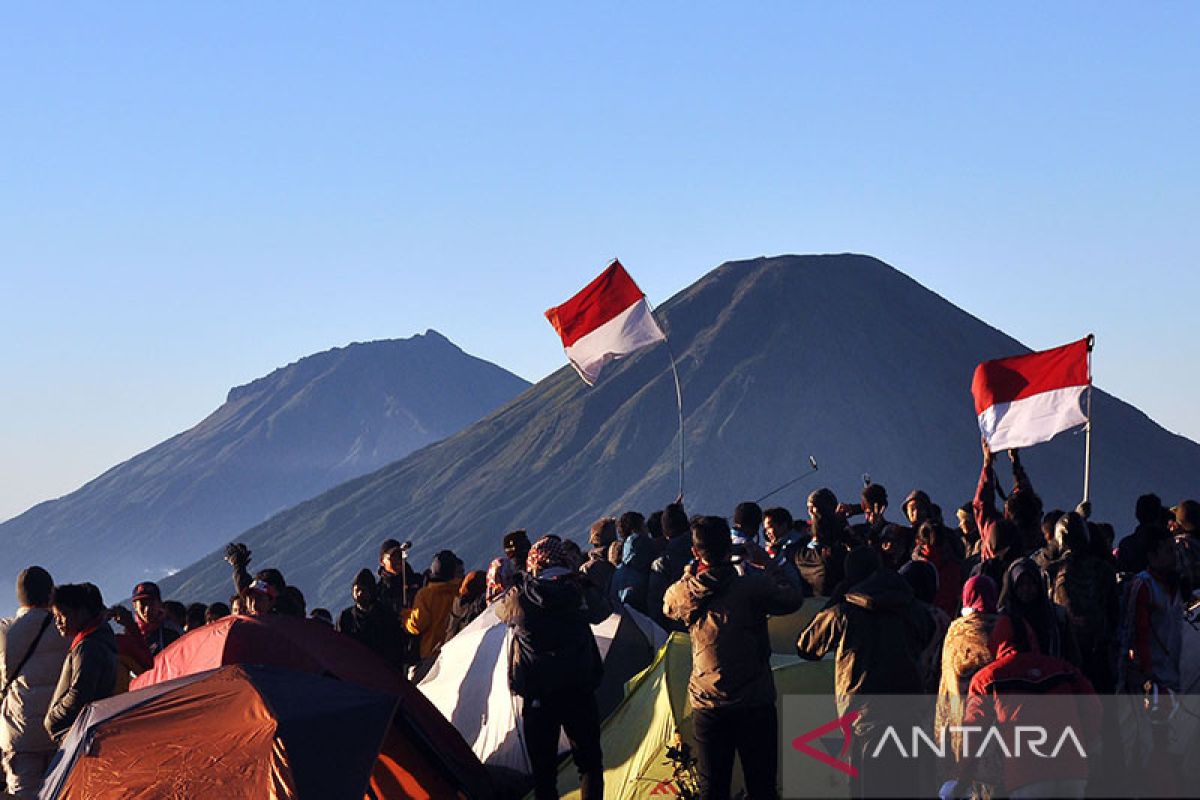
Jakarta (ANTARA) – Mount Prau is one of Indonesia’s favourite hiking destinations, particularly for novice hikers. Located in the Dieng Plateau area of Central Java, the mountain, which stands at around 2,565 metres above sea level, is famous for its stunning sunrise views, known as the ‘golden sunrise’.
But behind its natural beauty, Mount Prau is also the subject of various mystical stories circulating among local communities. These range from tales of a supernatural gateway and a dwelling place for deities to certain prohibitions still believed by some hikers.
Passed down through generations, these stories are part of the local wisdom of the Dieng community. Here are seven myths associated with Mount Prau.
- Mount Prau is a dwelling place for deities
People living in the Dieng area believe that Mount Prau is one of the places where Hindu deities reside.
This belief is linked to the history of the Dieng area, which is home to many Hindu-style temple remains. According to local stories, the deities are said to descend and appear during rituals in which the matted hair of Dieng children is cut.
- Mount Prau was once called Mount Mayit
As well as being known as Mount Prau, the area is also nicknamed Mount Mayit. In Javanese, ‘mayit’ means a corpse or a deceased person.
The nickname arose because, when viewed from a distance, the mountain’s shape is thought to resemble a person lying down. The name Prau, meanwhile, comes from the landscape’s resemblance to a boat.
- Oyot Rimpang is a supernatural gateway
Oyot Rimpang is one of the best-known mystical stories among Mount Prau hikers.
The place is described as a group of tall trees forming what looks like a gateway. According to local legend, hikers who pass through it may lose their way and enter the supernatural realm.
It is often associated with the area around Telaga Wurung and the Dwarawati hiking route.
- Women who are menstruating are forbidden from hiking
Another myth concerns a prohibition on women hiking Mount Prau while menstruating, particularly via the Dwarawati route.
Some local people believe that menstruation makes hikers more vulnerable to disturbances from supernatural beings, getting lost or having an accident.
However, this belief has no scientific basis. Women who are menstruating can still undertake physical activity according to how they feel, while taking their fitness and hiking preparations into account.
- The tomb of Kyai Jalak Ijo is considered sacred
On the Dwarawati route up Mount Prau is a tomb known as the tomb of Kyai Jalak Ijo.
Some local people consider the tomb sacred, and it is often visited for pilgrimages at certain times, including on the night of 1 Suro.
According to local stories, many people come to pray and ask for various things, from prosperity to finding a partner.
- The Javan myna is associated with the supernatural
Hikers also know a myth about a Javan myna believed to have a connection with the supernatural world.
Some people believe that Javan mynas seen in the Mount Prau area are incarnations of spirits. Hikers are therefore advised not to catch or disturb the birds.
Regardless of the myth, protecting wildlife is an important part of conserving the mountain ecosystem.
- Sandekala is a time to avoid hiking
Sandekala is a term in Javanese belief referring to the transition into evening, around sunset.
The time is believed to have a mystical atmosphere, so hikers are advised not to set out or walk alone as dusk approaches.
According to local stories, those who disregard the prohibition may be disturbed by spirits or lose their way.
The various myths surrounding Mount Prau form part of the stories and culture of the Dieng community and are interesting to learn about. Even so, hikers should not automatically regard all these stories as fact.
More importantly, they should respect local beliefs, be mindful of their words and behaviour, and follow the rules set by the hiking-route managers.
Hikers should also prepare their equipment, check weather conditions and avoid hiking alone. These precautions can help ensure a safer and more comfortable trip to enjoy Mount Prau’s beauty.
Source: jawawa.id (https://jawawa.id/newsitem/seven-myths-about-mount-prau-among-hikers-1794653541)
Originally published by Antara (Indonesian) (https://www.antaranews.com/berita/5854163/7-mitos-di-gunung-prau-yang-berkembang-di-kalangan-pendaki), translated from Indonesian