
Seven Endangered Endemic Animals in Indonesia
Jakarta (ANTARA) — Indonesia is known for its rich biodiversity, including endemic wildlife found naturally only in particular areas. However, several of the archipelago’s distinctive animals now face the threat of extinction because of habitat destruction, poaching, wildlife trafficking and climate change.
The global threat status of species is assessed through the International Union for Conservation of Nature (IUCN) Red List. Under its system, the categories Critically Endangered, Endangered and Vulnerable indicate that a species faces a risk of extinction in the wild. The IUCN released an updated list in July 2026, known as version 2026-1.
Some Indonesian species have wild populations confined to a single island or specific area. This makes habitat protection and anti-poaching monitoring essential to their survival.
Here are seven endemic Indonesian animals that are threatened with extinction and need protection.
- Tapanuli orangutan
The Tapanuli orangutan (Pongo tapanuliensis) is one of the world’s rarest great apes. It is found only in the Batang Toru forest area of North Sumatra, so its survival depends heavily on preserving that forest.
The species is classified as Critically Endangered on the IUCN Red List. A population survey covering 2021–2023, announced in 2026, estimated that there were about 716 individuals.
Threats to the Tapanuli orangutan have become more serious since floods and landslides struck Sumatra in November 2025. A study published in the journal Current Biology in June 2026 estimated that at least 58 individuals died in the disaster. Habitat destruction, forest fragmentation and conflict with humans also threaten the species’ survival.
- Sumatran orangutan
The Sumatran orangutan (Pongo abelii) is an endemic primate found in the northern part of Sumatra, particularly in Aceh and North Sumatra. It spends most of its time in the canopy of tropical rainforests.
The IUCN classifies the Sumatran orangutan as Critically Endangered, with its population in decline. Forest fragmentation caused by land clearance, plantations, development and human activity is increasingly restricting its habitat.
A population survey covering 2021–2023 estimated that there were about 11,694 Sumatran orangutans. The figure highlights the importance of protecting forest areas where they feed, breed and raise their young.
- Sumatran tiger
The Sumatran tiger (Panthera tigris sumatrae) is a tiger subspecies that survives naturally only on Sumatra. It has relatively close-set black stripes and plays an important role in maintaining ecosystem balance as an apex predator.
Its conservation status is Critically Endangered. Forest loss caused by land clearance, poaching and the trade in animal parts are the main threats to its survival.
In addition to habitat loss, Sumatran tigers also face conflict with humans when their ranges overlap with settlements or farmland. Protecting forests and cracking down on the illegal wildlife trade are vital to preventing further population decline.
- Bali myna
The Bali myna (Leucopsar rothschildi) is endemic to Bali. It has white plumage, a distinctive crest and blue skin around its eyes. Its striking appearance has made it a target for poaching and illegal trade.
The IUCN lists the Bali myna as Critically Endangered. The latest assessment recorded, in 2020, estimated that there were between one and 49 mature individuals in the wild, with the population declining.
Its limited natural habitat and the intense pressure of the bird trade pose challenges for conservation. Captive-breeding and release programmes, along with monitoring of protected areas, are among the measures intended to prevent the species from moving closer to extinction.
- Anoa
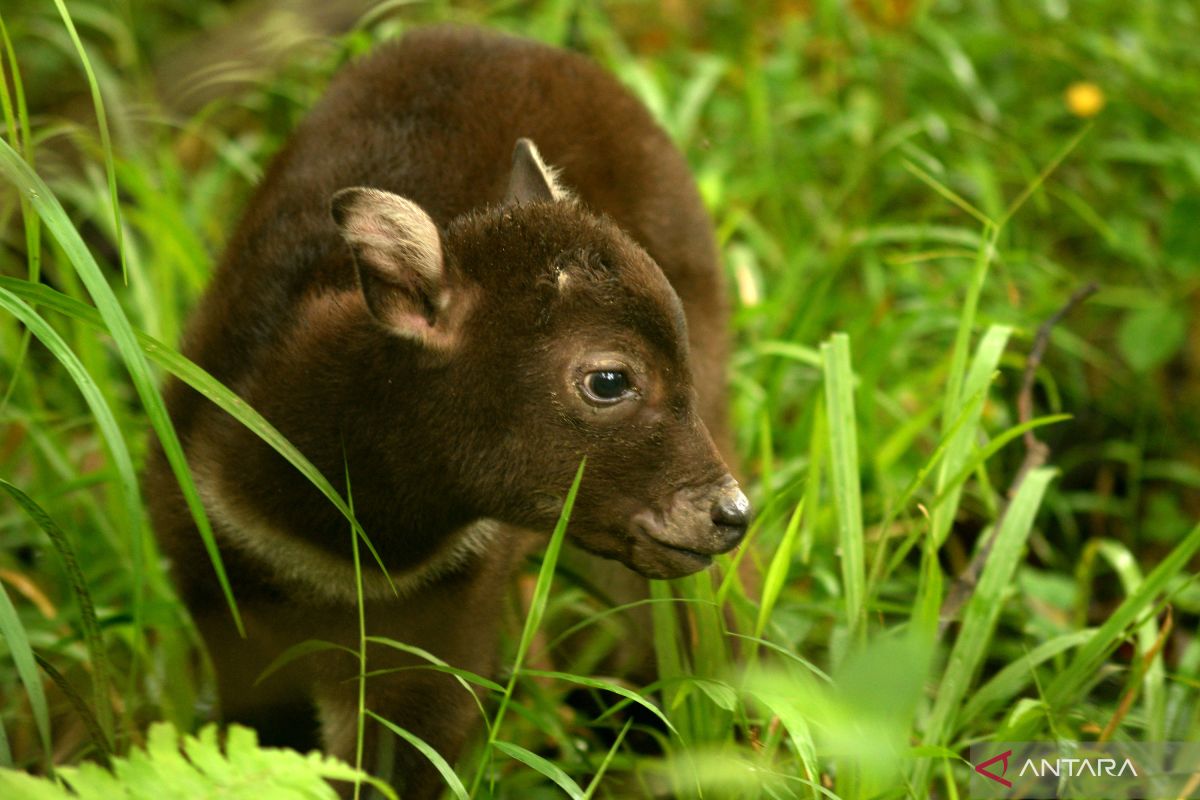
The anoa is a mammal endemic to Sulawesi and Buton Island, known as a dwarf buffalo. There are two recognised types: the lowland anoa (Bubalus depressicornis) and the mountain anoa (Bubalus quarlesi).
Both are classified as Endangered by the IUCN. Anoa live in forest areas and help maintain ecosystem balance through their feeding habits and interactions with their surroundings.
Hunting for meat and habitat destruction caused by land clearance are the main threats. Their populations are also fragmented, leaving groups increasingly isolated and vulnerable to declines in numbers.
Protecting Sulawesi’s forests, monitoring poaching and tracking populations are important steps in safeguarding these distinctive animals.
- Komodo dragon
The Komodo dragon (Varanus komodoensis) is the largest reptile living in the wild and is characteristic of East Nusa Tenggara. It occurs naturally on several islands, including Komodo, Rinca and Gili Motang, as well as in parts of Flores.
The IUCN classified the Komodo dragon as Endangered in an assessment made in 2019 and published in 2021. The assessment recorded about 1,383 mature individuals and considered the population stable at the time. Nevertheless, the species remains at risk from limited habitat and environmental change.
Threats include habitat change, fires, human activity and the effects of climate change on environmental conditions and prey availability. Managing protected areas and restricting activities that disturb the habitat are important aspects of its protection.
- Maleo
The maleo (Macrocephalon maleo) is endemic to Sulawesi and has a distinctive horn-like casque on top of its head. It is known for its unusual breeding method: it uses natural heat from sand or soil to incubate its eggs.
The maleo is classified as Endangered on the IUCN Red List. Its survival is threatened by forest habitat loss, damage to nesting sites and the collection of eggs by people.
Because the species needs specific sites to lay its eggs, damage to nesting areas can directly affect its breeding success. Protecting habitat and nesting sites, and preventing egg collection, are essential to conserving the maleo.
Status update: A more recent assessment published in 2025 classified the maleo as Critically Endangered, rather than Endangered as in the previous assessment. A survey of 228 nesting sites found a sharp decline in the number of active sites and in populations in several parts of Sulawesi. Egg collection by people is one of the main causes of this decline.
The extinction risk facing endemic wildlife is not determined solely by the number of individuals remaining; habitat conditions and the ability of species to reproduce also matter. Forest destruction, poaching, illegal trade and climate change can accelerate population declines.
There are several ways to help protect these animals:
- Do not buy wild animals
Avoid buying, keeping or trading protected animals or their body parts.
- Protect natural habitats
Support the protection of forests, conservation areas and places where animals breed.
- Do not disturb wildlife
When visiting conservation areas, do not feed, chase, touch or otherwise disturb wild animals.
- Support conservation organisations
The public can take part through education and conservation activities, or by supporting organisations working to protect wildlife.
- Report illegal wildlife trade
If you encounter suspicious poaching or wildlife-trading activity, report it to the authorities.
Endemic animals are an important part of Indonesia’s natural wealth. Protecting them is not only about saving individual species, but also about maintaining the balance of ecosystems so that future generations can enjoy them.
Source: jawawa.id (https://jawawa.id/newsitem/seven-endangered-endemic-animals-in-indonesia-1794631951)
Originally published by Antara (Indonesian) (https://www.antaranews.com/berita/5853519/7-hewan-endemik-indonesia-yang-terancam-punah), translated from Indonesian