
Seven Depok Subdistricts Develop Maggot-Based Waste Management
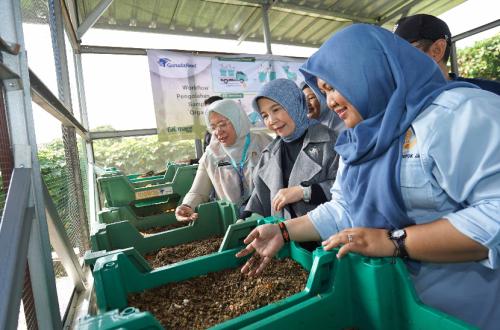
Community-based organic waste management is beginning to show results in the city of Depok, West Java. As of June 2026, a maggot cultivation programme across seven kelurahan has processed more than 100 tonnes of household organic waste, produced 9.7 tonnes of Black Soldier Fly (BSF) maggots, and contributed to a reduction in carbon emissions of up to 325 tonnes CO2e.
The programme involves more than 60 heads of families in the kelurahan of Jatijajar, Sukmajaya, Depok Jaya, Limo, Meruyung, Tanah Baru and Jatimulya. Beginning as a pilot project in 2024, organic waste management through maggot cultivation has developed into a model being replicated across several areas of Depok.
PT Garudafood Putra Putri Jaya Tbk, together with Biomagg and the Depok municipal government, has expanded the programme through the construction of a maggot house in Depok Jaya. Similar facilities had previously been established in Jatijajar and Sukmajaya as centres for cultivation and education on organic waste management.
Dian Astriana, Head of Corporate Communication and External Relations at Garudafood, said the construction of the maggot house is a continuation of a community empowerment programme that has been running since 2024.
“The Garudafood Maggot House was established as a sustainable community empowerment programme through a Creating Shared Value (CSV) approach, generating shared benefits for the community, the environment and the company,” Dian said in a press release on Wednesday (22 July 2026).
In addition to the inauguration of the maggot house, the event also featured BSF maggot cultivation training and knowledge-sharing between beneficiary groups to strengthen the capacity of new groups in managing cultivation independently.
Dian said the company would expand the Maggot Entrepreneur Village programme to other areas. The company is also preparing to develop a maggot ecosystem through cultivation and derivative products, such as livestock feed and organic fertiliser.
“We cannot walk alone. Support from the kelurahan and district governments, technical assistance from Biomagg as our mentoring partner, and most importantly the enthusiasm of residents, are the keys to this programme’s sustainability,” she said.
Hadijah, leader of the Depok Jaya maggot cultivation group, said her group learned from the beneficiary group in Limo before receiving mentoring from Biomagg and Garudafood.
“At first we learned from the beneficiary group in Limo, until we were introduced to Biomagg and received support to establish this maggot house. Our first harvest successfully produced 20 kg of maggots,” she said.
The community-based waste management model shows that the maggot cultivation approach not only helps reduce organic waste generation but also opens up business opportunities for residents through the use of cultivation output and its derivative products.