
Seven Common Mistakes Repeated During Wudu, Which Could Affect the Acceptance of Prayer
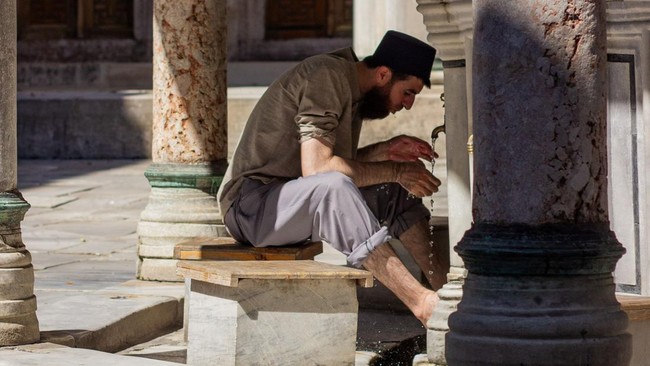
Jakarta, CNBC Indonesia – A number of mistakes are often made during wudu, or ablution. They may seem trivial, which is why they are repeated without people realising it.
However, if the wudu performed before prayer is incorrect or incomplete, the prayer itself will not be accepted. Wudu is therefore more than simply washing parts of the body.
In a hadith narrated by Abu Hurairah, the Prophet Muhammad said: “The prayer of any one of you is not accepted if he has broken his state of purity, until he performs wudu” (reported by al-Bukhari and Muslim), detikhikmah reported on Saturday (7 November 2026).
So what mistakes do Muslims often make when performing wudu?
- Becoming overly anxious during wudu
Anxiety during wudu can lead people to repeat the movements more times than is recommended.
According to a hadith narrated by Thabit, the Prophet performed wudu three times for each action. A Muslim should dismiss any anxiety or doubt that arises after completing wudu and should not wash more than three times to ward off such feelings, which are described as one of Satan’s deceptions (reported by al-Bukhari).
- Wasting water
This is related to anxiety: people may worry that they have not wet every part of their body and use excessive amounts of water. Yet Allah forbids His servants from going beyond the limits of religious practice. The Qur’an states in Surah al-Ma’idah, verse 77: “Say, ‘O People of the Book, do not go to extremes in your religion, contrary to the truth, and do not follow the desires of a people who went astray before, led many others astray, and themselves strayed from the right path.’”
The Prophet also warned against using too much water when performing wudu, saying: “Do not waste water, even if you are beside a plentiful river” (reported by Ahmad).
- Invoking Allah’s name in the toilet
Avoid performing wudu inside a toilet, as Allah’s name is sacred and should not be spoken in an unclean place.
The Prophet also taught that Allah’s name should not be invoked in the toilet. Ibn Umar narrated that a man passed by while the Prophet was urinating and greeted him, but the Prophet did not return the greeting (reported by Muslim).
- Failing to wash both hands first
Performing wudu without first washing both hands is a common mistake, particularly after waking up.
The Prophet taught that hands should be washed first: “When one of you wakes from sleep, let him not put his hand into a vessel until he has washed it three times, for he does not know where his hand was during the night” (reported by al-Bukhari and Muslim).
- Failing to complete wudu properly
Rushing through wudu can lead people to neglect its required steps. Some may also be reluctant to perform it properly because they fear it will spoil their hairstyle or make-up.
Allah sets out the requirements for wudu in Surah al-Ma’idah, verse 6: “O you who believe, when you rise to pray, wash your faces and your hands up to the elbows, wipe your heads, and wash your feet up to the ankles. If you are in a state of major ritual impurity, purify yourselves. If you are ill, travelling, have relieved yourselves, or have been intimate with women and cannot find water, then perform tayammum with clean earth, wiping your faces and hands with it. Allah does not intend to make things difficult for you; rather, He intends to purify you and complete His favour upon you, so that you may be grateful.”
- Not washing between the fingers
The majority of Islamic scholars consider washing between the fingers of the hands and feet to be recommended, based on the Prophet’s instruction: “Complete your wudu and wash between your fingers” (reported by Ahmad, al-Tirmidhi and Ibn Majah).
Muslims who wear rings should also remove them first so that water can reach the skin. If water is prevented from touching the skin, the wudu is considered invalid.
- Forgetting to wash the heels
The heels are an important part of the feet to wash during wudu.
A narration from Abdullah bin Amr recounts the Prophet’s instruction to wash them properly: “We were once left behind by the Messenger of Allah on a journey. He caught up with us as the time for the Asr prayer had arrived. We began performing wudu in haste, merely wiping our feet. The Messenger of Allah then called out loudly, ‘Woe to the heels from the fire!’ He said this two or three times” (reported by al-Bukhari and Muslim).
These are some of the seemingly minor mistakes that are often repeated during wudu. The article cites the books Cantik dan Mulus dengan Wudhu by Rizem Aizid, Kesalahan-kesalahan dalam Tahajud, Dhuha, dan Hajat yang Membuatmu Sulit Kaya dan Tidak Bahagia by Sayyid M. Dzikri, and 400 Kesalahan dalam Shalat by Mahmud Al-Mishri.
Source: jawawa.id (https://jawawa.id/newsitem/seven-common-mistakes-repeated-during-wudu-which-could-affect-the-acceptance-of-prayer-1794012650)
Originally published by CNBC Indonesia (https://www.cnbcindonesia.com/syariah/20261107033620-29-783133/7-kesalahaan-sering-terulang-saat-berwudhu-awas-salat-tak-diterima), translated from Indonesian