
Setu Babakan Redeveloped as Hundreds of Traders Are Relocated to Support Betawi Cultural Tourism
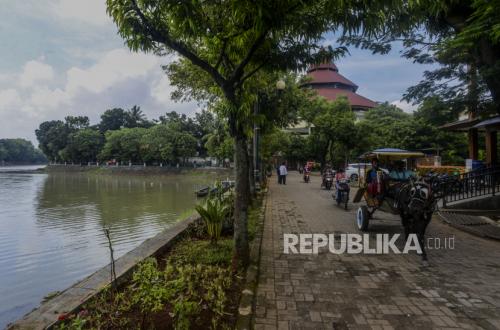
The South Jakarta Administrative City Government is reorganising the Setu Babakan Betawi Cultural Village in Jagakarsa, relocating hundreds of traders who have been operating in the area. The move is intended to restore Setu Babakan’s role as a centre for cultural preservation and a destination for tourism and Betawi cuisine.
South Jakarta Deputy Mayor Firmanuddin Ibrahim said the redevelopment was part of a Jakarta provincial government programme to strengthen Setu Babakan’s identity. The government wants to ensure that commercial activity, tourist facilities and public spaces are in keeping with the area’s main function as a centre of Betawi culture.
“This is part of a series of activities under the DKI Jakarta provincial programme to reorganise Setu Babakan. We know this is a tourist destination and a place for preserving Betawi culture,” Firmanuddin said in Jakarta on Thursday (15 October 2026).
Firmanuddin said the plan involved relocating 216 traders operating in the area. The government has prepared 63 temporary stalls, with 57 traders approved through a selection process to sell Betawi food.
Meanwhile, data from the South Jakarta Public Order Agency (Satpol PP), compiled at a municipal government meeting on 5 October, recorded 224 traders: 130 on the eastern side of Setu Babakan and 94 on the western side. South Jakarta Satpol PP chief Nanto Dwi Subekti said on Wednesday (14 October 2026) that only five traders were still in the process of dismantling their kiosks, while most had moved their stalls. No explanation was given for the difference between the figures of 216 and 224 traders, including whether it reflected a change or a difference in the scope of the data.
The selection process is intended to ensure that the goods on offer fit Setu Babakan’s character as a cultural tourism destination. Economic activity in the area is therefore expected to support the preservation of traditional Betawi cuisine.
Traders who were not selected have been directed to apply for places at other government-managed trading centres. The policy is intended to ensure that the reorganisation still allows business owners to continue their economic activities.
The South Jakarta administration has also offered alternative trading locations, including Lokbin Pasar Minggu, Teras Lenteng Agung and Pasar Bintaro. Nanto said Lokbin Pasar Minggu, near the terminal, still had about 250 vacant kiosks available to traders affected by the redevelopment.
Firmanuddin said the reorganisation had followed consultation and the issuing of warning notices in accordance with procedures. After that process, traders dismantled their stalls themselves as part of the site’s redevelopment.
South Jakarta Satpol PP had issued a first warning on 28 September, followed by a second on 5 October and a third on 8 October 2026. The final notice required traders to vacate their stalls and move their goods within 24 hours of its issuance.
The South Jakarta administration deployed around 400 personnel from various government bodies and local administrative units. Local residents also took part to help ensure the operation proceeded in an orderly manner.
To assist with the move, South Jakarta Satpol PP provided free transport for traders needing help moving their goods and business equipment. Officers also helped dismantle stalls and transport belongings for traders unable to move them on their own.
Source: jawawa.id (https://jawawa.id/newsitem/setu-babakan-redeveloped-as-hundreds-of-traders-are-relocated-to-support-betawi-cultural-tourism-1792039898)
Originally published by Republika (https://news.republika.co.id/berita/tmxlae451/setu-babakan-ditata-ratusan-pedagang-direlokasi-demi-wisata-budaya-betawi), translated from Indonesian