
Set to Become Jakarta's New Icon, This is the History of Jalan Rasuna Said
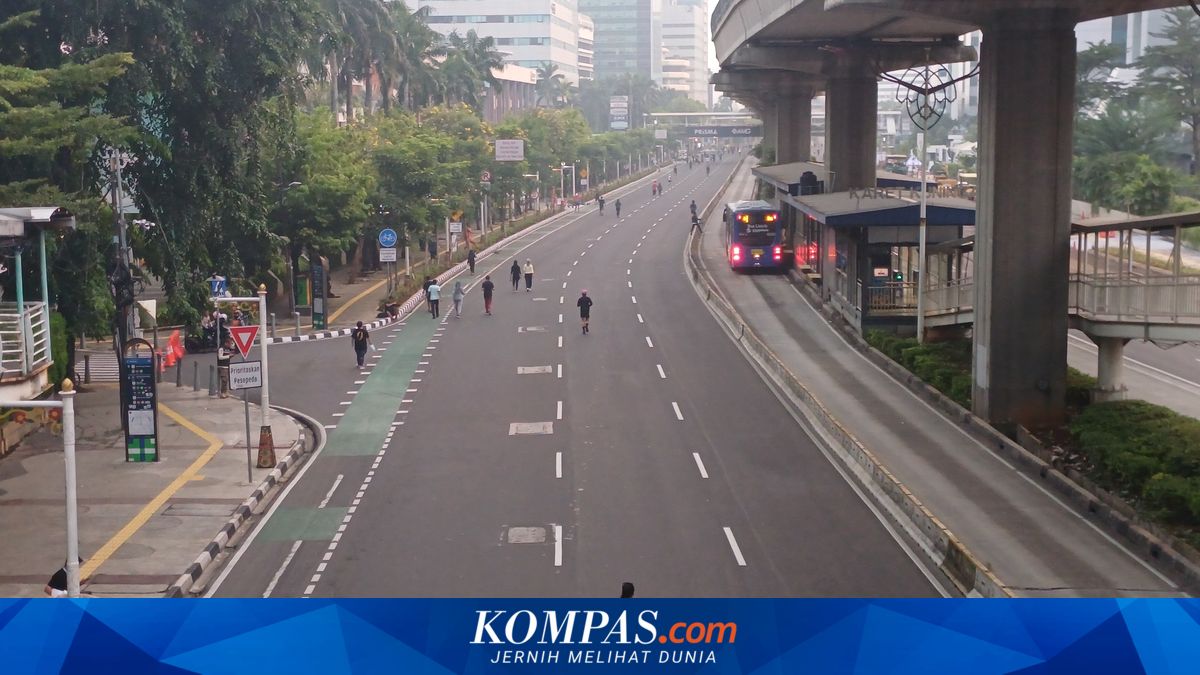
Jalan H.R. Rasuna Said has been known for decades as one of the vital arteries of Jakarta’s business district. The road, which cuts through the Kuningan area in South Jakarta, also forms an important part of the capital’s “Golden Triangle” alongside Jalan Sudirman and Gatot Subroto.
However, over the past nearly two decades, the face of Rasuna Said has been synonymous with a row of derelict monorail pillars standing in the middle of the road.
Now, after those pillars have been dismantled, the DKI Jakarta Provincial Government has begun reorganising the area and preparing it to become Jakarta’s new icon.
DKI Jakarta Governor Pramono Anung stated that the reorganisation of the Rasuna Said area is being carried out to transform the face of this business corridor into something more orderly and friendly to the public.
“We want to show the public that Jakarta is improving to have a new icon on this road,” said Pramono during the launch of Jakarta’s 499th Anniversary at the Rasuna Said Car Free Day (CFD) area on Sunday (10/5/2026).
According to Pramono, the reorganisation is also inspired by the figure of Hajjah Rangkayo Rasuna Said, a national heroine from West Sumatra whose name has been immortalised as the road’s name.
“At the same time, this is inspired by the figure of Hajjah Rangkayo Rasuna Said, our national heroine from Padang. I hope that this road will become Jakarta’s new icon,” he said.
At that time, Indonesia’s first President Soekarno pushed for large-scale development to transform Jakarta into a modern city and a symbol of Indonesia’s progress.
The direction of urban development then shifted southwards, from the Medan Merdeka area towards Kebayoran Baru.
The construction of major roads such as MH Thamrin, Sudirman, and Gatot Subroto became the foundation for the growth of Jakarta’s new business district.
Amid this expansion, the construction of Jalan H.R. Rasuna Said began in 1973 and was completed in 1979, and it was inaugurated by the then Minister of Public Works and Electricity, Sutami.
Jalan Rasuna Said is named after a female national heroine named Hajjah Rangkayo Rasuna Said.
This road was originally designed as an extension of Jalan H.O.S Cokroaminoto heading south until it connects with Jalan Gatot Subroto.
That corridor then developed into an important business area in Jakarta, together with Sudirman and Gatot Subroto, forming Jakarta’s Golden Triangle.
Source: jawawa.id (https://jawawa.id/newsitem/set-to-become-jakartas-new-icon-this-is-the-history-of-jalan-rasuna-said-1778471576)
Originally published by Kompas (https://megapolitan.kompas.com/read/2026/05/11/10173111/bakal-jadi-ikon-baru-jakarta-ini-sejarah-jalan-rasuna-said?utm_source=ABC&utm_medium=rss), translated from Indonesian