
Sesaot Forest Proposed for Protected Status, Covering 3,000 Hectares Across Three Villages
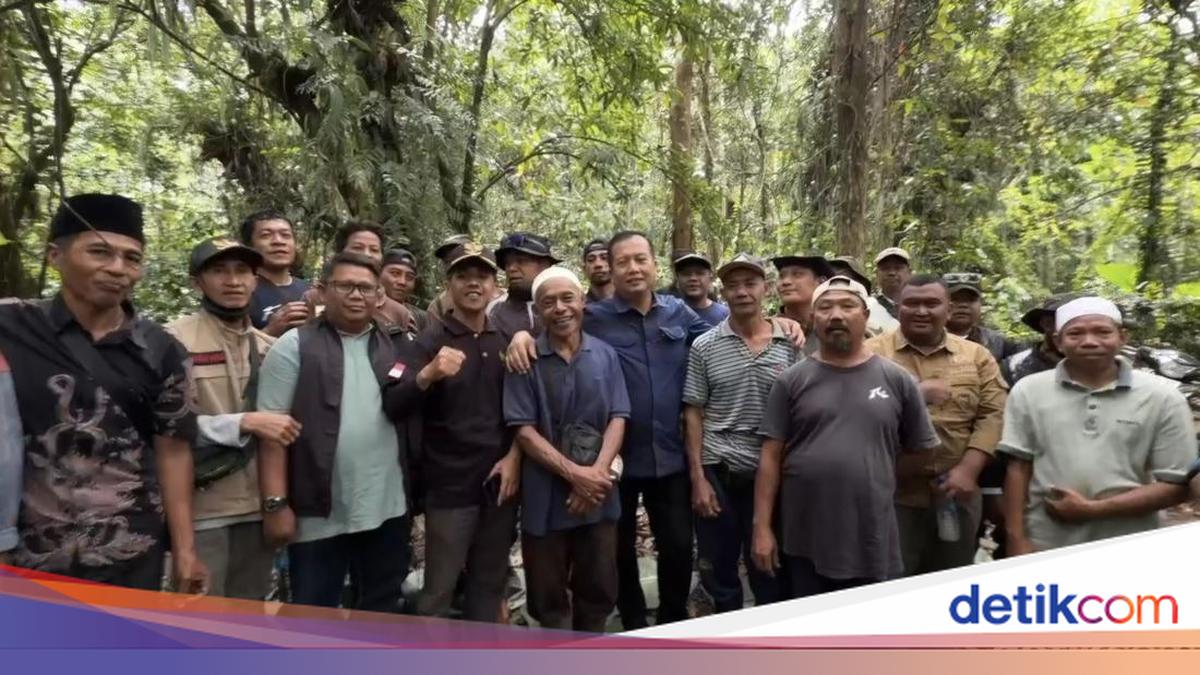
The Governor of West Nusa Tenggara (NTB), Lalu Muhamad Iqbal, has discussed plans to change the status of parts of the Sesaot Forest area in West Lombok. The area, which currently holds conservation forest status, is proposed to become a protected forest.
Iqbal held discussions with the village heads of three villages in the Narmada District, namely Pakuan, Buwun Sejati, and Sesaot. The meeting also addressed the legality of local communities organised under the Farmer Group Union (Gapoktan) to utilise the forest area.
“The Sesaot Forest area has been subject to efforts for decades to transition from conservation forest to partially protected forest,” Iqbal stated during a visit to the Sesaom Forest on Tuesday (1/9/2026).
Iqbal noted that the process of changing the area’s status involves a specific mechanism. A key priority is ensuring that the total area proposed by the community and the Gapoktan from the three villages does not decrease.
“Previously, there were regulations regarding land swaps that prohibited any reduction in area. We have consolidated the forest data and obtained compensation, so we will submit the proposal in the near future. This is in the final stages and will soon become a protected forest,” he explained.
According to Iqbal, the change to protected forest status will allow the community to utilise certain forest products while adhering to applicable regulations.
“Because this will be a protected forest, certain parts can be utilised by the community. It is more about utilisation rather than conversion. Previously, community use within the area was illegal. Now, with protected forest status, they may utilise the forest as long as they do not fell trees,” Iqbal added.
Regarding regulations and territorial boundaries, the NTB Provincial Government continues to coordinate intensively with the central government. He promised to meet with the Ministry of Forestry to discuss the transition of the area’s status.
“This is merely the final process. It is essentially about the regulation and the status change from conservation forest to protected forest,” he clarified.
Iqbal emphasised the importance of aligning perceptions between the community and forestry authorities to enforce existing rules. He noted that there have been differing views between the Gapoktan and the forestry department.
“The law must be upheld, and an agreement has been reached to move from conservation to protected forest. Forests that are not converted will serve as defence areas—red zones that must not be touched; that has been agreed upon,” he said.
The three village heads will be requested to draft ‘awig-awig’ or customary laws to protect the areas designated as red zones. It was agreed that these areas must not be disturbed or utilised.
The Head of Buwun Sejati Village, Muhidin, stated that the application for Community Forest (HKm) covers approximately 3,000 hectares, divided among Buwun Sejati, Pakuan, and Sesaot. The management process for the HKm has been allocated based on Gapoktan data.
“That is what will be processed for the HKm, covering about 3,000 hectares for the three villages. The portions have been determined, but it has not yet been legalised as it is still in progress,” Muhidin revealed.
Meanwhile, the Chairman of the Sekawan Sejati Gapoktan, Rusmayadi, provided details on the territorial division based on reference data from early 2017: approximately 800 hectares for Pakuan Village, 1,000 hectares for Sesaot Village, and 1,000 hectares for Buwun Sejati.
“It is divided into three parts,” explained Rusmayadi.
He added that regarding the total land area of 3,000 hectares previously discussed, there had been discussions with the government. However, a consensus has yet to be reached.
“Regarding the 3,000 hectares discussed, there was a debate with the government. However, we are fine with it, provided there is mutual recognition of the boundaries set by the Forest Management Unit (KPH) to prevent unrest at the local level. That is our concern,” he explained.
To prevent conflict and forest damage in the remaining conservation areas, all parties agreed to draft local customary rules or ‘awig-awig’.
“Part will remain conservation, and part will become protected forest. Because this issue arose from unavoidable encroachments, we have taken the initiative to establish the term ‘red zone’,” said Rusmayadi.
This red zone was agreed upon by the three village heads as an absolute area that must not be disturbed. This red zone is now a mutual agreement between the three village heads.
“There is no room for negotiation; that area cannot be touched. That is what we want to discuss with the government—to determine the exact coordinates of the red zone,” he elaborated.
Rusmayadi explained that a social and psychological approach for forest managers is now being prioritised over repressive legal enforcement, which has proven less effective in the past.
“What we consider the red zone is technically outside the area, yet in reality, people still enter secretly. This is what we are guarding, using a social approach,” he concluded.
Source: jawawa.id (https://jawawa.id/newsitem/sesaot-forest-proposed-for-protected-status-covering-3-000-hectares-across-three-villages-1788270955)
Originally published by detikBali (https://www.detik.com/bali/nusra/d-8644091/hutan-sesaot-diusulkan-jadi-hutan-lindung-3-desa-kelola-3-000-hektare), translated from Indonesian