
Serpong-Parung Toll Road Update: BSD to Bogor Journey a Stone's Throw Away
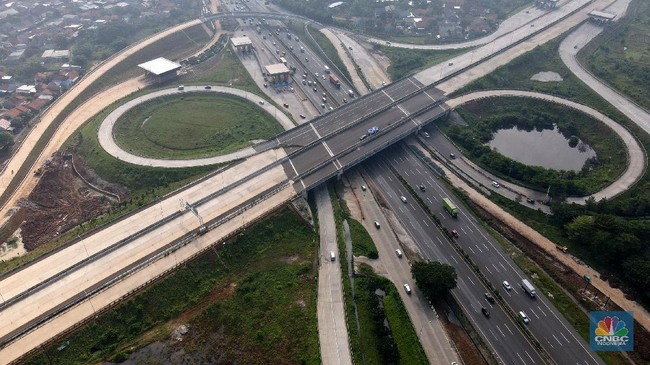
The Ministry of Public Works (PU) is accelerating the construction of the Serpong-Bogor Toll Road via Parung to strengthen connectivity in the Jabodetabek region. The 32-kilometre toll road is expected to improve public mobility and logistics distribution efficiency.
Minister of Public Works Dody Hanggodo stated that the project is currently in the technical planning phase, nearing 80% completion. ‘We are accelerating the process to finalise the planning phase by this year,’ he said in a written statement on Sunday, 31 May 2026.
The Serpong-Bogor via Parung toll road has an investment value of Rp12.35 trillion and is being developed under a Public-Private Partnership (PPP) scheme without government budget support. It is projected to reduce travel time from Bogor to Tangerang to around 45 minutes.
Technically, the toll road will feature two main junctions—Salabenda and Serpong—and three interchanges at Pondok Udik, Putat Nutug, and Rumpin.
Construction will be carried out by PT Bogor Serpong Infra Selaras, a consortium comprising PT Jasa Marga, PT Adhi Karya, PT Hutama Karya Infrastruktur, and PT Persada Utama Infra, with a 40-year concession period.
The Serpong-Bogor via Parung toll road is divided into four sections: Section I Salabenda-Pondok Udik (3.97km), Section II Pondok Udik-Putat Nutug (9.27km), Section III Putat Nutug-Rumpin (8.23km), and Section IV Rumpin-Serpong (10.56km).
The Ministry of Public Works confirmed that construction will adhere to technical standards and regulations, including road geometry, construction safety, and minimum service standards for toll roads.
The Serpong-Bogor via Parung toll road is expected to foster new economic centres, strengthen regional connectivity, and support balanced development across Jabodetabek and surrounding areas. This connectivity infrastructure will also contribute to improved investment efficiency and a lower Incremental Capital Output Ratio (ICOR) through reduced logistics costs, faster goods and services distribution, and increased regional productivity.