
Seroja Weaving Survives with Six Elderly Artisans
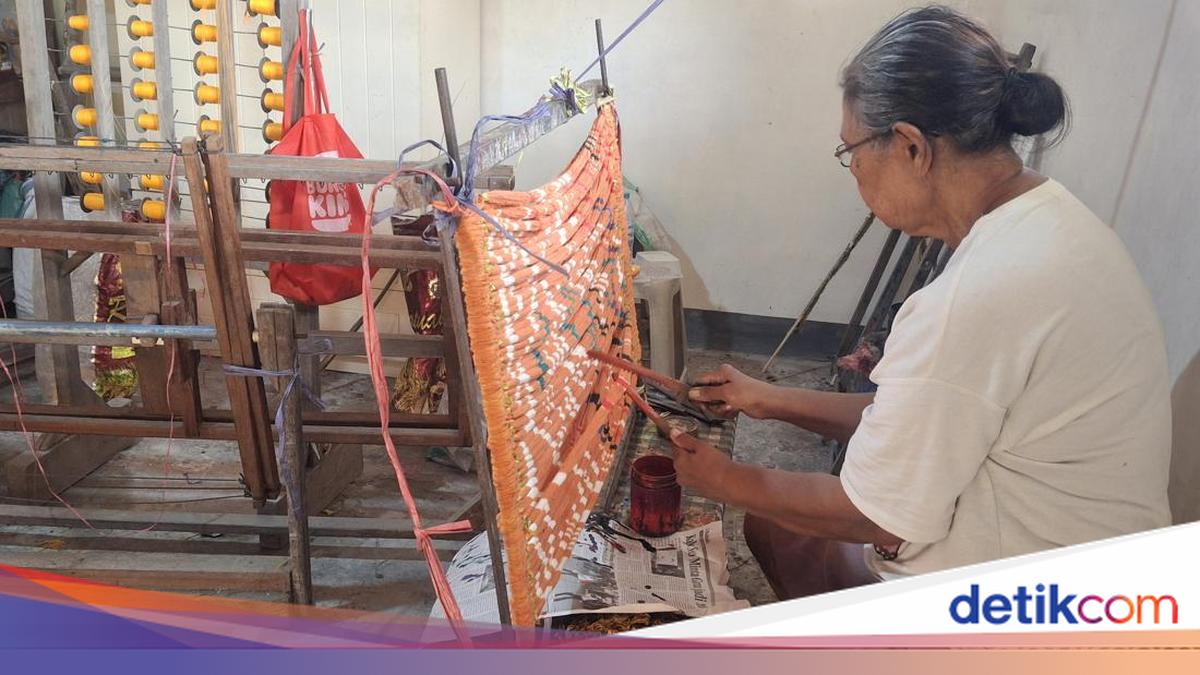
Seroja Weaving, an endek cloth weaving business in Pemecutan Kelod, West Denpasar, is now facing the threat of extinction. The stagnation of weaver regeneration means the remaining artisans are now predominantly elderly.
Seroja Weaving, run by Made Rai Sudani, has felt this impact. The business, which has been operating since the 1960s, once thrived and employed up to around 50 artisans. Today, the number of workers has declined drastically, with only six people remaining.
Three weavers still work at the business premises, two others work from home, while one senior artisan is responsible for creating patterns and motifs, known as nganyin.
“Three are weaving, there are also two who work from home, and one is the pattern maker. So there are six people in total,” she said when met on Thursday (30/7/2026).
All the remaining artisans are on average aged over 60 to 70 years. Ironically, no young generation or children of the artisans are willing to continue this profession.
“No one wants to learn to weave,” she said.
Even for pattern making and motif binding (mempen), the business relies solely on one elderly artisan. This situation raises concerns for Rai about the continuity of the business if the artisan is no longer able to work.
The Complex Process of Weaving Endek
Rai explained that the process of making endek takes up to one month. The process begins with winding white thread and initial dyeing. If using the lusi technique, the wound thread will enter the nganyin process.
“From winding the thread, the white thread is dyed first, then after dyeing it is wound. After winding, there is a process using endek, of two types. There is from lusi, and there is from endek. If from lusi, after winding it is called nganyin,” explained the 65-year-old woman.
Meanwhile, in the endek technique, the wound thread is then tied or mempen, and subsequently dyed with colour. After the dyeing process is complete, the ties are opened so the motif begins to appear. The thread then undergoes a pencatrian or colouring process before being wound again and ready to be woven.
“If from endek, after winding it is made like this, called mempen. After that it is tied. After tying it is dyed, after dyeing it is opened again. The ties already show the motif. Then it is coloured. To make it colourful. There are people who do the colouring. After that it is wound again, then it can be woven. That is why it takes a long time,” she added.
Limited workforce and the physical condition of the artisans mean Rai does not dare to accept large orders of cloth or those with tight deadlines.
“Now I do not dare to accept orders because there are few workers,” she revealed.
Currently, average production only reaches 100 pieces of cloth per month, each measuring two metres. The output is distributed to individual buyers, traditional markets such as Pasar Badung and Gianyar for ceremonial cloth needs, as well as art shops in the Sanur tourist area. Cloth prices vary between Rp 130,000 and Rp 200,000 per piece, depending on the type and complexity of the motif.
Online Sales
Amid the threat of closure, a glimmer of hope has emerged through digital sales. Sonia Melati, daughter of Rai Sudani, has begun utilising online platforms such as Instagram, Threads, and Shopee to reach a wider market.
As a result, marketing that previously relied only on regular customers at Pasar Badung or collectors who came to the house now reaches markets outside the region such as Jakarta and Yogyakarta. This step has successfully saved stockpiles of unsold cloth.
“Previously, my sister mostly sold to Sanur, to hotels, or there were people who came to the house to collect. My mother also sold to Pasar Badung. Now, because of online sales, the leftovers here are being sold again,” said the 25-year-old woman.
As the next generation, Sonia admits she is interested in the preservation of endek, but she acknowledges the difficulty of learning the complex basic weaving techniques. The biggest challenge for her lies in the initial calculation of pattern and motif creation, such as determining the number of threads to be tied and calculating the precise distance between motifs.
“Calculating to make the pattern is difficult. In weaving there are motifs, to make the ties from the beginning of the process. Like how many threads we tie, then the distance from one motif pattern to the second, how far it is, that is the difficult part,” she explained.
Sonia hopes for more attention to the sustainability of endek making through training and empowerment programmes, so that this tradition does not stop with the older generation alone.
“Maybe empowerment is what I hope for. So that there are new generations of women who want to learn about weaving. Not only women, but perhaps there are young people who are interested in learning to weave again,” she hoped.