
Sermon on Arafah Wukuf: Threefold Hajj Successes - The Path to Accepted Hajj and National welfare
First Khutbah
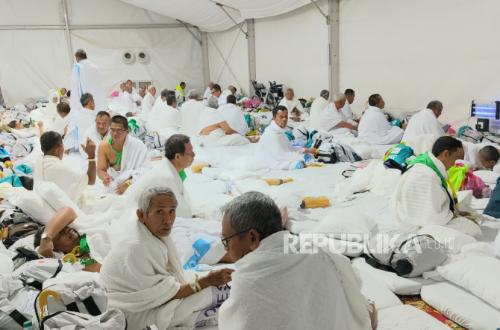
Indonesian Hajj pilgrims, may Allah honour you. On this sacred day, we gather at Arafah. We present ourselves at the core of Hajj rituals. We come in Ihram garments, shedding worldly insignia. We humble our hearts before Allah, realising human beings possess no strength except through divine assistance.
On the plains of Arafah, humanity learns that true dignity lies solely in piety. Here, tears of repentance surpass worldly grandeur. Status does not elevate a person; wealth does not dignify; position does not draw closer to Allah.
Here, a servant realises life’s journey ultimately returns to Allah Almighty. All stand as equal servants, all seek forgiveness, all yearn for mercy, all await Allah’s grace. The Prophet Muhammad (peace be upon him) said: ‘Hajj is Arafah.’ This hadith reminds us that wukuf is not merely physical presence but a presence of the heart.
Wukuf is acknowledging weakness. Wukuf is returning to Allah. Wukuf is a servant silently saying: ‘O Allah, I come to You. I bring my sins and hope, my frailty and longing. I seek Your forgiveness, I seek Your pleasure.’
Indonesian Hajj pilgrims, may Allah bless you. Arafah is the day prayers are answered and forgiveness sought. Arafah is when Allah showers mercy upon servants who travel dust-covered, physically exhausted, and tearful with longing. The Prophet Muhammad (peace be upon him) said: ‘The best prayers are offered on Arafah’ (Tirmidzi). Do not let this time pass without seeking forgiveness. Do not let Arafah slip by without private supplication. Do not let these sacred moments vanish without prayers for yourself, family, parents, teachers, service staff, leaders, all Hajj pilgrims, the Muslim Uummah, and Indonesia. Let us pray earnestly for all. Here, let us humble our hearts, clarify intentions, purify tongues of unnecessary complaints that may harm others. Let us open our hearts and ask Allah to make this Hajj accepted.
The Prophet Muhammad (peace be upon him) said: ’ an accepted Hajj has no reward except Paradise’ (Bukhari and Muslim).
Accepted Hajj is not merely completing rituals. It is a life transformed: a softer heart, more steadfast worship, gentler speech, greater patience and wisdom, and tangible compassion in daily living. Indonesian Hajj pilgrims, may Allah honour you. Araf teaches tawhid. The Talbiyah we utter from Ihram reminds us life must return to Allah: ’ Here I am, O Allah, at Your command.’
This phrase is simple yet profound for a servant reciting it, as they surrender to Allah, affirm readiness to obey, accept guidance, and recognise all praise, blessings, and power belong solely to Allah. This is the essence of Hajj. Hajj is not a tourist trip, a status journey, or a quest for titles. Hajj is a journey back to Allah, back to fitrah ( innate purity), back to a clean life.
Allah Almighty says: ’ Take provisions, but the best provision is piety. Fear Me, O people of understanding’ (Surah Al-Baqarah 197). The finest legacy from Hajj is not souvenirs or status, but piety, a cleaner heart, a life closer to Allah, and a commitment to being a more beneficial, dignified human.
Indonesian Hajj pilgrims, may Allah bless you. At Arafah, we also learn brotherhood. Millions from nations worldwide gather in one garment, one direction, one remembrance, one hope. They differ in language, skin colour, and background, yet tawhid unites them.
Allah Almighty says: ’ O humanity, We created you from a male and female, then made you into nations and tribes so you may know one another. The most honourable among you in Allah’s sight is the most pious’ (Surah Al-Hujurat 13).
This verse resonates deeply with Indonesia. Our nation comprises diverse ethnic groups, languages, cultures, and religions. We inhabit a ‘house’ called Indonesia. Thus, Hajj must strengthen brotherhood. Hajj must train us not to belittle or dismiss others. Hajj must cultivate our ability to listen, understand, help, and protect one another.