
Series of Large Earthquakes Strike Venezuela and Sangihe: Is the Ring of Fire Raging?
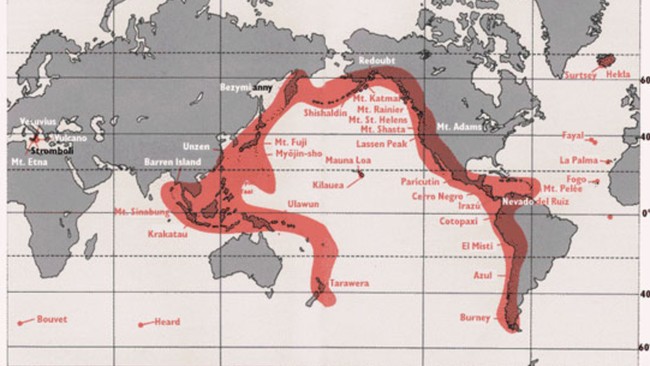
Jakarta, CNBC Indonesia - A series of earthquakes have shaken various parts of the world, particularly in the last two months. Not only abroad, but large-scale quakes above M5.0 have also rocked parts of Indonesia.
So, what triggers these earthquakes? Are they interconnected and influencing one another? Is it true that they are caused by increased activity in the Pacific Ring of Fire?
Responding to this, Daryono from the Indonesian Association of Disaster Experts (IABI) stated that psychologically, it is natural for this series of successive earthquakes to trigger concern and lead to the assumption that these events are interconnected. However, he added, this perception is largely driven by the speed of digital information dissemination today.
“However, from a seismological perspective, this series of earthquakes in distant locations is actually an independent, local, and normal release of tectonic plate energy,” Daryono said in a statement on Wednesday (15/7/2026).
“Scientifically, there is actually no unusual increase in earthquake activity in the Pacific Ring of Fire. This region is home to about 90% of the world’s earthquakes. So, the tremors are a normal and natural daily activity there,” he added.
Daryono referred to data from the United States Geological Survey (USGS), which states that a total of around 500,000 earthquakes occur and are detected across the globe each year, including very small ones that cannot be felt by humans but are recorded by instruments.
“Because the Pacific Ring of Fire accounts for about 90% of all earthquakes on Earth, that means around 450,000 earthquakes occur in this region per year. On average, that means about 1,200 earthquakes occur around the Pacific Ring of Fire every day,” he said.
Therefore, he stated, based on this data, the Ring of Fire is never truly “asleep.”
“When we feel that conditions are calm, seismic instruments around the world are actually continuously recording thousands of small vibrations every day as part of the planet’s routine activity,” Daryono explained.
“When the public feels that earthquakes seem to be increasing, this phenomenon is usually triggered by several psychological and technological factors, not because the earth is suddenly becoming more violently active,” he stressed.
In this case, he continued, the suspicion that the Ring of Fire is becoming more active is usually triggered by a time-clustering effect. This is a condition when several significant earthquakes happen to occur close together in time, coupled with the speed of information dissemination on social media, which means earthquakes in remote areas can now be known to the public within minutes.
“In the past, a magnitude 6.0 earthquake in the remote areas of Tonga, Kamchatka, Chile, or off the coast of Japan might only have been an internal record for seismologists. Now, as soon as a significant earthquake occurs, notifications from earthquake monitoring apps immediately sound, and the information spreads via WhatsApp groups and social media platforms like X, Facebook, and Instagram within minutes,” he asserted.
“This speed of information creates an optical illusion that the frequency of earthquakes is increasing sharply, when in fact it is the intensity of the reporting that has increased,” Daryono said.
He revealed that in statistics and seismology, there is a phase where several strong earthquakes happen to occur close together by chance.
“After that busy phase passes, the earth will enter a calmer phase. This up-and-down rhythm change is a completely normal fluctuation in the tectonic plate energy release cycle, not a sign that the Ring of Fire is ‘waking up’ or becoming more active than usual,” Daryono emphasised.
Furthermore, the increasing availability of detection equipment is also a contributing factor.
“The number of seismic stations around the world continues to grow every year, and the technology is becoming more sensitive. As a result, small earthquakes or quakes in remote areas that went undetected decades ago can now be recorded very accurately by monitoring agencies such as the USGS, GFZ, EMSC, or BMKG,” he explained.
“The collected data does indeed appear to be swelling, but this is because our detection capabilities are improving, not because the earth is becoming more active,” Daryono said.
Thus, Daryono stressed, the series of earthquakes frequently reported in the news recently is actually the routine activity of the Pacific Ring of Fire releasing its energy naturally.
“I have proven with data that there is no increase in strong earthquakes in the Pacific. The vision I am building is one of valid, meticulous, scientifically sound, and integral information, not assumptions and guesswork,” Daryono concluded.
A series of large earthquakes occurred in quick succession. Venezuela, Japan, and the United States (Northern California) were rocked by major earthquakes within a span of less than 12 hours, from Wednesday afternoon Western Indonesia Time (WIB) to Thursday morning WIB (25-26 June 2026).
Twin earthquakes of M7.2 and M7.5 struck Venezuela 40 seconds apart on Wednesday afternoon local time, followed by an M5.6 quake in Northern California and an M7.2 quake that hit the northeastern region of Japan on Thursday morning local time.
Previously, according to the Meteorology, Climatology, and Geophysics Agency (BMKG), an M7.7 earthquake shook the North Sulawesi region on 8 June 2026 at 06:37:42 WIB. The quake was located 244 km northwest of Karatung Island, at 5.79 North Latitude and 125.14 East Longitude, at a sea depth of 47 km. This earthquake prompted the BMKG to issue a Tsunami Advisory for the Sangihe Islands, Talaud, and Buol (Central Sulawesi) regions.
Then, on Thursday, 25 June 2026, at 11:03:35 WIB, the Sulawesi Sea region was also shaken.