
Series of Demands in Today's Labour Protest
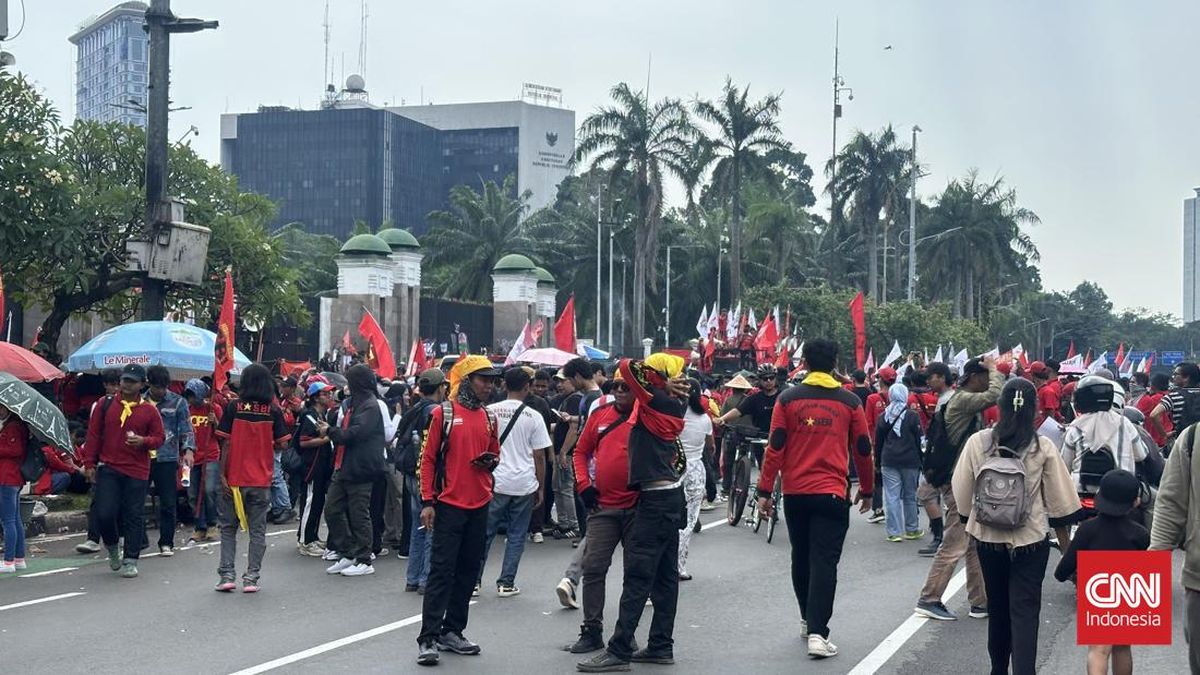
The Great Coalition for the Struggle of Indonesian Labour (KBPBI), comprising 18 trade union confederations, held a demonstration on Tuesday (29/9) in front of the DPR RI Building.
Labour groups voiced several demands, including the limitation of Fixed-Term Employment Agreements (PKWT). Workers are demanding that PKWT be restricted only to temporary roles with a maximum duration of one year.
The protest was organised to monitor the discussions regarding the Labour Protection Bill, following meetings between Commission IX and the DPR RI Legislation Committee. KBPBI believes there remains a substantive gap between the draft Bill planned by the DPR and the version advocated by the coalition.
“Labour laws must serve as a tool to protect working human beings, not as a tool to further facilitate the exploitation of labour,” stated an official Kuju KBPBI release on Thursday (24/9).
KBPBI highlighted several constitutional articles as the basis for the Labour Protection Bill, namely Article 27 paragraph (2) of the 1945 Constitution, which guarantees the right of every citizen to work and a decent living. Furthermore, Article 28D paragraph (2) affirms that everyone has the right to work and receive fair and decent compensation and treatment in employment relations. Additionally, Article 28E paragraph (3) guarantees the freedom of association and assembly, while Article 28C paragraph (2) guarantees the right of every individual to fight for their rights collectively.
According to KBPBI, economic growth should not be achieved at the cost of labour poverty. Investment must not be built upon job uncertainty; efficiency should not mean Redundancy (PHK); productivity should not mean low wages; and corporate flexibility should not equate to an uncertain future for work. They maintain that the constitutional mandate requires the state to side with justice in employment relations.
The following are the 11 demands presented in today’s labour protest:
Limiting Fixed-Term Employment Agreements (PKWT) only to temporary work with a maximum duration of one year.
Limiting Outsourcing/Subcontracting, which includes prohibiting labour supply; restricting it only to specific subcontracted tasks between companies; ensuring workers in recipient companies are under PKWT status; and limiting subcontracted roles to supporting services such as cleaning services, security, catering, and employee shuttle drivers.
Limiting internships strictly to students (pupils/university students) in accordance with educational curricula, ensuring they do not constitute an employment relationship.
Protecting digital platform workers by clarifying the employment relationship between workers and application providers as an employer-employee relationship.
Overseeing minimum wage regulations, including calculating the minimum wage based on economic growth and inflation, strengthening wages for those with over one year of service, rejecting minimum wage calculations using certain indices, and ensuring Sectoral Minimum Wages are at least 5% higher than the Minimum Wage.
Overseeing Redundancy (PHK). Redundancy must be negotiated with Trade Unions, and if no agreement is reached, it must proceed through a legally binding Industrial Relations Court decision. Wages must continue to be paid monthly until a final/appeal decision is reached.
Implementing/Establishing a Severance Reserve Fund for workers whose employment ends, to be paid by employers monthly and managed by BPJS Ketenagakerjaan.
Establishing a Supervisory Commission consisting of Tripartite elements.
Allocating State Budget (APBN) funds for job training.
Providing two days of menstrual leave for female workers without requiring a doctor’s note, with full wages maintained.
Imposing sanctions in accordance with applicable laws for any violations regarding the implementation of PKWT.