
Serang Regent Ratu Backs MSMEs’ Push into Export Markets
Serang Regent Ratu Rachmatuzakiyah is encouraging micro, small and medium-sized enterprises (MSMEs) to improve product quality so they can enter export markets.
Kaserangan batik and coffee are two of the region’s leading products being promoted as part of efforts to expand market access. Ratu made the remarks while attending the Export Product Showcase in Cikande on Tuesday (3 November).
The event brought together exporting companies and Serang Regency MSMEs to introduce local products and provide opportunities to learn about the export process.
“We want to ensure that MSMEs in Serang Regency can grow rapidly and that their products meet the requirements set by companies if they are to be marketed more widely,” Ratu said.
At the event, the Serang Regency Government also promoted coffee and Kaserangan batik to a number of companies. Ratu hopes MSMEs will gain wider market access through partnerships with companies that already have export experience.
She said support from Customs is needed to assist MSMEs, particularly first-time exporters, in understanding and meeting export requirements. Access to financing and licensing through banks is also considered important to business development.
“We ask the banks to support MSMEs that want to grow by making it easier for them to access services, permits and loans,” the regent said.
Ratu said some businesses in Serang Regency had begun exporting their products to various countries. She hopes their achievements will create opportunities for other MSMEs to follow suit.
“Thankfully, exports have increased. We have also spoken with several people who have obtained export certificates, and they have sent various products to Europe and other regions,” she said.
To support market expansion, Ratu reminded MSMEs to maintain product quality, packaging, permits and a reliable supply. She said readiness in these areas was essential for meeting the needs of export markets.
The development of Kaserangan batik, meanwhile, is still focused on the domestic market. Ratu urged residents and companies in Serang Regency to use the region’s distinctive batik, which has 12 motifs and has been granted patent rights.
“For batik, we are still focusing on the local market. I told the company leaders attending the event that we should use local products together, particularly Kaserangan batik, for which we have secured the rights. It has 12 motifs, and everyone—especially residents of Serang Regency—should wear them,” the regent said.
She stressed that local products should first be embraced by the community and businesses in the region itself.
“If we do not love and take pride in our own products, who will? If not now, when? I urge everyone, particularly company leaders, to use local products, especially Kaserangan batik,” she said.
The Serang Regency Government has issued a circular on the use of Kaserangan batik. Ratu said the policy would continue to be reinforced to encourage more residents and companies to wear it.
“We continue to remind company colleagues and leaders to use Kaserangan batik. If more people wear it, this batik MSME sector can help support family livelihoods,” Ratu said.
Adang Rachmat, head of the Serang Regency Cooperatives, MSMEs, Industry and Trade Agency (Diskoumperindag), said the Export Product Showcase gave MSMEs an opportunity to learn the export process from companies that had already entered international markets.
“We held the event alongside exports by companies so that MSMEs and business owners in coffee and batik could learn how to export and follow the example of companies already exporting,” he said.
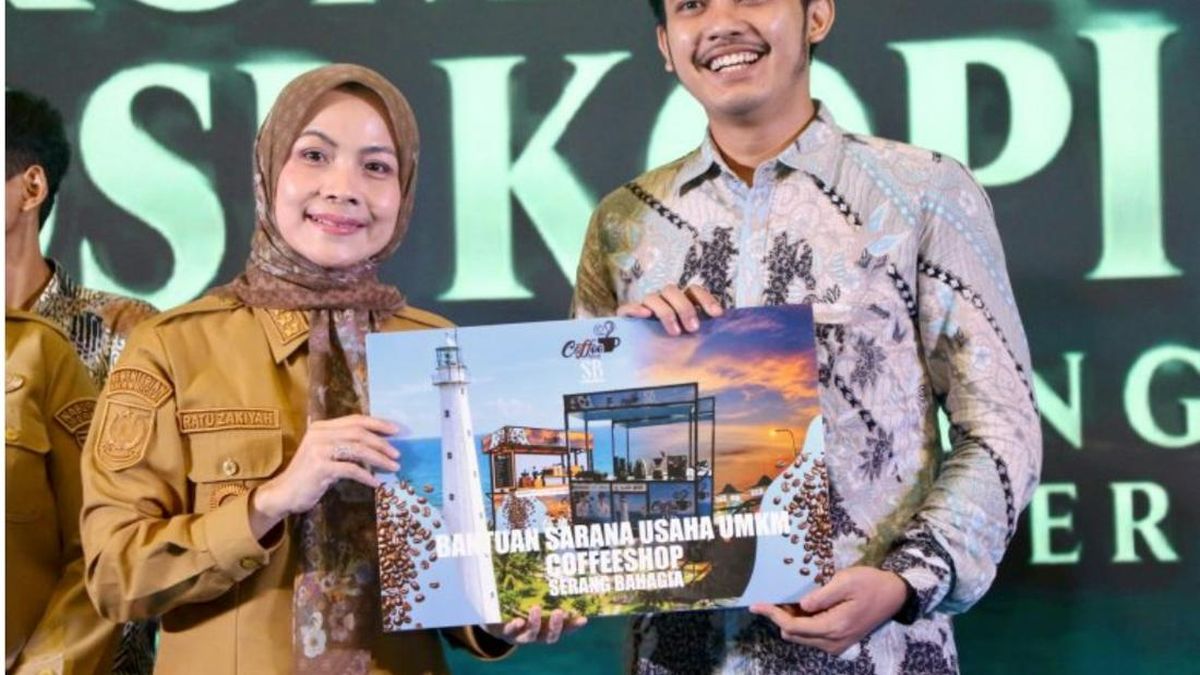
At the same event, the Serang Regency Government provided equipment to baristas and coffee entrepreneurs in the regency. Each recipient received a fully equipped cart for selling, which will be placed in a strategic location.
The contribution of other Serang Regency MSMEs is reflected in the export activity of local companies, which demonstrates the region’s economic potential. One plastic-straw manufacturer exports 15 containers of products to China and Taiwan each month.
A total of 69 exporting companies were invited to the event. Some were new exporters, including ceramic and glassware crafts producers selling to Taiwan and Abu Dhabi. The ceramic products are made using traditional methods, from polishing to colouring.
A bicycle company operating in the Modern Cikande industrial area is also exporting its products.