
Sentiment and Fundamentals in the Mirror of a Conscious Organisation
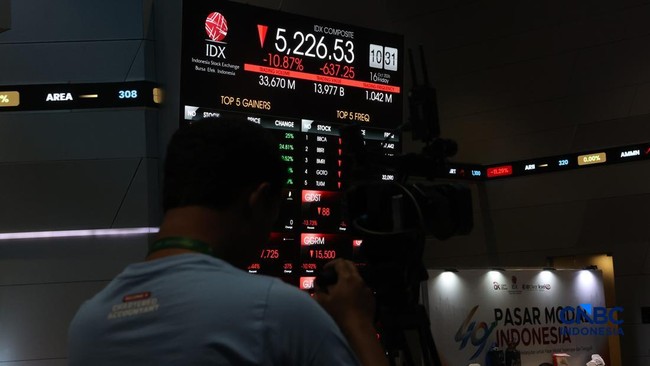
There has been a collective unease in Indonesia’s capital market in recent times. The uproar over MSCI (Morgan Stanley Capital International), a global benchmark index used by investment managers worldwide to allocate passive funds, has had a strongly negative impact on sentiment towards the IDX Composite (IHSG).
The prospect of Indonesia’s weighting being reduced, the threat of some listed companies being excluded, and changes to the methodology concerning free float and investability have become dominant sources of market sentiment. Panic has spread through the market, market capitalisation has eroded, and management meeting rooms have been filled with the same question: how should we respond to MSCI?
At this point, we need to pause and take a look in the mirror. Could an organisation built over decades—with hard work, systems, people and values—really collapse simply because of sentiment around a global index? Or are we caught in the illusion that market perception is the organisation’s reality?
Seen through the lens of a conscious organisation, this is a fundamental question. A conscious organisation does not deny the power of sentiment; it recognises that sentiment is part of the market’s lifeblood and of the collective psychology that shapes expectations.
But it refuses to make sentiment the sole judge of its sustainability. Profitable organisations do not collapse in a vacuum of sentiment alone: they fall because underlying weaknesses are left unaddressed, with sentiment acting only as a trigger—a final sign of internal decay that has gone unnoticed.
By analogy with the human body, sentiment is a fever. A fever indicates an infection inside, but it is not the disease itself. Treating the fever without curing the infection is futile, and judging the body’s health solely by whether it has a fever is a fundamental error of reasoning. The MSCI turmoil affecting the IHSG is that fever: an important signal for review, but not a death sentence.
Strengthening the foundations: making sentiment a mirror, not a threat
The MSCI turmoil and volatility in the IHSG often trigger corporate panic because companies become trapped in a false dichotomy: treating market sentiment as their main enemy or making it their sole compass for truth. To ensure external sentiment is no longer paralysing—without simply ignoring it—organisations need to reinforce their fundamentals through three key pillars:
- Operational performance is the effort to transform a machine into a flexible organism. This is where the organisation’s true pulse lies: how a product is created, how a service is delivered, how promises are kept, and how every process is carried out from end to end with discipline and integrity.
Conscious operational performance is not measured by how busily production lines pursue numerical efficiency, but by the elasticity of the value chain. An organisation with strong operational fundamentals has capacity buffers, a flexible supply chain and room for frontline talent to innovate.
Some questions for reflection: does our supply chain remain flexible? Do our operational teams still have room to breathe and innovate? When market sentiment becomes turbulent, operations should not respond with indiscriminate cost-cutting.
Operations management should treat this sentiment as a mirror, asking whether products and services genuinely deliver value to their customers. If customers remain loyal because of a product’s quality, the departure of global passive investors is merely a change in share ownership on paper.
Operational flexibility requires an understanding that mechanical efficiency without human awareness creates fragility. A living organism knows when to stretch and when to tighten ranks—not in response to daily index movements, but in order to preserve the quality of value creation itself.
- Financial performance is a reflection of the honesty with which entrusted capital is managed. Financial performance is often misunderstood as merely a profit-and-loss account and a cosmetic balance sheet designed to please the short-term market. In a conscious organisation, finances tell a story of managing capital responsibly, balancing growth with prudence, and aligning the risk framework with the nature of the business.
In response to market sentiment, an organisation with weak financial fundamentals—heavily reliant on foreign capital flows and index-driven valuations—will quickly lose its footing. By contrast, a company with strong operating cash flow, controlled leverage and adequate liquidity will see the MSCI turmoil as a passing spell of bad weather, not a tsunami. Its hull is not leaking, so it need not sell assets in a panic to prop up its daily share price.
Conscious financial management rejects window-dressing figures to satisfy the changing preferences of market analysts. It holds that balance-sheet integrity reflects a corporation’s moral honesty towards stakeholders who have entrusted it with their capital for the long term.
- Compliance is an investment in trust in an era of transparency. In a conscious organisation, compliance goes far beyond formal rules; it is a moral commitment to operate within the bounds of truth, good governance, business ethics and promises made to stakeholders.
The issues of free float, ownership transparency and the treatment of minority shareholders at the heart of the MSCI debate pose a real test for Indonesian corporate governance: are companies being run as closed kingdoms or as accountable public institutions? A conscious organisation regards compliance not as a cost burden, but as an investment in trust—the principal anchor when negative sentiment hits.
When governance is practised not merely to meet regulators’ requirements, but as a consistent expression of ethical conduct, external negative sentiment loses its grip. Public trust built on genuine compliance becomes the strongest shield, ensuring that an organisation is not easily shaken by successive storms of perception.
Navigating the tension between ‘need’ and ‘want’
These three fundamental pillars—operations, finance and compliance—lead to a deeper understanding of the relationship between an organisation and the market: the connection between ‘need’ on one side and ‘want’ on the other.
‘Need’ refers to the authentic needs of stakeholders: practical solutions that genuinely address customers’ problems; meaningful opportunities for employees to grow; measured and reasonable returns for long-term investors; and a healthy ecosystem for the wider community. Need is rooted in substance and sustainability.
‘Want’ refers to expectations, trends and fantasies shaped by market narratives, trading algorithms and daily sentiment. It is volatile, easily changed and often unconnected to operational reality.
Organisations with weak connections to their stakeholders become trapped in a reactive cycle, pursuing wants while neglecting needs. They may do anything to lift the daily share price, meet analysts’ expectations or retain a place in a global index—even at the expense of their internal fundamentals.
A conscious organisation, by contrast, is not opposed to wants. It understands that market desires are part of the psychological pulse that must be heard.
But rather than letting wants dictate the company’s direction, it filters demands for instant liquidity or aggressive growth through the deeper lens of need. It chooses to be responsive rather than reactive, keeping its moral and strategic compass amid the noise of short-term expectations.
Rumour control mechanisms and holistic awareness
Market sentiment is often little more than institutionalised rumour: a story or narrative amplified by social-media algorithms and market conversations until it resembles absolute truth. Without a mature control mechanism, such rumours can become a self-fulfilling prophecy, creating internal panic, draining employee productivity and damaging the confidence of external partners.
To counter this, a conscious organisation builds a rumour control mechanism operating through three layers of awareness:
Information awareness: the ability to separate pure fact objectively from opinion, bias and wild speculation behind every global announcement. Management examines the data clearly without being swept along by panic-driven narratives.
Meaning awareness: the ability to put facts in a fair and realistic context. Rather than assuming the worst, the organisation accurately measures its actual exposure to passive funds or global indices.
Response awareness: the ability to respond from a position of wholeness. The company takes market concerns seriously and professionally, while ensuring that corrective action remains grounded in its long-term vision rather than short-term fear.
These three layers of awareness show that external turmoil cannot be calmed simply by denial or by withholding information. It requires clarity at management level. Yet containing rumours in the information space is only half the battle.
Ultimately, ripples of sentiment and rumour will seep in and test the entire corporate nervous system, requiring a much broader view of how an organisation survives, operates and maintains its connections with the outside world.
Broadening the meaning of the supply chain and reading the wider context
In a conscious organisation, supply chain management is no longer narrowly defined as the physical movement of goods from supplier to factory. It is expanded into a living network of interactions encompassing five crucial dimensions: physical, financial, information, talent and trust supply chains.
A conscious organisation recognises that disruption to this network is inherent and inevitable in the business cycle. Risk mitigation is therefore not treated as an annual administrative document left in a drawer, but as part of the organisation’s everyday way of operating.
By reading the context comprehensively—from geopolitical dynamics and the direction of regulations issued by the Financial Services Authority (OJK) and the Indonesia Stock Exchange (BEI), to the social psychology experienced by employees on the ground—an organisation can see external turbulence such as the MSCI turmoil not as a death knell.
Instead, it can embrace such upheaval as a moment of purification: a conscious call to improve governance, strengthen communication about fundamentals and ensure the company’s pulse remains rooted in authentic, enduring values.
Ultimately, the IHSG will continue to fluctuate and MSCI will continue its periodic reviews. What distinguishes organisations that survive from those that fall is not their ability to stop the winter storm, but their ability to build a warm hearth within the house of their fundamentals.
With the hearth of excellent operational performance, honest financial management and integrity in compliance, an organisation need not fear the storm outside. It will stand firm because it deserves to endure.
Source: jawawa.id (https://jawawa.id/newsitem/sentiment-and-fundamentals-in-the-mirror-of-a-conscious-organisation-1792392632)
Originally published by CNBC Indonesia (https://www.cnbcindonesia.com/opini/20261019124645-14-777446/sentimen-dan-fundamental-dalam-cermin-organisasi-berkesadaran), translated from Indonesian