
Sentenced to 10 Years, Siska Now Creates Batik at Bandung Women's Prison
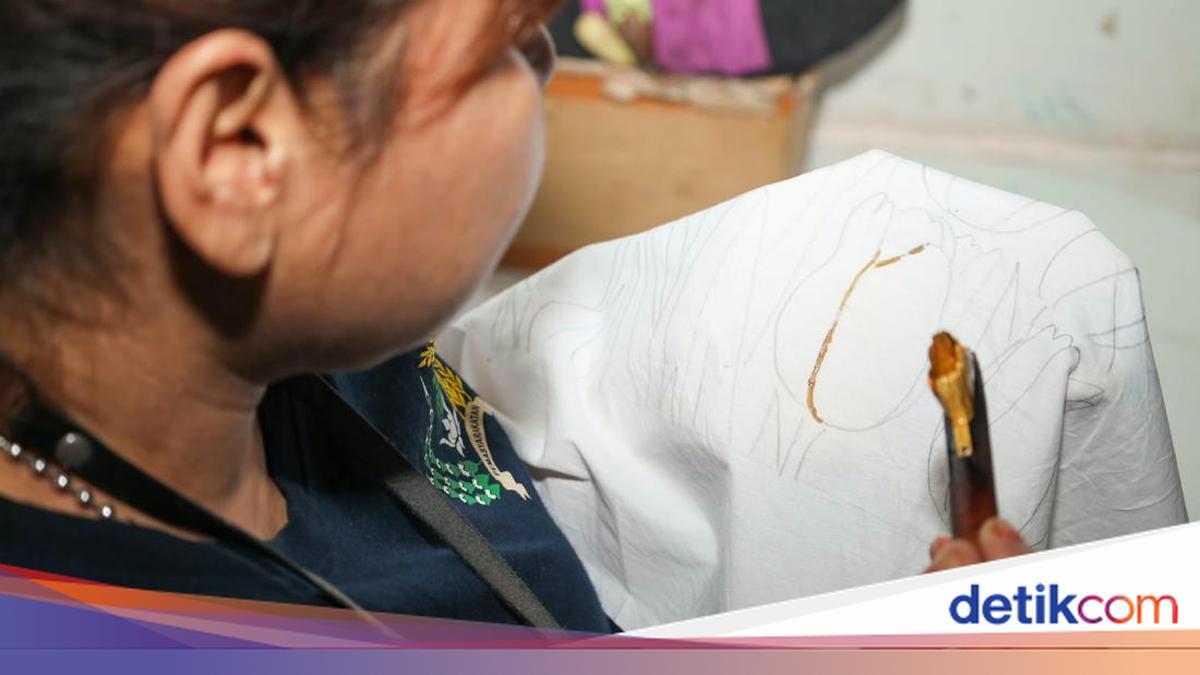
Siska is an inmate who has become a mainstay of the batik work post at Bandung Women’s Prison, West Java. The 41-year-old has no background as an artist, and her batik talent emerged unexpectedly.
“If you ask about batik, I wasn’t interested at all before. Outside I wasn’t interested, let alone inside prison. I wasn’t even interested in the training. I ended up getting into batik because the prison governor held a batik design drawing competition, and I joined just representing my cell. So I was just messing about,” Siska told detikcom at Bandung Women’s Prison on Friday (21/8/2026).
She then emerged as the first-place winner of the Bandung Women’s Prison Batik Competition, which was held in 2025. “I didn’t expect to win first place. The prison governor paid attention to me: ‘Whoever won yesterday, please put them in the batik work post.’ I was confused,” she continued.
Siska said that, let alone making batik, she never expected to be involved in a work post activity at all. What she knew was that work posts were intended for inmates who had served one-third of their sentence, while at that time she had served less than that.
“I was at Warung Kiara for 1.5 years. Here I’ve been here for 2 years. So when I entered the batik work post, I hadn’t yet served one-third of my sentence,” Siska explained.
“Before that, I just messed about every day. Playing, church, playing, church. I didn’t join a work post because it was still far off — my sentence is 10 years. ‘What’s the point of joining work posts?’, I thought,” she added.
Siska admitted she was confused when she first entered the batik work post because she felt she had zero knowledge. However, she chose not to give up and learned from inmates who had been making hand-drawn batik at the work post before her.
“So I entered the batik post, confused at first about what to do. Drawing on a small piece of paper I might manage, but drawing on a large piece of cloth — how could I? But I didn’t give up there. Even though I never attended training, I wanted to learn and wanted to know what batik is actually like,” said the inmate from East Jakarta.
During those two weeks, Siska learned the basics of making motifs and placing designs on cloth. Then she eventually took the initiative to explore batik motifs.
“That’s where I first got to know batik — what the bottom part is called. Oh, the design on a garment has to connect, it can’t be random. Oh, this is what the customer wants,” said the inmate convicted in a methamphetamine case.
Siska is now tasked with creating hand-drawn batik motifs on sheets of cloth. She does not work on making bags or derivative products, because that work is handled by other inmates.
“Batik has its own characteristics from each region, and we want to have our own batik identity. There are several batik motifs that we have created and that we have copyrighted. The motifs are my drawings,” Siska said.
Some of the motifs made by Siska include Manuk Dadali, Ciung Wanara, Sisingaan, Macan Godong Wening, and Hagia Sofia. The design process, Siska explained, is also adjusted to consumer demand.
“For example, if someone wants the Manuk Dadali motif, I make the sketch, it gets approved, and then we process it,” Siska explained.
Siska said making batik has changed her daily life as an inmate. By painting batik, Siska feels time passes quickly.
“Even though it adds stress because now there’s work to do,” she said jokingly.
Siska admitted that the productive activity has made her mind more focused. One of the hardest temptations for her is a mobile phone.
“But here, those drawings are what save me. I can survive here because of batik. If it weren’t for batik, maybe I would have problems with people, maybe I would be thinking about phones,” Siska said.
Thanks to pursuing hand-drawn batik, Siska said she has actually been given the opportunity to access a phone and laptop, even if only to search for references related to hand-drawn batik.
“In batik I’m safe, I don’t have to hide to be able to hold a phone. Because I’m given phone and laptop facilities to learn and develop my batik skills. I’ve gained a lot more knowledge because of batik. So if we’re given the chance to learn techniques or motifs on the internet, I end up thinking, ‘If they can do it, why can’t I?’ So I feel challenged,” Siska said.
“Not everyone who does batik is allowed to hold a phone. That’s a privilege and I’m grateful,” she added.
Siska said she is comfortable at the batik work post not because she is chasing the premium payment, but because she receives validation.
“To me, the premium means nothing. I don’t really worry about the premium. What matters most is that I have gained the trust of the prison,” Siska said.
Siska feels happy when her work starts to be ordered and used by people outside the prison. In fact, she continued, her hand-drawn batik has been worn by officials.
“When there are orders, I become even more motivated. So for example, if there’s an order from abroad, I feel validated because my work is appreciated. I don’t need to fly abroad myself — my batik has already flown there first, and that’s fine. I’m still proud,” Siska said.
“When I saw the batik being worn by an official — recently the Director General wore a matching set with his wife. Then several other officials too, prison governors — wow, I was happy,” she said.
Products made by inmates at Bandung Women’s Prison have participated in several exhibitions, including cloth and derivative batik products. One of them is at every IPPA Fest event.
However, Siska said, some items were taken to exhibitions but never returned, and the sales results are unknown. “The only obstacle is that items that have been exhibited don’t come back, they just disappear, and they’re not paid for. That’s what makes us sad,” Siska said.
Siska hopes exhibition organisers will pay more attention to recording inmates’ products. According to her, sales information is needed so that they know which motifs consumers are interested in and can set prices appropriately.
“My hope going forward is that the committee will be concerned about this — don’t let items just disappear. We want to know which of our batik pieces are selling, and which groups are buying them. No matter how good the items we make are, if we don’t know their value or how much they sold for, we can’t set a price standard,” Siska continued.
She also hopes that marketing access for inmates’ products will be expanded. Sales have a direct impact on premiums because inmates only receive a premium if their products are sold.
“We also hope they will find us a market so we can get premiums. We’re still confused about marketing because not everyone likes it — only those who know about it like it,” she said.
Source: jawawa.id (https://jawawa.id/newsitem/sentenced-to-10-years-siska-now-creates-batik-at-bandung-womens-prison-1787730819)
Originally published by detikcom (https://news.detik.com/berita/d-8634977/divonis-10-tahun-siska-kini-berkarya-lewat-batik-di-lapas-perempuan-bandung), translated from Indonesian