
Sentenced! Former Deputy Minister of Manpower Noel Ebenezer Receives 4-Year and 6-Month Prison Term
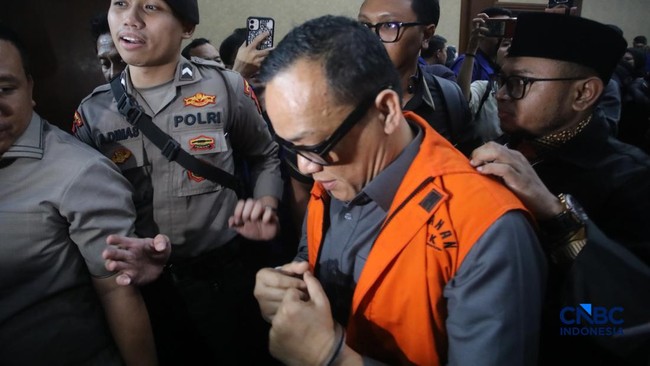
The former Deputy Minister of Manpower of the Republic of Indonesia, Immanuel Ebenezer Gerungan, also known as Noel, was sentenced during a verdict reading at the Corruption Court (Tipikor) in Jakarta on Thursday (4/6/2026). In the ruling, Noel was sentenced to 4 years and 6 months in prison in connection with a corruption case involving the management of Occupational Health and Safety (K3) certifications.
The Panel of Judges stated that Noel was proven legally and convincingly to have committed acts of corruption. “Sentencing the defendant Immanuel Ebenezer Gerungan to 4 years and 6 months of imprisonment,” the Judge declared at the Corruption Court.
In addition to the prison term, Noel was ordered to pay restitution amounting to Rp3.4 billion. The Rp3 billion previously returned by Noel was accounted for as part of this restitution. Should his assets prove insufficient to cover the remaining restitution within one month after the court’s decision becomes legally binding, the sentence will be substituted with an additional 1-year prison term.
This verdict is lower than the demand previously made by the Corruption Eradication Commission (KPK) prosecutors. Previously, the KPK prosecutors had requested that the judges of the Jakarta Corruption Court sentence Noel to 5 years in prison and a fine of Rp250 million, with a subsidiary of 90 days in prison. Prosecutors also demanded restitution of Rp4.4 billion; however, as Noel had already returned Rp3 billion, the remaining restitution required was calculated at Rp1.43 billion. Under the prosecution’s original demand, failure to pay the restitution within one month of a final verdict would have resulted in a 2-year prison substitution. In delivering the verdict, the judges took into account both aggravating and mitigating factors.