
Senator Fahira Idris Urges Maximum Legal Action in West Java Severe Abuse Case
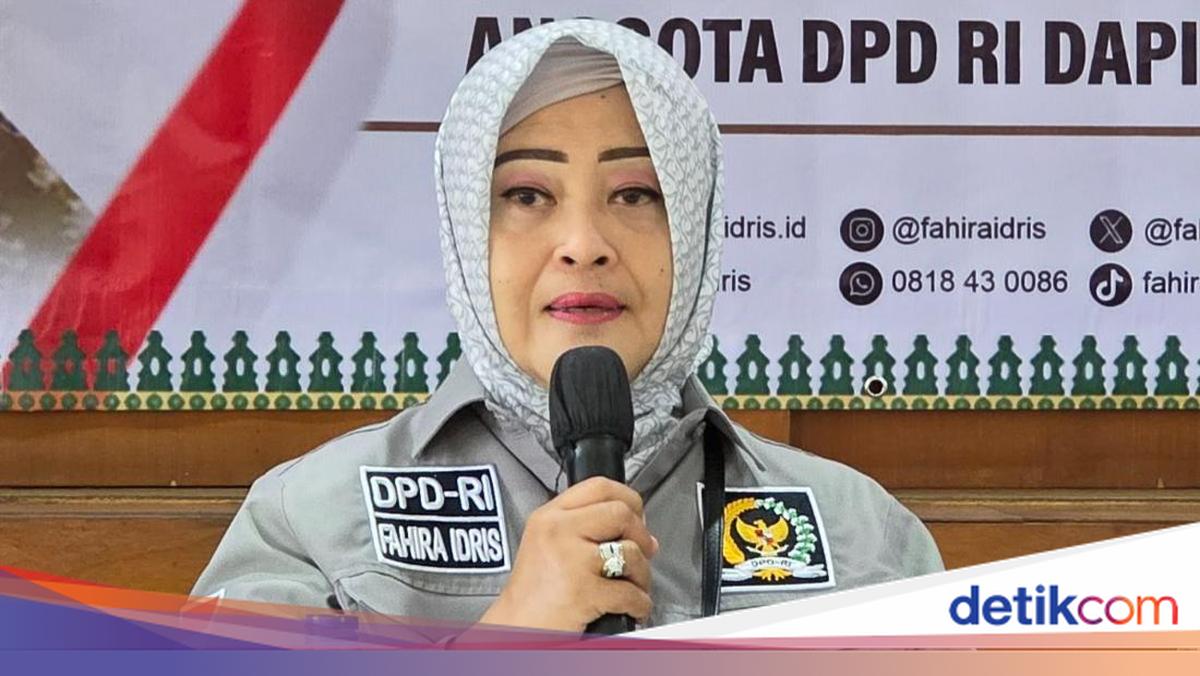
MPR RI member Fahira Idris has commended the swift action of the West Java Regional Police in arresting a suspect in a case of alleged false imprisonment, torture, and severe abuse against a woman with the initials YTR in Bandung, West Java. Fahira Idris assessed that the alleged confinement and torture suffered by the victim over a long period indicates a pattern of extreme violence, control, isolation, and deprivation of liberty that is highly dangerous. Therefore, the legal process must utilise all available legal instruments.
“In my view, perpetrators of extreme violence like this are a threat to the victim, to women, and to society. Therefore, law enforcement must ensnare them with multiple articles and ensure the heaviest possible sentence demanded by law,” Fahira Idris said in a statement on Friday (26/6/2026).
Fahira Idris stated that there are at least seven matters that need immediate attention from law enforcement officials and stakeholders regarding this case. Firstly, investigators must apply multiple articles to the maximum extent. The Jakarta senator believes the investigation must delve into all possible criminal acts, ranging from deprivation of liberty or false imprisonment, severe abuse, premeditated severe abuse if the elements are met, threats, coercion, seizure of the victim’s property or assets, to other criminal acts proven during the investigation.
“Do not just stop at one or two articles. The victim’s injuries, the duration of the violence, the pattern of control, the alleged false imprisonment, and the permanent impact suffered by the victim must be the basis for applying the most comprehensive and heaviest articles,” she said.
Secondly, investigators must explore the possibility of applying the Sexual Violence Crime Law (UU TPKS). If the examination finds elements of sexual violence, sexual exploitation, sexual slavery, coercion, or other forms of sexual violence, then the UU TPKS must be applied. According to her, the UU TPKS is an important legal instrument because it not only addresses the punishment of perpetrators but also regulates the victim’s rights to handling, protection, recovery, assistance, restitution, and a victim-oriented legal process.
Thirdly, the possibility of other victims must be investigated. Fahira Idris urged the police to open the widest possible reporting channels for anyone who feels they have been a victim of the suspect or has information related to patterns of violence allegedly committed by the suspect previously. According to her, information emerging in the public sphere regarding the possibility of other victims must be followed up seriously, carefully, and professionally.
“Cases like this are often not isolated incidents. Therefore, the police need to investigate whether there are other victims, how the perpetrator approached the victims, whether there is a pattern of repeated violence, and whether there are victims who have been afraid to report,” she explained.
Fourthly, if there are parties who assisted the suspect during his flight, they must be examined. Fahira Idris believes investigators need to trace anyone who knew the suspect’s whereabouts, helped provide a hiding place, provided financial assistance, facilitated the escape, concealed evidence, or gave false statements. According to her, anyone who consciously helped the suspect evade the legal process must be held accountable according to applicable legal provisions.
Fifthly, all medical, digital, financial, and location evidence must be secured. Fahira Idris urged investigators to ensure all evidence is thoroughly examined, including post-mortem results, medical records, forensic examinations, items suspected of being used to abuse the victim, communication trails, history of residence changes, financial transactions, the victim’s personal documents, and alleged control or seizure of the victim’s assets.
“This evidence is crucial for building a strong case construction and preventing legal loopholes that could lighten the perpetrator’s sentence,” she said.
Sixthly, prosecutors must oversee the case from the outset to ensure a strong indictment and maximum demands. Fahira Idris encouraged the prosecutor’s office to coordinate with investigators from the beginning so that the case file is not weak. According to her, the construction of the indictment must depict the entire series of crimes completely, including the duration of violence, the permanent impact on the victim, power relations, the victim’s isolation, and the possibility of additional criminal acts.
Seventhly, the victim’s rights to recovery, protection, and restitution must be fully safeguarded. Fahira Idris stressed that the suspect’s arrest should not diminish attention to the victim. The victim still requires long-term medical care, reconstruction, physical rehabilitation, psychological recovery, legal assistance, protection from intimidation, document recovery, social assistance, and economic support.
“The victim must be totally recovered. Do not let public attention stop at the perpetrator’s arrest, while the victim and her family are left to bear the medical, psychological, social, and economic burdens alone,” Fahira Idris explained.
Fahira Idris also requested that the victim’s examination process be conducted with extreme care and a trauma-informed perspective. The victim must not be forced to repeat her story excessively, must not be cornered, and must always be accompanied by a competent companion. “This case provides an important lesson that violence against women is not always immediately visible as major violence. It often starts with control, isolation, manipulation, and threats. Therefore, families, friends, neighbours, boarding house owners, local neighbourhood units, and the community are urged to be more sensitive,” she concluded.